Get AI Briefings, Transcripts & Alerts on Local & National Government Meetings — Forever.
Lawmakers and witnesses press reforms to lower ACA-era premiums, debate incentives and PBM market power
Loading...
Summary
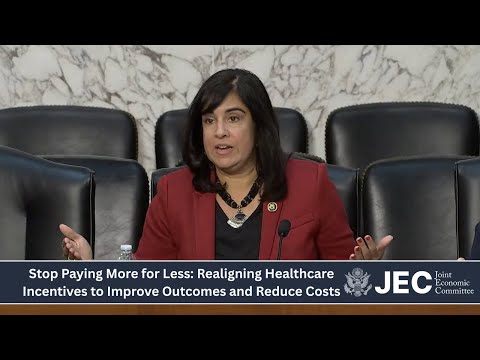
Members and witnesses discussed proposals to curb rising premiums under the Affordable Care Act, including a bipartisan short-term bill, incentive-based insurance designs (including multi-year plans modeled on Switzerland), and concerns about market concentration among pharmacy benefit managers.
Speaker 1, Unidentified Speaker, opened by tying rising costs to the Affordable Care Act and to insurer behavior: "since the Affordable Care Act took effect in 2014, the insurance company profits have skyrocketed by more than 230% while insurers deny as many as 1 out of 3 claims," Speaker 1 said, adding that premiums have increased "96% since 2014." He said he had introduced a bipartisan bill with "Bridal Fitzpatrick and a couple of Democrats" intended to prevent steep premium hikes for the roughly "24,000,000 Americans who rely on the Affordable Care Act."
Why it matters: lawmakers framed the conversation as a mix of short-term fixes for subsidies and longer-term market reforms. Speaker 1 emphasized both protecting current enrollees who depend on ACA coverage and curbing what he described as predatory behavior by insurers, brokers and pharmacy benefit managers (PBMs).
Panel testimony and proposed options: Speaker 2, Unidentified Witness, said the Affordable Care Act limits insurers' ability to vary premiums based on health and noted a specific allowable exception: "The only thing the ACA allows you to do is charge a 50% surcharge if you're a smoker." He suggested studying foreign models, saying Switzerland allows longer-term (three- or five-year) insurance contracts with refundable premium incentives tied to clinical benchmarks (for example, lower hemoglobin A1c or blood pressure). Speaker 2 argued multi-year contracts can align insurers' incentives with prevention because insurers would retain customers longer and thus "reap the rewards."
An industry representative, Speaker 3, described a consumer-facing incentive program that awards points for daily steps and highlighted clear behavior changes around thresholds: "Our customers get points for the number of steps they take each day" with thresholds at 5,000, 10,000 and 15,000 steps, and "there's a huge spike" in participants just above those cutoffs. That testimony was offered as evidence incentives can change behavior and support cost-saving prevention strategies.
PBMs and market structure: Speaker 1 raised concerns that vertically integrated insurers and PBMs are limiting competition and raising prices for consumers and independent pharmacies. In response, Speaker 4 said market concentration was a core problem: "there's just not very much competition ... 3 PBMs control a very large fraction of the market," and he recommended better transparency on the employer side so employers can understand contract terms and negotiate better deals for employees.
What the record shows and doesn't: witnesses offered policy options but did not report enacted regulatory changes or formal votes. Several numerical claims were made on the record—insurer profits rising by "more than 230%," claims denial rates as "1 out of 3," and premiums up "96% since 2014"—all asserted by Speaker 1 and not independently verified in the hearing transcript. Speaker 2 clarified a specific statutory limit under the ACA regarding premium variation for health status and cited the 50% smoker surcharge as an express allowance.
Next steps: the panel sought technical input rather than taking formal action during the segment. No motions or votes were recorded in the transcript excerpt. The discussion signaled interest in drafting short-term legislation to preserve subsidies and in exploring structural reforms to insurer and PBM markets.