Get email alerts on the Environment Red Tide topic
No spam. Unsubscribe anytime.
FWC: Red tide concentrations easing; county to get weekly updates
Summary
Florida Fish and Wildlife officials told Gulf County commissioners that a red tide event that began in September shows low-to-moderate concentrations in local bays and is expected to decline by January–February; the agency will continue weekly sampling and share results with the county.
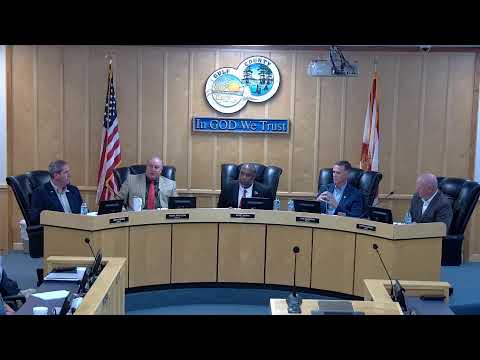
Florida Fish and Wildlife representatives told Gulf County commissioners at a Dec. 16 special meeting that a red tide event that began in September has shown signs of easing but will continue to be monitored.
"As we entered into December, we saw red tide levels decreasing slightly from some of the testing we do each week," FWC representative Mr. Kramer said, noting the agency collects samples weekly and will provide the county with the most recent results. He said current samples taken over the weekend were being tested and "should be available tomorrow, Thursday."
The presenter outlined the event's history in the Panhandle, saying similar blooms occurred in 2015, 2018 and 2021 and that blooms typically arise every three to five years. He described environmental conditions that allow Karenia brevis, the organism behind Florida red tide, to concentrate: warm water (70–90 degrees), light winds and ocean currents. "In low concentrations, it's not harmful, but when factors are right, it will congregate," he said.
Commissioners and residents raised local concerns, including heavy aquatic vegetation in Lake Wemeco and a recent small fish kill on the northwest side of the bay. Mr. Kramer said invasive hydrilla and cold-weather stress likely contributed to the lake's poor condition and that FWC had observed a fish kill of about 20 fish earlier in the week; he emphasized that multiple causes, including low-oxygen events, can lead to fish mortality and that testing would clarify the cause.
The agency said it is working with Mote Marine Laboratory and the University of South Florida on forecast models and research to better predict the timing and movement of blooms. Mr. Kramer added that the county's semi-enclosed Saint Joe Bay can retain blooms longer than more open waters and that forecasting improvements are a longer-term goal.
Commissioners asked about public postings and the county's ability to receive timely results; staff said web-posting glitches had occurred but that weekly results are usually posted and that FWC would check and follow up.
The commission did not take formal action on the update; staff said they would receive and distribute the agency's weekly reports while continuing local sampling at sites including White City Bridge.
AI generated
The text on this page is AI generated. Summaries, highlights, analysis, and video transcripts are all produced from the original source material.
AI can make mistakes, so if you spot one, and we will fix it for everyone.
Note: the source content is unaltered by us. Any content source we link to, be it a video, an audio recording, or a document, is presented exactly as its publisher released it. That publisher is usually a government body, sometimes an individual official or another organisation.