Get Full Government Meeting Transcripts, Videos, & Alerts Forever!
Get email alerts on the Signs Ordinance topic
No spam. Unsubscribe anytime.
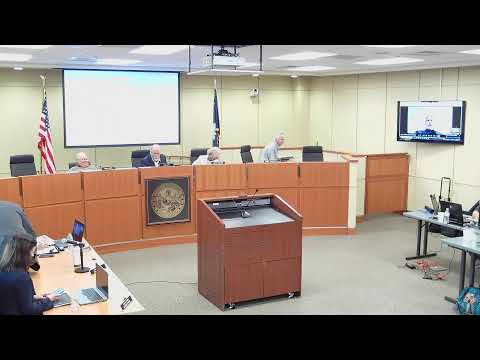
Greenwood County Council approves tighter limits on temporary development signs after contested public hearing
Summary
After a public hearing and a period of debate, Greenwood County Council on Oct. 7 approved an amendment to the zoning ordinance that establishes new definitions and limits for temporary on-site and off-site subdivision/development signs; the measure passed on a 3–2 vote.
Greenwood County Council voted 3–2 on Oct. 7 to amend the county zoning ordinance to set specific rules for temporary development and off-site subdivision signs, after a public hearing drew community members and a debate among council members.
Planning Director Carol Coleman told the council the changes update multiple sections of the zoning ordinance — definitions, residential-district signage rules, accessory-structure language, permit requirements and penalties — to address a proliferation of off-premise development signage tied to recent growth. "We created parameters under which they could occur," Coleman said, listing limits on square footage, spacing and duration.
The ordinance establishes that off-premise development signs are limited to no more than five signs per subdivision, must be within a one-half-mile radius of the subdivision’s main entrance, must be removed before issuance of a final certificate of occupancy, must be at least five feet from property lines and cannot be placed in the public right-of-way. The county attorney emphasized the changes are intended to distinguish development signs from real-estate signs and to ensure consistent enforcement going forward.
During the public-comment period Matthew Paris of Highway 25 South, who operates a home-occupation security-camera business, urged council to reconsider home-occupation sign-size limits. "I think this size right here, 18 by 24, I own a business," Paris said, arguing that the 12-by-12 limit he had been told about made his safety-related signage ineffective. Coleman and council members responded that the ordinance as presented addresses development and real-estate/developer signs, not home-occupation sign-sizing, and that the latter could be considered in a future ordinance update.
Council members debated whether to adopt the discrete sign changes now or to pause and overhaul the entire zoning ordinance. Proponents said the zoning document is a fluid instrument and that this narrow fix enhances equity and clarity; opponents argued for a fuller review. Mr. Templeton moved to approve the ordinance as presented, Ms. Miller seconded, and the motion carried 3–2.
The ordinance as approved tightens parameters for development signage countywide; council members who objected said they still want to revisit related topics — including home-occupation sign sizes and other enforcement details — in a later, more comprehensive ordinance revision.