Get AI Briefings, Transcripts & Alerts on Local & National Government Meetings — Forever.
Sheboygan council moves zoning boards in code amid public objections over data centers and administrative authority
Loading...
Summary
The council adopted an ordinance relocating Plan Commission and Zoning Board of Appeals language to Chapter 2 of the municipal code, a move staff described as organizational; residents urged delays, citing reduced transparency, possible consolidation of power in the city administrator and gaps on data-center regulation.
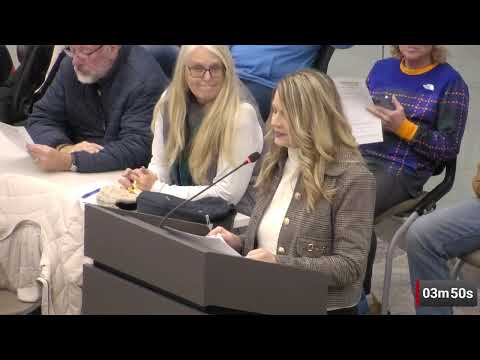
Sheboygan’s Common Council on Tuesday voted to relocate provisions relating to the Plan Commission and the Zoning Board of Appeals into Chapter 2 of the municipal code, a structural change council staff said is intended to make board information easier to find. The vote followed more than an hour of public comment in which residents urged greater transparency and asked the council to delay action on the broader zoning-code rewrite.
Supporters of moving the provisions said the change is limited in scope and does not remove statutory authority. City Attorney (unnamed in transcript) told the council the relocation “takes the provisions regarding Plan Commission and Zoning Board of Appeals” out of the zoning chapter and places them with other boards for ease of reading, and that the Plan Commission and ZBA “still retain the statutory authority and responsibilities.” The attorney said optional authorities not required by state law were pulled back and any substantive approval-process language remains in the proposed zoning code.
Residents at the hearing urged a different course. “This ordinance is being described as a simple cleanup or reorganization, but what it really does is change where the Plan Commission and the Zoning Board of Appeals live in the code and how their roles are defined,” said Lisa Salgado, a North Fourth Street resident. Salgado warned the draft shifts interpretation authority to the city administrator and said, “This zoning ordinance should provide specific requirements that must be met to protect the interests of residents.”
Other speakers pressed similar concerns. Peter Jacobs of Mead Avenue said the draft appears not to have been prepared by an attorney “as required by the state,” and argued the text grants outsized powers to the city administrator, creating what he called a “zoning czar.” Jacobs also said the draft lacks specific regulation for data centers on electricity, water consumption and pollution and warned the ordinance’s legitimacy “could easily be contested.”
Samantha Sager, president of Dark Sky Wisconsin, praised proposed outdoor-lighting regulations but recommended technical refinements, including lowering a shielding threshold and capping residential color temperature to reduce glare and sky glow. “The outdoor lighting regulations in this draft are very strong,” she said, while offering proposals to strengthen enforceability.
Council members asked staff to clarify the scope of the relocation. Alder Borst asked whether the move produced any functional change; the city attorney replied that the relocation alone does not remove statutory responsibilities and that where approval processes change, that language is in the proposed zoning code rather than in the chapter being moved. The attorney said Historic Preservation Commission language was left in the zoning code at that commission’s request to allow it more time to review its mission.
The council adopted the ordinance on a 10-0 roll call vote. The full zoning-code rewrite (Item 12), which speakers repeatedly urged the council to slow down and present in public forums with code drafters, was explicitly laid over for a subsequent meeting.
Next steps: the council will present the full zoning-code rewrite at a later meeting where residents and council members can again review substantive language and approval processes.