
House subcommittee weighs expanding lifetime‑income options for 401(k) savers
Get AI-powered insights, summaries, and transcripts
Subscribe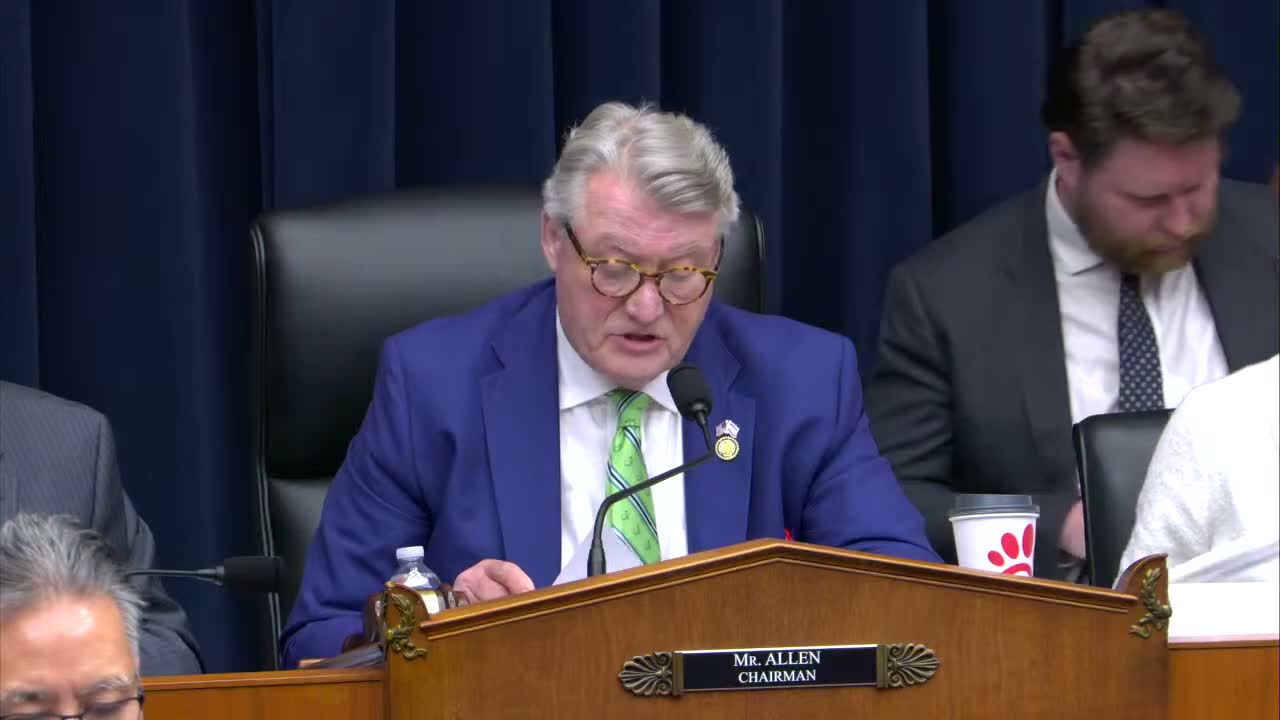
Summary
Witnesses and members debated whether defined contribution plans should offer guaranteed lifetime‑income choices, with industry witnesses reporting employer pilots and researchers urging strict guardrails and transparency to protect savers.
The House Education and Workforce subcommittee on Health, Employment, Labor, and Pensions heard testimony and questions on modernizing retirement plans so workers can convert 401(k) balances into predictable lifetime income. Chairman Allen said the hearing would focus on how retirees ‘‘draw down their defined contribution plan balances’’ and whether Congress should promote lifetime‑income options.
Witnesses described both the promise and the risks of expanding annuity‑style solutions inside employer plans. Surya Kullouri, head of the TIAA Institute, said defined contribution plans help workers accumulate savings but often ‘‘fall short in helping them convert them into a guaranteed income that lasts throughout their retirement,’’ calling that shortfall the ‘‘guarantee gap.’’ He urged Congress to encourage lifetime‑income products in qualified default investment alternatives and to require plans to offer a menu of qualified payout options accompanied by improved ‘‘longevity literacy’’ education.
Ken Levine, who leads global retirement strategy at RTX, described his company’s 401(k) default ‘‘lifetime income strategy,’’ introduced in 2012, as a model for employers. Levine said the option ‘‘does not require annuitization’’ and keeps assets in the participant’s account while embedding an insurance guarantee that steps in if the account is depleted. He told the committee limited awareness, perceived fiduciary risk and misperceptions about complexity explain why few plan sponsors have adopted similar approaches.
Dr. Nari Rhee of the UC Berkeley Labor Center urged caution. She noted wide disparities in retirement savings—median working‑age balances of roughly $8,000 and about $20,000 for people approaching retirement—and said ‘‘any move to expand the use of annuities as a default investment must include strong guardrails to protect employees’ hard‑earned savings.’’ She recommended clear disclosure, actuarial fairness, insurer quality standards and strong fiduciary duties.
Industry representative Wayne Chopas of the Insured Retirement Institute argued annuities can close gaps by hedging longevity and market risk and by providing predictable monthly income. ‘‘Annuities insure against the risk of outliving your savings,’’ he said, adding that expanding access to lifetime income options could reduce consumer anxiety about retirement.
Members probed practical details: how a lifetime‑income default would operate, fee levels and net returns, how many households would have sufficient balances to consider annuitization, and the potential litigation risk for plan sponsors that offer products with higher fees. Witnesses and members repeatedly emphasized choice—several witnesses described solutions that allow participants to opt out or retain account control rather than being forced into irreversible annuitization.
The committee did not take formal action or votes. Members on both sides called for bipartisan work on protections and on measures—ranging from clearer Department of Labor guidance to possible statutory changes—to encourage retirement income options while safeguarding participants. The hearing record was left open for 14 days for additional written statements and materials.