Lifetime Citizen Portal Access — AI Briefings, Alerts & Unlimited Follows
Ethics commission pauses decision after heavy public opposition to letting supervisors approve behested‑payment waivers
Loading...
Summary
After extensive public testimony, the San Francisco Ethics Commission declined to vote on proposed legislation that would let the Board of Supervisors grant behested‑payment waivers to its own members, instead continuing the item to a later meeting for a full commission vote.
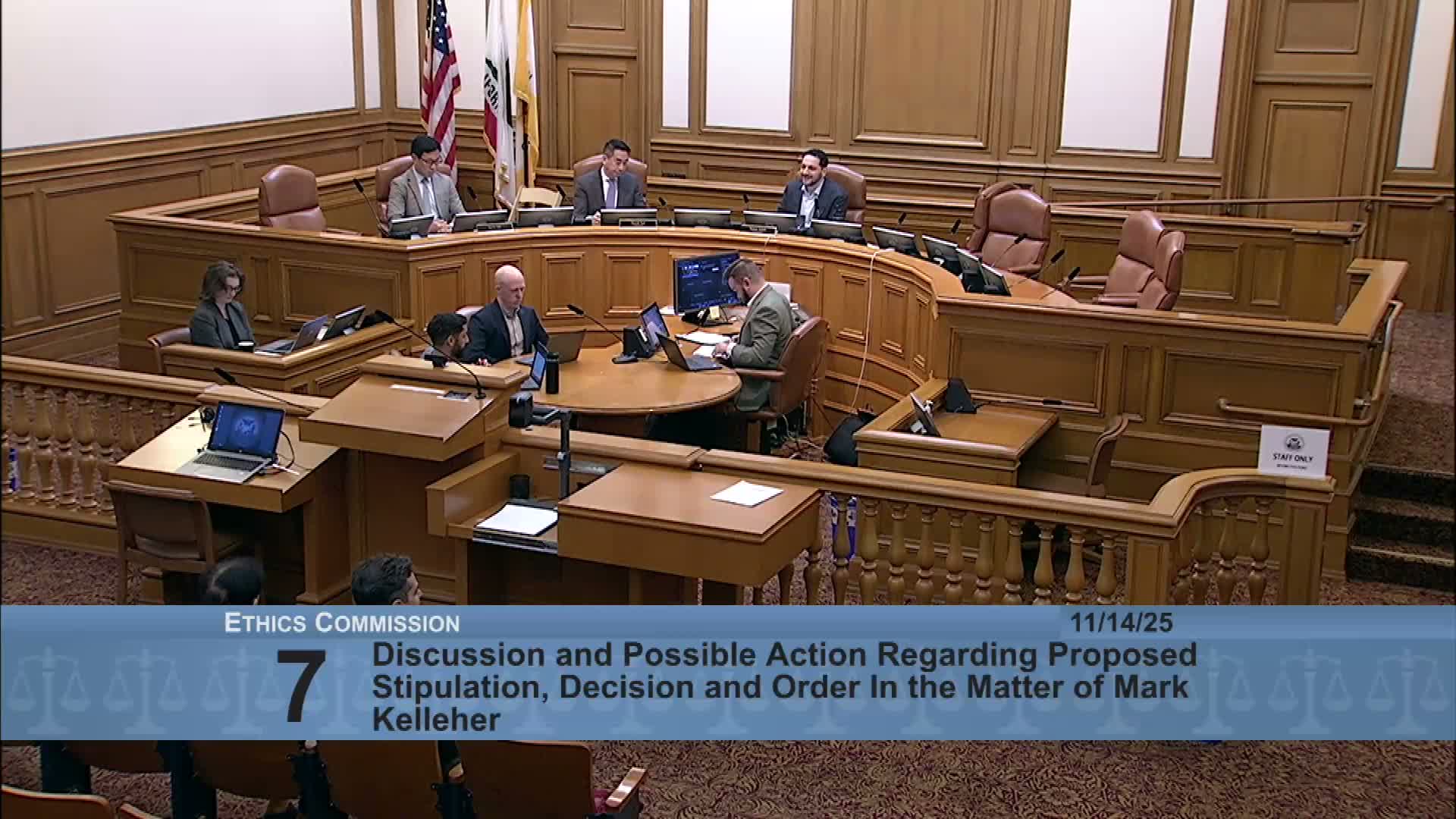
The San Francisco Ethics Commission on Nov. 14 continued deliberation on an ordinance that would let the Board of Supervisors grant behested‑payment waivers to its own members, following hours of staff briefing, sponsor remarks and largely critical public comment.
Commission staff described the ordinance, introduced by Board President Rafael Mandelmann, as a change that would allow supervisors the same waiver route available to other city officers and departments while leaving in place the procedural safeguards — public resolutions, a majority vote by supervisors and required documentation — that currently accompany such waivers. Staff recommended clarifying edits to the chapter heading and additional specificity about which positions would be covered.
Board President Rafael Mandelmann said supervisors often work closest to constituents and community nonprofits and cited examples such as support for LGBTQ services and emergency needs, arguing the change would grant parity with other officials who can already seek waivers. "Waivers give officials the clarity and confidence they need to make appropriate and reportable asks rather than worrying about inadvertently crossing a line," Mandelmann said.
Public commenters urged the commission to reject the proposal. Speakers from California Clean Money Campaign, California Common Cause, Indivisible San Francisco and multiple residents said the change would undercut Proposition E (2022), which extended a prohibition on soliciting donations from interested parties to supervisors, and would reopen opportunities for "pay‑to‑play" influence. "This would open the door to corruption," one commenter said, urging the commission to vote no on item 8.
Commissioners probed practical questions, including why some prior waivers appeared non‑specific and how accountability would be enforced. City Attorney staff and commission legal counsel clarified that, under the commission’s rules, any amendment to local ethics rules requires approval by a majority of all commission members; with three of five members present, that would require a unanimous vote to pass today. Given public concern and the quorum issue, a motion was made to require a full commission vote and the item was continued to a future meeting for further consideration.
What happens next: The commission plans to revisit the ordinance at a later meeting with fuller attendance to allow more deliberation and possible edits addressing transparency and specificity concerns. The record includes dozens of written and oral public comments opposing the change.
Sources: Staff presentation and memo; remarks by Board President Rafael Mandelmann; more than a dozen public commenters and telephone callers during the Nov. 14 hearing.