DPH outlines 200+ new beds, client-flow fixes and Prop 1 plan in behavioral health update
Loading...
Summary
Department of Public Health staff told the Health Commission the city has added more than 200 behavioral-health beds, is piloting new lower‑barrier sites and is expanding medication and contingency-management programs; a Prop 1 integrated plan draft is due to the state by March 31, 2026.
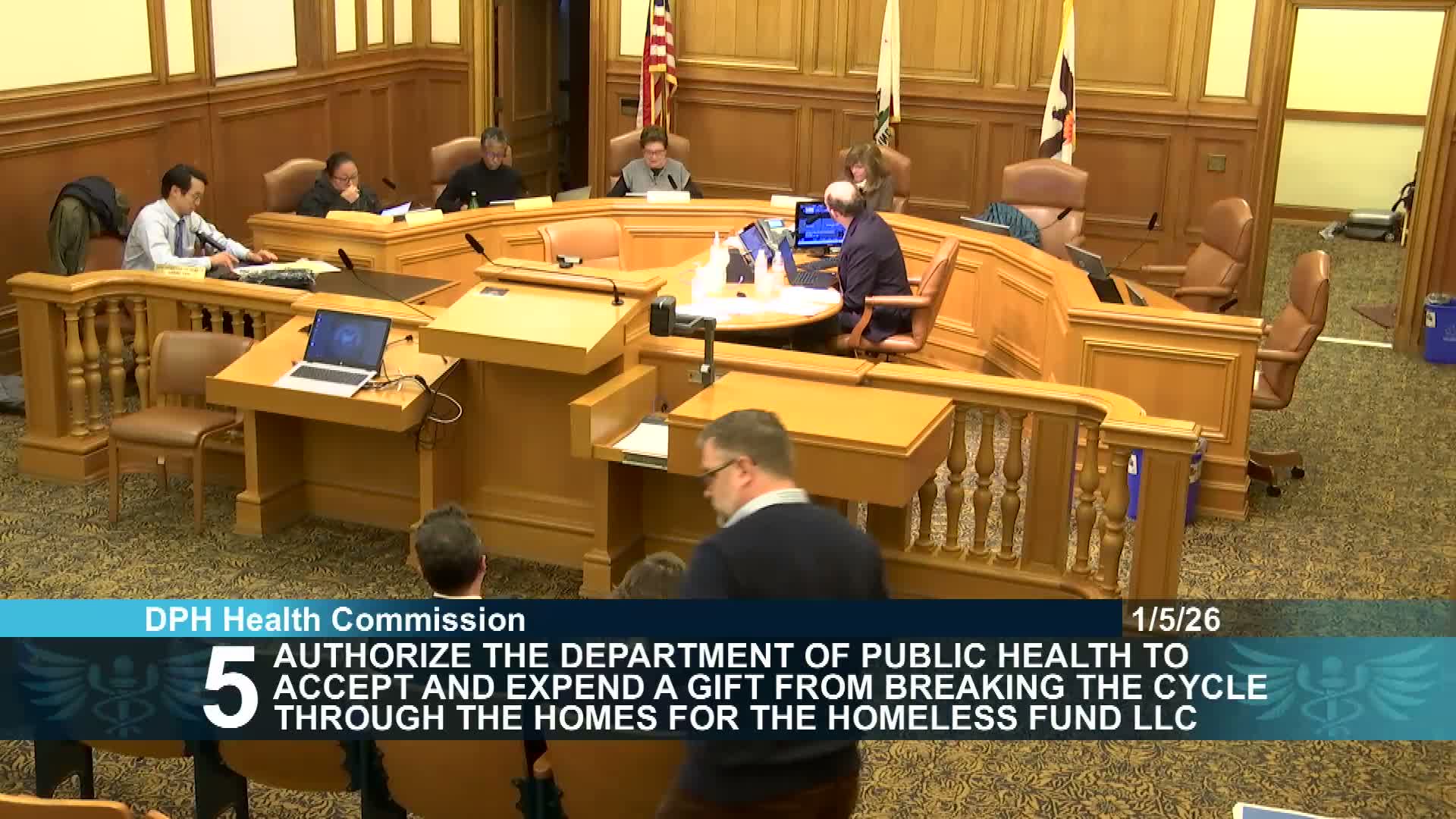
The San Francisco Department of Public Health on Jan. 5 told the Health Commission it has added more than 200 residential and stabilization beds across multiple programs, is rolling out pilots to improve client flow from street contacts into care, and is implementing state-driven reforms under Proposition 1.
Director of Behavioral Health Services Dr. Cunnins summarized recent openings and performance indicators, saying, "we have been able to add more than 200 beds or residential care and treatment across key programmatic areas," and that staff will provide a bed-inventory memorandum for commissioners to review. She framed the expansions as part of a broader effort to strengthen the city's continuum of care amid a continuing behavioral health and homelessness crisis.
Why it matters: Commissioners and staff said the additions and operations work aim to reduce overdose deaths, improve retention in medication-based treatment, and close racial disparities in outcomes. Cunnins noted the department's strategy pairs immediate site-level operational changes with systemwide investments in data and technology to track capacity and transitions.
Key program details presented
- 822 Geary stabilization unit: capacity for 16 clients, 543 admissions from early May through November and an average length of stay of about 23 hours (the program bills Medi-Cal for up to 24 hours under crisis licensing). Most referrals come from the Street Crisis Intervention Response Team.
- Wells Place / Marina Inn recovery housing: 41 admissions since September, capacity for 68 residents, a phased ramp-up with early average stays near 74 days and plans to reach full capacity in the coming months.
- Eleanor Fagan stabilization center (Keene Hotel): run by Westside Community Services, 79 admissions since August with roughly 40 clients currently active; early average length of stay reported around 62 days.
- Golf Cabins: a 70-cabin, low-barrier stabilization shelter that provides on-site clinical services; initial referral patterns include legacy and newly referred clients and staff will continue monitoring effectiveness.
- Client flow initiative: the department described a three-pronged approach to improve street-to-care transitions—(1) strengthen street-health teams' knowledge of referral options, (2) standardize site-level operations for drop-in/drop-off points, and (3) upgrade data systems to present a single picture of available beds and services.
Overdose-response work and medication expansion
Cunnins said the city is on track to match 2024 overdose death figures (a reduction from 2023) and outlined strategies to expand buprenorphine and methadone access, increase retention (including contingency management), and extend methadone initiation into jails. She said the methadone client census exceeded 2,000 in late 2025 and the department is tracking retention improvements tied to new programs.
Community partnerships and equity focus
The department is expanding contingency-management programs (incentive-based approaches shown to reduce stimulant use) through community partners such as the Gubbio Project, the San Francisco AIDS Foundation and GLIDE Foundation; staff reported 283 clients enrolled in the most recent quarter, a 20% increase year over year. Cunnins also highlighted a Bayview-specific pilot with Code Tenderloin that linked 170 individuals to medication services in its first three months.
Prop 1 integrated plan and next steps
Cunnins said the Behavioral Health Services Act and Prop 1 require the department to submit an integrated plan covering behavioral health programs and staffing; she reported the department expects to deliver a draft to the state by 03/31/2026, incorporate state feedback, and submit a final plan by July 2026. The department will continue stakeholder engagement and return with additional outcome and evaluation data.
Commissioner questions focused on timelines, systematic collection of data on why people decline services and the department's plans to evaluate transitions from short-term stabilization to longer-term care. Cunnins said some data collection has begun at pilot sites and the department is seeking evaluators to analyze outcomes.