Get AI Briefings, Transcripts & Alerts on Local & National Government Meetings — Forever.
Berkeley County officials and residents urge faster, clearer kratom regulation after local overdoses
Summary
Local officials, health providers and people in recovery told a Berkeley County town hall that kratom and potent lab-made derivatives are widely sold in convenience and vape shops, have appeared in local overdose deaths and ER cases, and require stronger enforcement and clearer state law to close loopholes.
Berkeley County leaders, medical experts and people in recovery urged swift legislative and enforcement action after local health workers reported kratom’s growing presence in treatment settings and the coroner’s office linked the product to fatal overdoses.
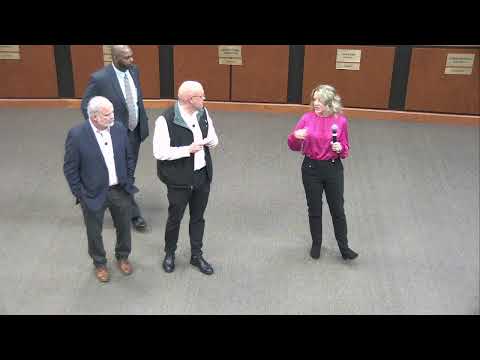
The town hall "Freedom in the Lowcountry," hosted by the Berkeley County coroner’s office, featured presentations from Sen. Brian Adams (Senate District 44), Rep. Mark Smith (House District 99), Coroner Darnell Hartwell, and medical and treatment professionals. Hartwell told the audience that the coroner’s office has recorded kratom in multiple fatal overdoses and motor‑vehicle crashes and spent roughly $475,000 on toxicology and autopsy testing last year; he said he will ask county council for an additional $100,000 for next year’s budget.
Why it matters: Presenters and audience members said current statutes and enforcement are not keeping pace with rapidly evolving synthetic derivatives of kratom. Panelists pointed to gaps in testing, data and statutory definitions that allow manufacturers to tweak formulas and continue sales unless laws are drafted to include derivatives.
Sen. Brian Adams said legislators must refine recently passed language because "the manufacturers figure out another way around it," and indicated he would work to fix wording in the coming year. Rep. Mark Smith framed the event as a "listening town hall" to help craft better bills at county and state levels.
Hartwell urged residents and families to push the General Assembly: "We can no longer claim we don't know," he said, adding that South Carolina has counties that already ban kratom and that Florida issued an emergency declaration in 2025 to stop sales. Panelists and attendees discussed pending bills to add kratom or its derivatives to controlled schedules and bills to clarify what constitutes a kratom product.
Panelists described enforcement challenges: many standard toxicology panels do not include kratom alkaloids, so law enforcement and courts often lack laboratory confirmation; Berkeley County is not participating in a state hospital toxicology partnership that some other counties use to collect nonfatal overdose data. Panelists urged residents to use the South Carolina Legislature app to identify their legislator, follow committee calendars and testify when bills are considered.
What panelists proposed or asked for: attendees were urged to document retail availability (product placement, age‑of‑sale compliance), support prevention funding, press legislators to avoid weakening amendments, and help mobilize turnout for committee hearings. Some speakers recommended amending statutes to explicitly cover synthetic derivatives of 7‑hydroxy mitragynine.
Next steps: There were no formal votes at the town hall. Legislators asked residents to provide contact information and attend or testify at committee meetings to support clarifying legislation; the coroner said he will request additional county funds for toxicology and outreach.
(Attributions: quotes and specific claims in this article are from town hall speakers listed in the speaker whitelist.)