Get email alerts on the Accounting Reconciliation topic
No spam. Unsubscribe anytime.
Waste Reduction District approves $17,199.50 accounting adjustment after software conversion discrepancy
Summary
The Monroe County Waste Reduction District board unanimously approved a $17,199.50 correcting entry on Jan. 8, 2026, to reconcile bookkeeping differences created during a conversion from the Harris to Lao accounting system; staff and the State Board of Accounts said no funds were missing.
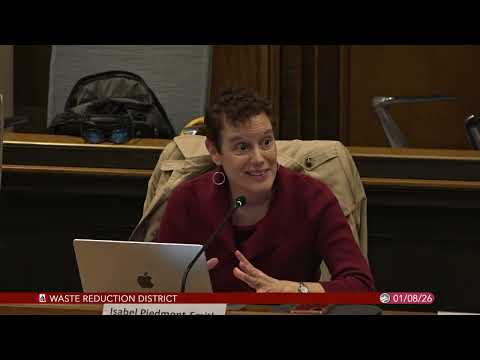
The Monroe County Waste Reduction District board voted unanimously Jan. 8 to retroactively approve accounting adjustment entries that correct recordkeeping discrepancies created during the district’s conversion from the Harris accounting system to Lao.
Staff reported the conversion initially produced an apparent discrepancy of roughly $48,000; most errors were identified and corrected through reconciliation and consultant review, leaving a remaining net adjustment of $17,199.50. The State Board of Accounts recommended making a correcting entry to clear the remaining discrepancy before year-end reconciliation, staff said.
Unidentified Speaker (S3), during discussion, sought to reassure the public: “This is not money missing. The money has always been there and will be there. It is about what the accounting system says is there, and that is wrong.” Board members repeatedly emphasized that monthly bank reconciliations have balanced and that the issue reflects bookkeeping entries, not lost funds.
Commissioner Thomas and other members said the discrepancy appears to have originated from historic entry errors in Harris that were carried over at conversion; the Lao system’s reconciliation features make recurrence less likely, staff said. Directors asked staff to review internal controls and bring recommended changes to the board if warranted.
The motion to approve the adjusting entries passed on a roll-call vote with affirmative votes recorded from Wilkes, Thomas, Pete Mount Smith (recorded in the transcript as "Piedmont Smith"), and Swofford. The board did not record any no votes, abstentions, or recusals on the motion.
The board’s action was administrative: staff made the correcting journal entry in Lao to remove the discrepancy and requested retroactive approval to begin the year without the imbalance. Staff said monthly reconciliation and consultant review show no unaccounted expenditures or missing receipts.
Next steps: staff will continue reconciliation and will present any proposed internal-control changes to the executive committee or board if they identify measures that would reduce the risk of future entry errors.
AI generated
The text on this page is AI generated. Summaries, highlights, analysis, and video transcripts are all produced from the original source material.
AI can make mistakes, so if you spot one, and we will fix it for everyone.
Note: the source content is unaltered by us. Any content source we link to, be it a video, an audio recording, or a document, is presented exactly as its publisher released it. That publisher is usually a government body, sometimes an individual official or another organisation.