
Brevard Commission asks staff to draft materials on residential PACE after mixed public testimony
Get AI-powered insights, summaries, and transcripts
Subscribe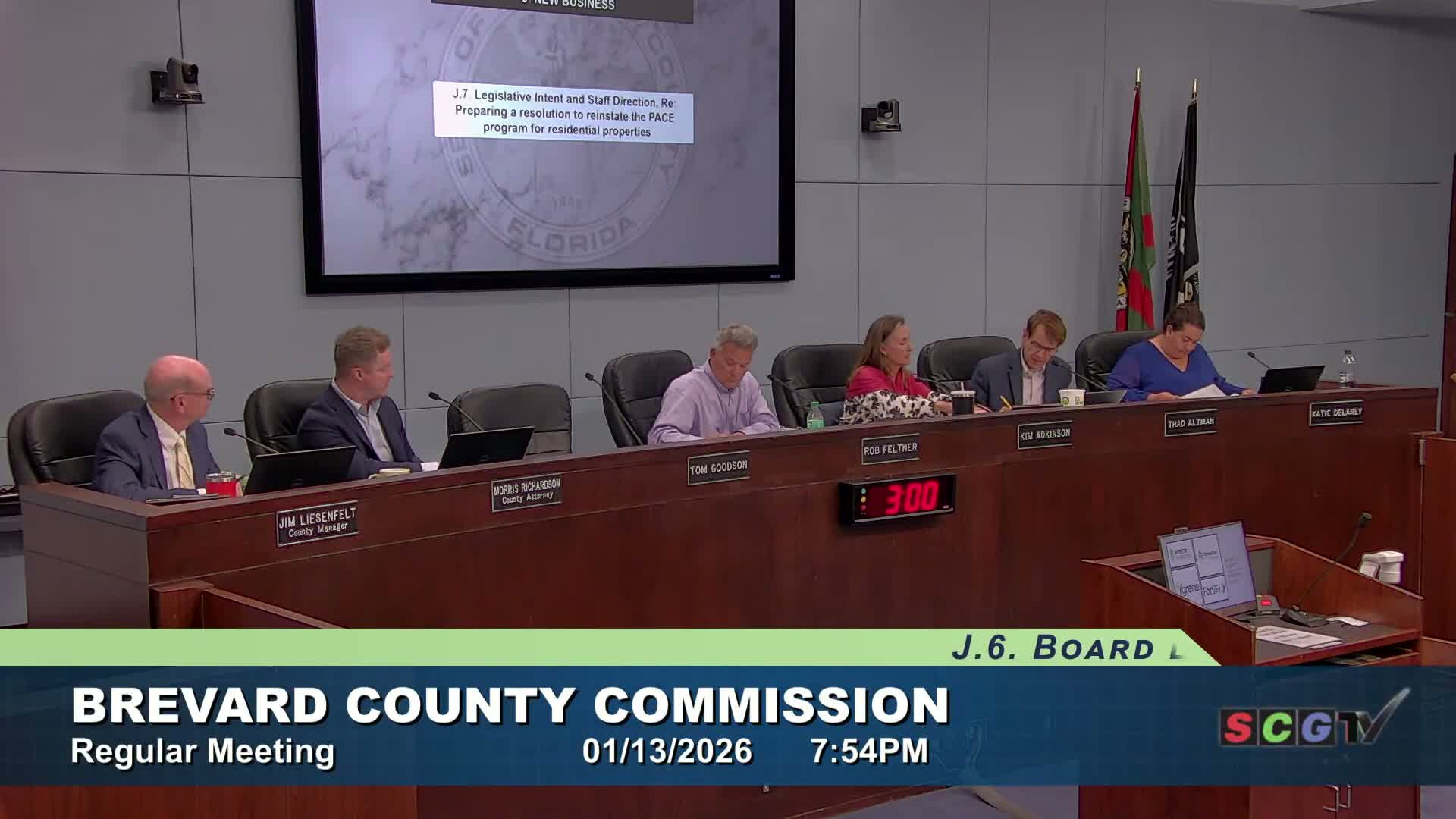
Summary
The board directed staff to prepare documentation and options for a possible residential PACE program, after hearing industry presentations on new 2024 protections and extensive public concern about past predatory practices and lien risks.
The Brevard County Board of County Commissioners directed staff to draft materials exploring whether to reestablish a residential Property Assessed Clean Energy (PACE) financing program in the county.
Industry representatives described statutory changes made in 2024 (SB 770) that they say add consumer protections: mandatory third‑party ability-to-pay verification, recorded application confirmations, contractor oversight, and other safeguards. "This is completely private capital," a PACE presenter said, adding that the program uses non‑taxpayer funds and can finance home improvements such as roofs, impact windows, and septic-to-sewer conversions.
Opponents and numerous residents urged caution. Witnesses and speakers raised past examples of alleged predatory conduct and warned that placing a lien on a homeowner’s property tax bill can lead to serious consequences for vulnerable households. "It puts a lien on your house — and if you fall behind, you risk losing your home," said Stell Bailey (speaker 14), reflecting public concerns voiced during the meeting.
What the board decided: By unanimous vote the board did not adopt a PACE program but instructed staff to prepare draft implementation materials, proposed local consumer protections, and examples from other counties to support a future deliberation. Commissioners emphasized they want stronger local safeguards in addition to the 2024 statutory changes before any final decision.
Details and consumer protections discussed: PACE providers present described an ability-to-pay test (annual payment not exceeding 10% of household income in the examples given), recorded phone calls confirming terms, contractor registration/oversight and the requirement to notify primary mortgage holders. Providers said typical assessment amounts average about $25,000 with minimums near $5,000 and that many improvements reduce insurance costs for homeowners.
Next steps: Staff and the county attorney will return with draft resolution language, options for local-level consumer protections (for example, strengthened disclosure on the tax bill, contractor registration, and reporting requirements), and any fiscal/legal implications for county offices (property appraiser, tax collector) before the board considers whether to reauthorize the program.