Consultants urge Moab to shift from 'bucket‑list' marketing to experience design to lengthen stays and protect the place

Moab branding workshop / findings presentation · January 14, 2026

Get AI-powered insights, summaries, and transcripts

Subscribe
AI-Generated Content: All content on this page was generated by AI to highlight key points from the meeting. For complete details and context, we recommend watching the full video. so we can fix them.

Summary

In a phase‑1 findings briefing, consultants recommended the Moab tourism office pivot from broad awareness advertising toward curated, longer stays, guided and shoulder‑season experiences, and a new visual identity to protect the destination's 'emotional equity.'

Moab — Consultants working on a multi‑phase branding project told local tourism stakeholders on Jan. 15 that the town should pivot from broad, bucket‑list marketing to a system of experience design intended to lengthen stays and reduce peak‑period strain.

Ben Peters, the project strategist, framed the recommendation this way: "The land isn't the backdrop. It is the main character," and the brand should be designed to protect that emotional connection rather than simply grow visitation. Peters said Moab's current marketing has produced vast awareness but has become insufficiently distinctive and, at times, too stern to be welcoming.

Why it matters: The consultants said research and social listening show strong demand for deeper, less rushed visits. They reported that "84% of people said guides and community members enhance their experience" and that about "90% of people" the team surveyed said they wished they had more time in Moab. Those findings, consultants said, point to a strategy that increases value per visit while dispersing impacts away from the busiest sites.

What the plan would do: The team recommended four principal levers. First, extend and deepen stays by promoting multi‑day itineraries (the consultants suggested shifting emphasis from 3‑day to 5‑day planning). Second, actively promote shoulder‑season programming and off‑peak timing. Third, expand guided and more accessible products so local guides and everyday workers become intentional brand delivery channels. Fourth, develop targeted experiences such as 'Moab after dark' (stargazing and evening programming) to add capacity without adding peak daytime pressure.

The consultants framed the shift as moving "from destination marketing to experience design," arguing that a coordinated system of messaging, itineraries, and on‑the‑ground guidance can both support local businesses and preserve what makes Moab distinctive. They added that online narratives and social media amplify what people think and do, creating opportunities to shape demand before visitors arrive.

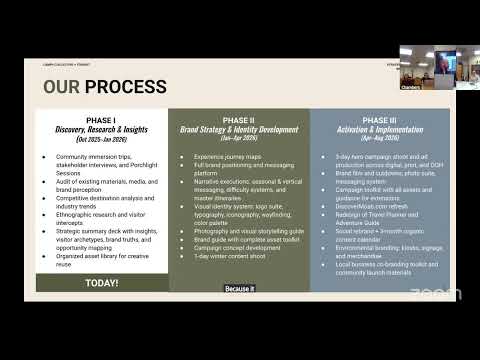
Deliverables and timing: The team described a multi‑workstream approach across phases 2 and 3: an owned brand platform (positioning, messaging and voice), a full visual identity system (logo, typography, color rules and asset toolkit), creative campaign concepts, and refreshed owned channels (website, travel planner, social content and kiosks). They said the next phases include a one‑day winter shoot for immediate assets and a three‑day spring shoot for campaign hero content; consultants indicated the work will unfold over several months (they referenced a 3–6 month horizon for coming phases).

Local reaction and next steps: Board members and partners pressed the team for more detail about specific deliverables and timelines; consultants said phase‑2 work includes internal assets and creative briefs before public ad buys and noted the team will return with a creative brief and asset schedule. A participant emphasized the economic stakes, urging that the work attract visitors who stay in hotels and spend locally rather than simply increasing overall foot traffic.

The meeting ended with the consultants and local stakeholders agreeing on next steps: refine the brand platform, complete the asset audit, conduct the planned shoots, and develop creative concepts tied to the audience archetypes introduced in the presentation. The board reconvened for follow‑on business at 3 p.m.