Get Full Government Meeting Transcripts, Videos, & Alerts Forever!
Get email alerts on the Open Data Chatbot topic
No spam. Unsubscribe anytime.
DBEDT, ETS debate statewide Open Data chatbot scope and pricing
Summary
At a task force meeting, DBEDT’s research-division representative pressed ETS on whether departments should build their own chatbots or use a statewide backend; ETS proposed a single indexed backend with department-specific front ends and said pricing models (named-user vs open-site usage) remain under evaluation.
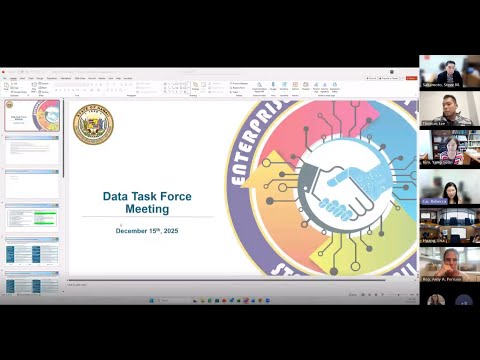
Representatives from the Department of Business, Economic Development & Tourism (DBEDT) and Enterprise Technology Services (ETS) discussed plans for a searchable Open Data website and a possible statewide chatbot at the Data & AI Task Force meeting.
Young Sun Kim, branch chief in DBEDT’s Research Division, said the division is considering a chatbot for its research pages and raised concerns about timing, cost and usefulness given rapid AI change. "They charge by usage," Kim said of vendor conversations, and she asked how departmental offices could use any statewide platform without incurring their own upfront costs.
ETS responded that the office is piloting a shared backend approach: all departmental datasets would be indexed once so individual departments could deploy their own front-end chatbots that query the same backend index. ETS said this model preserves consistent answers while letting departments tailor front-end experiences. The office outlined two common pricing approaches it is evaluating: named-user subscriptions for internal departmental users, and usage-based pricing for public-facing chatbots on the Open Data site.
ETS emphasized scope limits: the statewide effort would index only state Open Data datasets (for example, DOH, DOE, Judiciary open data), not general web content. The presenter warned of risks if each department built a separate, standalone chatbot: higher maintenance costs, inconsistent answers and greater long-term expense.
DBEDT asked whether the statewide platform could be available so departments could avoid duplicative upfront investment. ETS said it will share pilot results and invited DBEDT to collaborate on test scenarios; both sides requested a follow-up meeting to examine cost proposals and integration details.
Practical next steps: ETS proposed starting with Open Data indexing (public datasets) and piloting departmental use cases; more personalized, authenticated services (for example, casework for individual residents) would be treated as a later phase requiring security and privacy design.
Attribution: direct quotes and paraphrases above are taken from Young Sun Kim (DBEDT Research Division) and the ETS representative in the meeting transcript.