
County staff proposes LDC updates for recovery residences, façade standards and bonding
Get AI-powered insights, summaries, and transcripts
Subscribe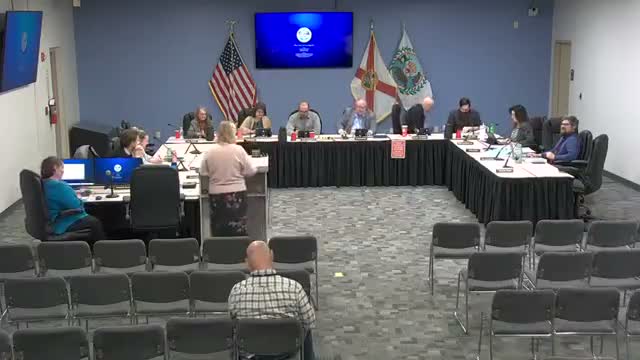
Summary
Staff presented an ordinance to align Citrus County’s Land Development Code with recent state law on certified recovery residences, to tighten façade/front‑door standards to prevent container‑siding 'front doors', remove a confusing replat step, and raise infrastructure bond minimums to 35% consistent with statute. Commissioners asked for compatibility safeguards for recovery residences in residential areas.
During the Jan. 15 Planning & Development Commission meeting staff presented a package of Land Development Code amendments intended to implement recent statutory changes and clean up several procedural issues.
The proposed ordinance adds a new section for "certified recovery residences" (the statutory successor to the colloquial term "halfway houses") and requires the county provide the statutorily required reasonable‑accommodation process. Staff emphasized that the amendments do not automatically change where recovery residences are allowed; they remain subject to conditional‑use review in residential districts so the board can evaluate compatibility and require residential appearance where appropriate.
Other changes include clarifying the LDC's "residential front door" standard so applicants cannot use shipping‑container siding or container doors as a façade treatment to masquerade commercial structures as houses. The ordinance also removes an obsolete "replat substantially similar to plat" process, which had caused confusion, and updates improvement agreement and bonding language to conform with state statute — raising the improvement bond minimum from 15% to 35% of construction cost estimates for unbuilt infrastructure when a developer bonds improvements.
Commissioners asked for clarity about how compatibility will be evaluated for recovery residences in MDR areas and whether a recovery residence proposed in an otherwise nonresidential institutional (PSI) area would be treated differently; staff replied compatibility and appearance standards will be considered during the conditional‑use review so the board and staff can require residential character as needed.
What happens next: the PDC recommended approval of the ordinance change (OA) and forwarded it to the Board of County Commissioners for final adoption; staff will publish updated code text and schedule the item for the BCC review.
Sources: Staff presentation and ordinance language at Jan. 15 PDC hearing.