Lifetime Citizen Portal Access — AI Briefings, Alerts & Unlimited Follows
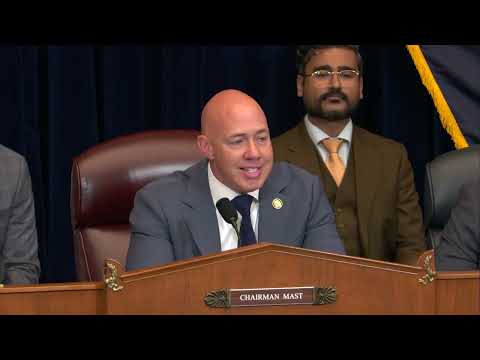
Chairman frames chip exports as national-security risk, introduces "AI Overwatch" concept
Loading...
Summary
The chairman of the House Foreign Affairs Committee said advanced AI chips are central to U.S. military advantage and described a bill, "AI Overwatch," to limit their use by the Chinese military and expand congressional oversight of sensitive chip exports.
The chairman of the House Foreign Affairs Committee opened a hearing by saying "winning the AI arms race is key to America's national security and our economic security," and argued advanced AI and the chips that power it directly affect U.S. military competitiveness with China.
He told the committee that artificial intelligence underpins military command and control, intelligence, surveillance, cyber operations, autonomous weapons and nuclear modernization, and warned that "AI dominance can decide who sees first, who decides first and who strikes first." He said the United States currently has an advantage in chips, cloud infrastructure and AI models but cautioned that the lead "cannot be taken for granted" as China seeks to catch up.
Pointing to U.S. export controls imposed in 2019, the chairman argued China cannot yet produce cutting-edge AI chips at scale and said that domestic yields are low compared with U.S. products. He singled out Nvidia's chips as especially capable and said, according to the transcript, that "if they were sold freely to the CCP, the CCP would likely overtake us in the AI arms race."
The chairman said he authored legislation called "AI Overwatch" that would "ensure our cutting edge AI chips cannot be used by the Chinese military," describing the proposal as modeled on existing foreign military sales guardrails. He urged that, as Congress exercises oversight of fighter-jet and missile sales, it should likewise retain a role in decisions about military-enabling chips.
The speaker also named private Chinese companies ("DeepSeek," Alibaba and Tencent) and asserted in the hearing record that some private purchasers can act as contractors for the Chinese Communist Party and that chip acquisitions could therefore bolster Chinese military capabilities. The transcript includes the speaker's phrasing that some sales "are buying it so they can take it from an American company" or to "make the Chinese military better than the United States military."
The hearing record also includes a reference to "Secretary of War Pete Hegseth" and a Department of War AI strategy; the transcript uses that wording. The committee record does not provide independent confirmation of that title or the department name.
No roll-call votes or formal committee actions on the bill are recorded in the provided transcript. The chairman framed the hearing as part of an ongoing effort to review the "AI stack" and to continue hearings and oversight work over the coming year.
The hearing closed with the chairman restating the purpose as developing an "AI acceleration strategy for America" and reiterating the need for congressional oversight of exports and technology that can shift military advantage.