
Allentown School District breaks ground on Family and Community Resource Center at Bridgeview Academy
Get AI-powered insights, summaries, and transcripts
Subscribe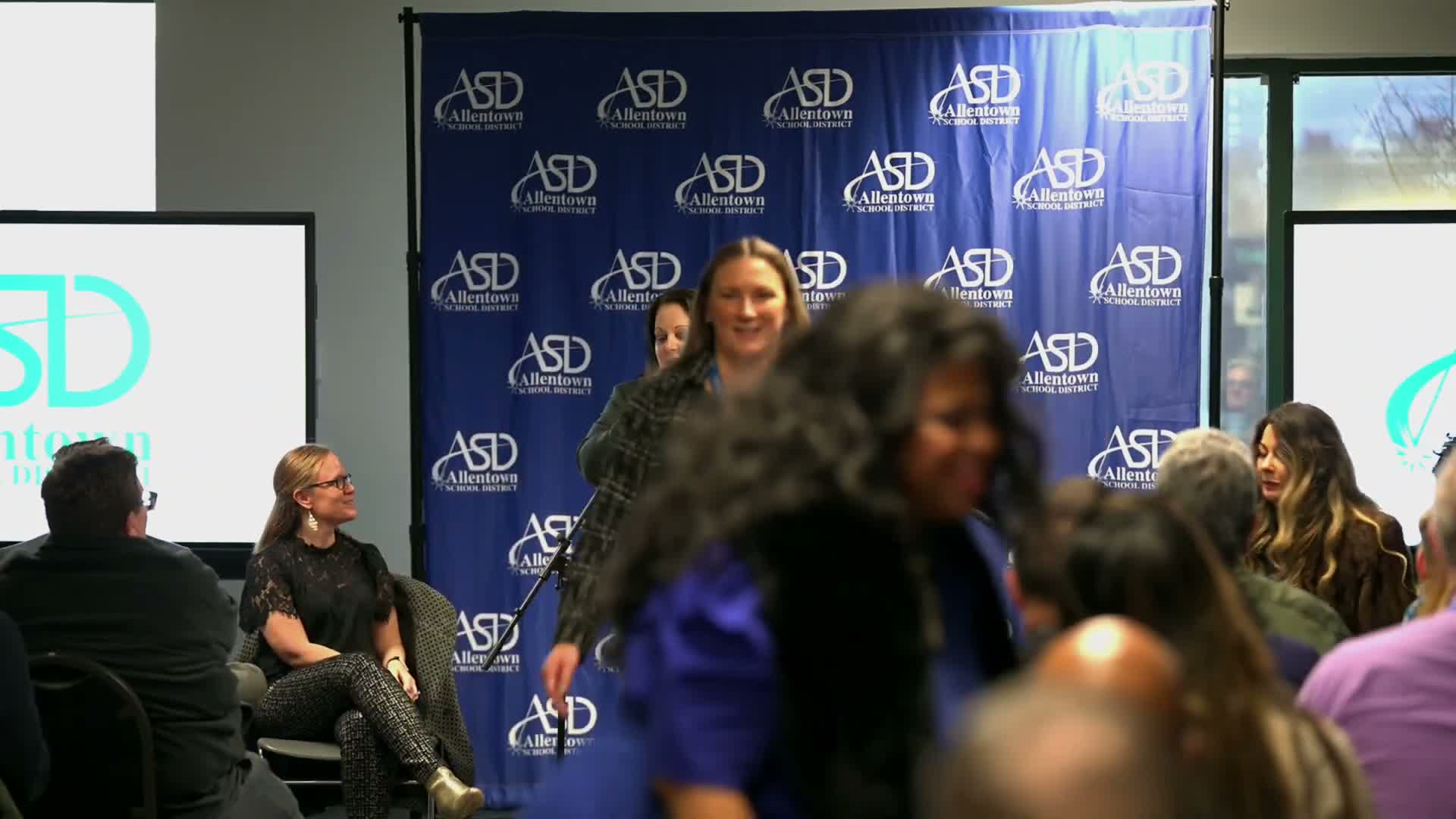
Summary
Allentown School District officials on Jan. 1 held a ceremonial groundbreaking for a Family and Community Resource Center at Bridgeview Academy, funded in part by a grant of more than $522,000 from the Pennsylvania Department of Community and Economic Development. District leaders said the project will be built in phases and include health services, ESL classes, workforce development and an eventual 6–12 school expansion.
Allentown School District leaders and community partners on Jan. 1 celebrated the ceremonial groundbreaking of a Family and Community Resource Center at Bridgeview Academy, a multi-phase project the district says will centralize enrollment, health services, workforce training and family supports.
Dr. Carol d Burks, superintendent and chief executive officer of the Allentown School District, opened the program by calling the project a community-owned effort. "This is our moment. This is our community," she said, repeatedly urging attendees to view the center as a shared resource for students and families.
District officials said the project will proceed in three phases. The first phase will establish the Family and Community Resource Center with administrative kiosks for registration, a separated health-care suite and flexible classrooms for English-language and workforce courses. The district also described a future phase that will add a 6–12 school on the same campus and a later multipurpose athletic center.
Dr. Burks said the district has secured "more than $522,000" to support the project and specifically thanked the Pennsylvania Department of Community and Economic Development for awarding the grant. "We want more money from them," she added, noting that additional partners and funding will be needed to deliver the full program of services.
Sarupa Samant, principal architect from DI Group, walked attendees through early design plans for the site, describing a "grand entrance," a distinct health suite, testing and clinic spaces, and a lower-floor area that can host training, ESL classes and community workshops. "I think this will provide the landmark that the community deserves," Samant said.
Michael Kelly of KCBA Architects presented renderings showing a refreshed street-facing façade and flexible lab and academic spaces. He said the district and architects expect additional design work and public engagement over the next year before starting the second phase of construction.
Elected officials and local leaders framed the center as both an educational and economic investment. Senator Nick Miller praised the centralized hub for families, describing it as "a centralized hub for services for our families" that could reduce barriers to health care and workforce training. Mayor Matt Turk said the project is part of a broader city "second act," and County Executive Josh Siegel called it an example of partnership-driven investment in students and neighborhoods.
Students and parents offered personal testimony about the need for coordinated services. Amelani Lorenzo, a tenth grader at Bridgeview Academy, said the center represents a physical step in the school’s transformation: "A Phoenix represents transformation and rebirth," she said. Parent members of the superintendent’s family advisory council told officials that having one welcoming place for enrollment, health care and social services will reduce the need for families to "run around" to multiple offices.
Organizers invited attendees outside after the program for a ceremonial shovel-turning to mark the start of work. District leaders said community partners, health providers and workforce development organizations will be asked to co-create programming as the project moves from design into construction.
Timeline and next steps: district staff and the architects said design and community engagement work will continue in the coming months; the district expects to begin the second phase of construction in roughly a year, with program rollouts to follow as funding and partner agreements are finalized.