Get Full Government Meeting Transcripts, Videos, & Alerts Forever!
Get email alerts on the Education Reading topic
No spam. Unsubscribe anytime.
Haskell School Board hears progress-monitoring report showing reading gains as district adopts stricter statistical standard
Summary
Superintendent Whitney told the Haskell School Board that the district saw statistically significant reading gains in 2024–25 — including an almost 6% STAAR proficiency increase and large kindergarten gains — and noted the district is applying a stricter statistical-significance threshold than the board originally approved.
Superintendent Whitney told the Haskell School Board the district recorded statistically significant reading gains in 2024–25 and that the district has moved to a stricter statistical-significance standard for judging progress.
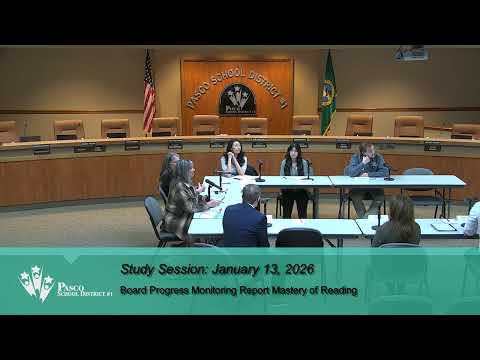
The report, presented during a study session, focused on the board’s reading goal and the district’s Board Progress Monitoring Reports. Whitney said the percentage of third graders meeting the STAAR standard increased by "almost 6%" year over year from 2024 to 2025, and that the district is seeing multi-year improvement with a four‑year high in 2025. "We are actually holding ourselves to a higher standard than what the board approved in this particular report," Whitney said, describing the district’s decision to apply industry-standard statistical tests rather than the lower 'standard error' threshold the board initially discussed.
Why it matters: board members have required measurable growth tied to the district’s strategic plan and the superintendent evaluation. The district says adopting a statistical-significance test reduces the risk of treating random year‑to‑year fluctuations as real progress, but staff acknowledged it is a more aggressive bar and may undercount meaningful gains for some students.
Key findings and numbers
- Third-grade STAAR proficiency: Whitney described an "almost 6%" increase from 2024 to 2025 and characterized that change as statistically significant under the district’s chosen tests.
- Curriculum-aligned assessments: Staff reported statistically significant gains across most grade levels on the adopted early and end-of-year curriculum assessments; kindergarten showed the largest proportional gain (reported as 31.4%). District presenters said just over 950 students across K–5 gained proficiency on those measures.
- Movement out of emergency level: The district reported significant movement out of the lowest ('emergency') literacy tier for most cohorts. Whitney said roughly 1,600 students moved out of the emergency level in grades K–5; separate STAR comparisons cited a 578-student count for K–8 movement out of emergency.
- High growth vs. statistical threshold: District staff explained some grade cohorts met the district’s expected high-growth targets (defined as more than a year’s growth) even when the change did not exceed the stricter statistical-significance threshold. "This is a more aggressive or a very aggressive approach and really more aggressive than what you asked us for or what you approved," Whitney told the board.
- Pre-K participation: Whitney said preschool participation correlates with higher proficiency; roughly 39% of current K–5 students had attended Pre-K and 47% of incoming 2025 kindergarteners had attended Pre-K, the highest share the district has reported to date.
Implementation and context
District staff tied the improvements to implementation fidelity for the American Reading Company (ARC) core materials and the district’s multi‑tiered system of support (MTSS), which provides increasingly intensive, small‑group interventions. Carla (assistant superintendent, listed in the record as "Carla" or inconsistently as "Carlo") and Executive Director of Technology and Information Systems Mark Garrett were present to field technical questions about data sources and visualization.
Board members asked for clarifications about "expected growth" (presenters said expected growth is based on assessment norming studies and national comparison groups) and about alpha levels and test selection; staff agreed to follow up with additional technical details.
Process and next steps
Whitney reminded the board that these progress-monitoring reports feed into the superintendent evaluation required by board policy 16‑30 and said a midyear evaluation is scheduled for February with a final evaluation due by June. The district plans further refinements to reporting and will present additional data (an "algebra" report referenced in the record) later in the month.
Quotations
"We are actually holding ourselves to a higher standard than what the board approved in this particular report," Superintendent Whitney said about the move to statistical‑significance testing. Whitney also framed the gains as material: "This isn't nothing, this is a really big deal," she said while summarizing district progress.
What the record does not show
The presentation did not include a formal vote or a board action item to change policy; the board did not take formal action during the study session. Several assessment names and some numeric details in the transcript were inconsistent (see audit). Staff committed to follow-up on technical parameters of the tests used (for example, alpha levels and which specific statistical test was applied) and on multi‑year comparisons for kindergarten cohorts.
The study session adjourned early and the board proceeded to its regular meeting.