Get Full Government Meeting Transcripts, Videos, & Alerts Forever!
Get email alerts on the Scam Prevention topic
No spam. Unsubscribe anytime.
FBI official warns scammers exploit panic; urges people to 'take a beat' before sending money
Summary
Rebecca Keithley of the FBI's financial crime section warned that scammers capitalize on fear and urgency, citing gift cards and cryptocurrency as preferred payment methods, and urged the public to pause and verify. She pointed listeners to fbi.gov/takeabeat for prevention resources.
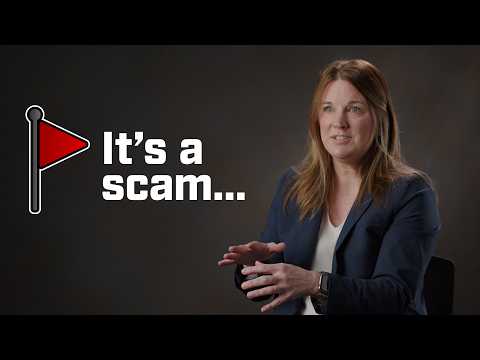
Rebecca Keithley, an assistant section chief in the Federal Bureau of Investigation's financial crime section, told listeners that "the scammers are capitalizing upon the victim's sense of panic," and that fear often pushes people to act without thinking.
Keithley said the number of victimizations and dollar losses "has grown exponentially" over the past five to seven years and described scamming as a globalized industry that has evolved from primarily U.S.-based actors to "transnational criminal enterprises." She said the most consistent warning signs are emotional triggers—especially urgency and secrecy—that aim to put people into an "autopilot" mode and prevent verification.
"Fear is probably the number 1 red flag," Keithley said, explaining that scammers exploit fear of missing out on investment opportunities, romance scams and threats of arrest to force quick, unverified payments. She described a typical manipulation: "You must act fast or else you will miss out" or "if you don't act now, we will arrest you."
Keithley highlighted unusual payment methods as another common scam marker. "What we consider to be unusual payment methods, that's a red flag," she said, naming gift cards, cryptocurrency and cash couriers. She warned that gift-card codes are effectively irreversible: "Once you have handed over that code into the scammer, the money's gone." She added that such methods "evade bank oversight" and enable near-instant cash transfers.
As an example, Keithley recounted an impostor scam in which a caller claiming to be from a third-party retailer said a victim's credit card had been declined and warned that the IRS would arrest her unless she bought gift cards and provided the codes. The victim complied out of fear despite not having made any purchase from that retailer.
Her practical advice was simple and repeated: if you spot a red flag, "take a beat, pause, breathe, put some distance between yourself and that interaction." She directed listeners seeking more information to the FBI's consumer-protection page at fbi.gov/takeabeat.
The briefing consisted of prevention guidance and examples; no formal policy action or vote was taken. The FBI resource is presented as the next step for people seeking detailed guidance and reporting instructions.