Get AI Briefings, Transcripts & Alerts on Local & National Government Meetings — Forever.
Counties and cities outline digital tools, inserts and mailers to demystify property taxes
Loading...
Summary
County association and multiple local government speakers described efforts to improve property-tax transparency — parcel lookup portals, mill-levy books, mailed inserts and utility-bill newsletters — and urged a coordinated interim subgroup to standardize what can be shown on tax statements.
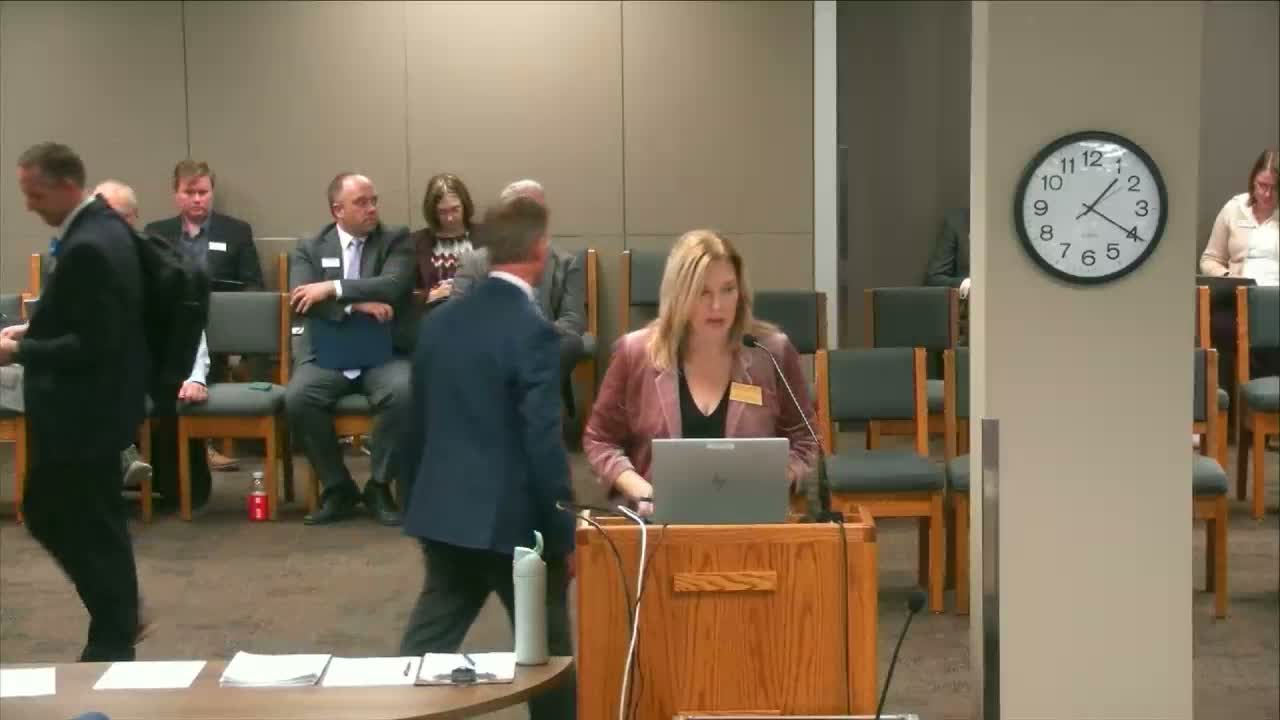
The Tax Reform Relief Advisory Committee heard multiple presentations about how counties and cities communicate property-tax information to residents and taxing districts.
A representative of the Association of Counties summarized county-level approaches: financial-transparency portals (OpenGov-type), property-tax lookup tools (Tyler/TaxWise portal), the recent shift to budget-hearing notices, and a mixed record on public engagement. The speaker said some counties discontinued expensive portals after finding low usage and suggested a multi-stakeholder interim subgroup to produce attainable, standardized changes to tax statements.
Williams County’s community engagement lead, Wendy (Wendy/Wendy Herriman as recorded) Herriman, described a coordinated county program that links TaxWise/iTAC parcel and billing data to an interactive parcel map, hosts downloadable historical budgets, and invests in staff (a mill-levy specialist and GIS analysts) to support parcel-level transparency. She said web discoverability and repeated, multi-channel outreach (social, radio, mail) are essential to getting information seen.
Matt Gardner of the North Dakota League of Cities and Jim Neubauer, Mandan’s city administrator, described city-level practices including municipal calendars, televised meetings, utility-bill newsletters (Mandan Messenger), and targeted inserts explaining project funding and how state grants reduce property assessments for local owners. Neubauer said turnout for budget hearings remains extremely low even after additional outreach, and that cities often insert contact information and explanatory graphics into valuation notices to reduce confusion.
Speakers emphasized trade-offs: adding pie charts or colored graphics to mailed tax statements costs money and printing capacity differs across jurisdictions; some counties lack color printers or staff to manage frequent changes. Several members urged exploring an opt-in digital-delivery option for tax statements while retaining paper copies for residents who need them. The association offered to host a subcommittee with auditors, clerks and technical staff to craft practical, cost-conscious changes for the next session.