Public split at Eugene hearing over proposed ban on exchanges in roadways
Loading...
Summary
Speakers at a public hearing were divided over a proposed Eugene ordinance that would restrict exchanges of goods or money between vehicle occupants and pedestrians on roadways; proponents emphasized safety and redirecting giving to service providers, opponents called it a de facto panhandling ban and warned of displacement and civil‑liberties concerns.
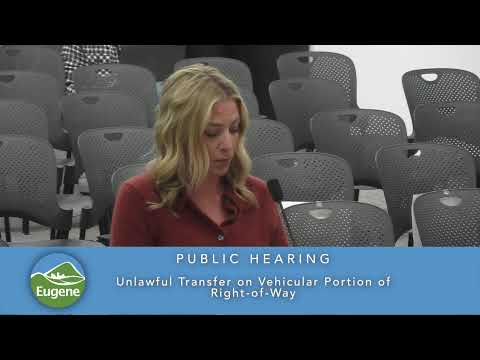
Eugene City Council heard public comment Jan. 20 on a proposed ordinance that would restrict the exchange of money or goods between vehicle occupants and pedestrians within the vehicular portion of the public right of way.
Opponents framed the proposal as a de facto panhandling ban that would criminalize or displace people who rely on roadside giving. "To be a ban on panhandling, the intent is to move people off of street corners by cutting off their source of funds," said one opponent, urging the council to consider where people would go instead.
Supporters, including local business and chamber representatives, said the ordinance is aimed at safety and should be paired with public education and stronger investment in outreach and housing. "These kinds of interactions place people in active traffic and create unpredictable, high‑risk situations," a resident who testified in support said, describing a personal incident in which a pedestrian struck his car window. Chamber representatives said they support the ordinance only if it is part of a broader strategy that includes public education campaigns, referral pathways to service providers, and funding for workforce and housing programs.
Speakers offering support recommended redirecting generosity toward trusted service providers and coupling any restriction with evaluation and outreach to ensure policies do not merely move visible homelessness into other areas. Business community witnesses outlined workforce programs and training partnerships they say have helped unhoused residents find employment and housing.
No council action was taken at the Jan. 20 hearing; the matter was taken under advisement following public testimony.