Get email alerts on the Basic Services Maps topic
No spam. Unsubscribe anytime.
Planning Board sets Feb. 5 public hearing on 2026 Basic Services Maps
Summary
The board scheduled an in-person public hearing for Feb. 5, 2026, at 5 p.m. to receive comments on the 2026 Basic Services Maps; Andrew Brown reported no water deficiencies, one sewer-deficient area and 11 deficient intersections for transportation.
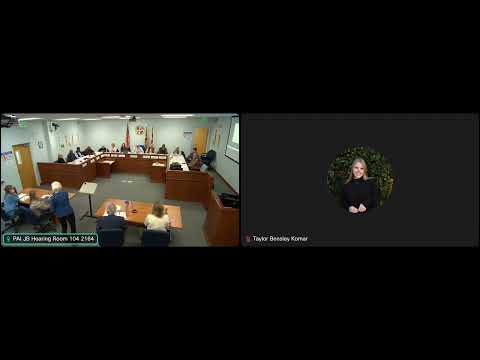
At the Jan. 15 meeting, Andrew Brown (Bureau of Engineering and Construction, Department of Public Works & Transportation) presented the draft 2026 Basic Services Maps, which identify county areas deficient in public water, sewer capacity or transportation intersection level of service.
Brown reported the water design section found no public water deficiencies for 2026, the sewer design section reported one deficient area (the same area reported the prior year) and indicated it was eliminating three areas of concern, and the Bureau of Traffic Engineering and Transportation Planning reported 11 deficient intersections that could control development (the same intersections reported the prior year).
The Planning Board voted to set an in-person public hearing under BCZR section 4A02.3.E for Thursday, Feb. 5, 2026 at 5:00 p.m. so the board can receive citizen comments on the 2026 Basic Services Maps. The board noted the hearing will provide an opportunity to present more detailed information on specific deficiencies and invited community input.
Next steps: DPWT will present detailed information at the public hearing; the Planning Board will consider recommended revisions to the maps and then forward recommendations to the County Council as required under the zoning regulations.
AI generated
The text on this page is AI generated. Summaries, highlights, analysis, and video transcripts are all produced from the original source material.
AI can make mistakes, so if you spot one, and we will fix it for everyone.
Note: the source content is unaltered by us. Any content source we link to, be it a video, an audio recording, or a document, is presented exactly as its publisher released it. That publisher is usually a government body, sometimes an individual official or another organisation.