Get Full Government Meeting Transcripts, Videos, & Alerts Forever!
Get email alerts on the Board Of Education topic
No spam. Unsubscribe anytime.
Superintendent urges Charter Review Commission to align vacancy language with state law, defends 4-year terms and nine-member board
Summary
At the Jan. 14 New Canaan Charter Review Commission meeting, the visiting superintendent recommended aligning the Board of Education vacancy language in the town charter with state statute (30 days), supported four‑year terms and a nine‑member board, and explained donation governance and typical annual gift levels.
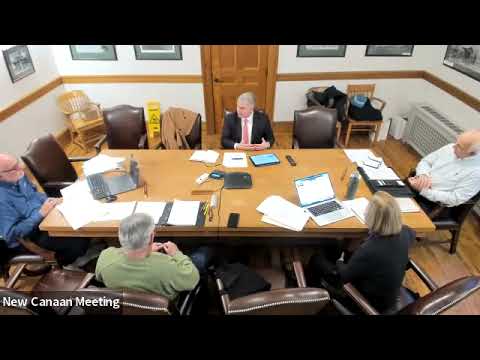
The New Canaan Charter Review Commission heard from the district superintendent at its Jan. 14 Group 1 meeting, where he recommended aligning the charter’s vacancy process with state law and defended the school board’s current structure and fundraising oversight.
Doctor Lutzky, identified in the meeting as the superintendent of schools, told commissioners that the charter “helps us to determine the terms of service, the elections, the frequency of the elections” and said a four‑year term for school board members and a nine‑member board have worked well for the district. “I think a 4 year term is appropriate,” he said, arguing that experience builds institutional capacity.
On vacancies, Doctor Lutzky flagged a discrepancy between local language and state law. He noted the charter’s provision (referred to in the transcript as “C 7‑4”) gives 90 days to fill a board vacancy but that state statute sets a 30‑day rule (transcript citation: “7‑107”). He recommended the commission align charter and bylaw language with the statute to avoid confusion and potential legal challenge, saying the 30‑day clock begins when a written resignation is received and acknowledged by the town clerk.
Members discussed practical steps and recent practice for filling vacancies; commissioners and counsel agreed aligning the charter to the 30‑day statutory timeframe would reduce ambiguity. The commission also discussed the mechanics of who may act if the board does not fill a vacancy within the statutory period.
Doctor Lutzky also described how donations and scholarships are handled. He said the New Canaan Scholarship Fund operates as an independent 501(c)(3) and works with the district; audit results go to the board for review. “We do receive $500,000–$600,000 give or take annually in donations depending upon sort of projects,” he said, noting roughly $200,000 of that typically comes from the All Sports Booster Club. He explained that donations above threshold amounts are presented to the Board of Education for approval, tracked in a dedicated donation fund, and included in the district audit.
The commission agreed to take up Lutzky’s suggested charter edits and to continue the appointed‑vs‑elected discussion at its next meeting; the group scheduled follow‑up for Jan. 20.