
HSH presents $785.6 million budget plan and flags federal funding uncertainty
Get AI-powered insights, summaries, and transcripts
Sign Up Free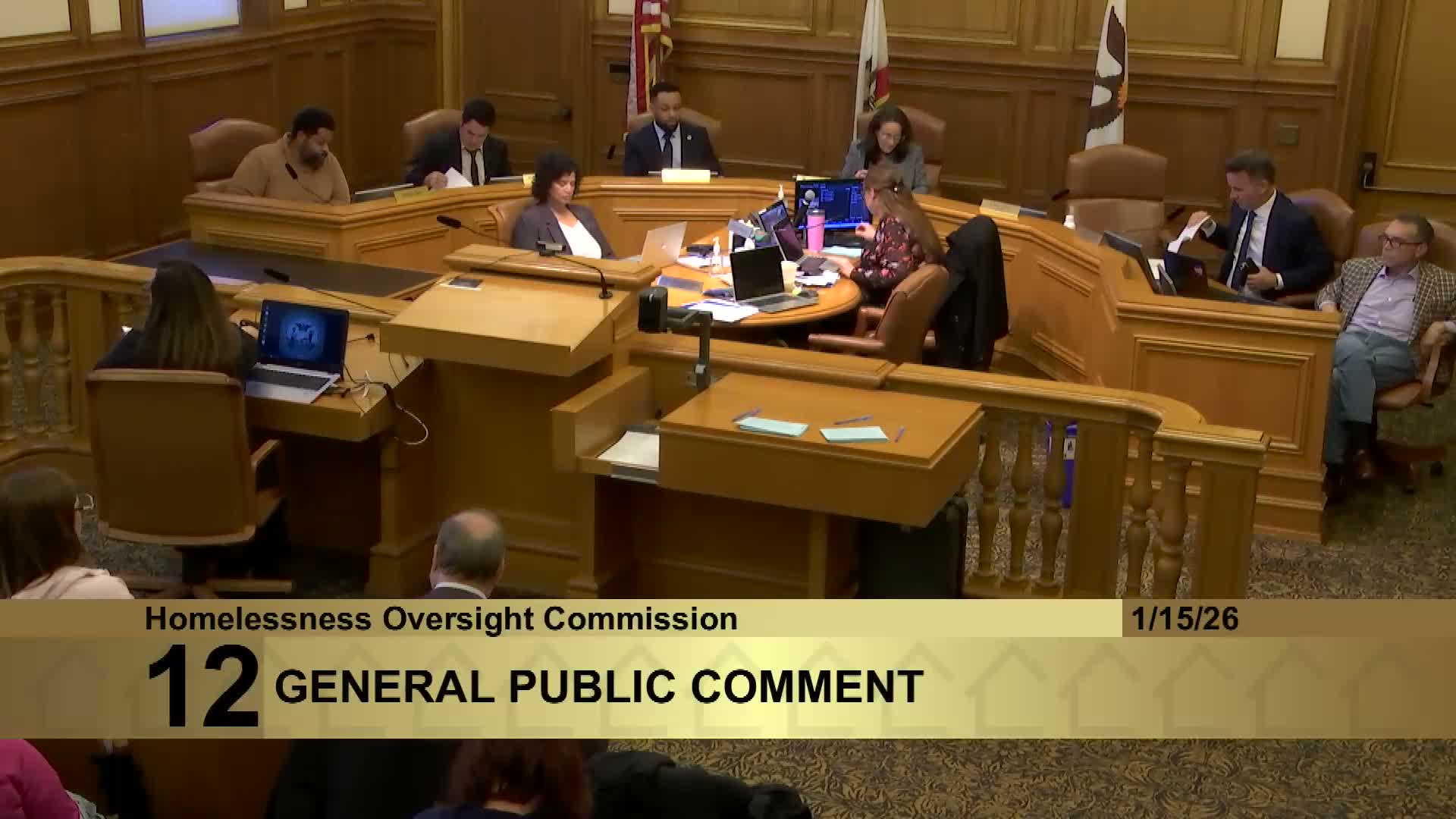
Summary
Deputy Director Gigi Whitley briefed the commission on the department's proposed $785.6 million budget, mayoral priorities, HUD NOFO-related risks, and a projected citywide $900 million general-fund shortfall over two years; commissioners asked about contingency plans and the fate of emergency housing vouchers.
Deputy Director and Chief of Finance Gigi Whitley told the Homeless Oversight Commission that the Department of Homelessness and Supportive Housing is preparing a proposed FY2025–26 budget submission to the mayor, describing both the calendar and the department's major funding lines.
Whitley said the department's current-year budget is $785,600,000 and that housing investments make up the largest share (about 54%), supporting more than 14,000 units in total. She outlined that the city has about $250 million in multi-year state grants being spent down over five years and that last year's budget included a $126,000,000 one-time appropriation from the Our City, Our Home fund. "It's projected to be more than $900,000,000 over the 2 year cycle," Whitley said, describing the city's structural general-fund challenge.
Whitley also flagged federal uncertainty: the U.S. Department of Housing and Urban Development reissued a NOFO after a preliminary injunction, and while renewal projects will generally not need to reapply, communities must ensure audits and grant materials are current. "Our HUD funding is a little over $50,000,000," she said, and the department is working with the City Attorney's Office and regional partners to limit disruption. Commissioners asked about funds at risk; Whitley said continuum-of-care funding is most exposed (about $56,000,000 annually) and that the department is preparing contingency plans and further engagement with the mayor's office.
Commissioners and public commenters pressed for protecting emergency housing vouchers set to end in October and urged the department to avoid using one-time funds for ongoing operations. Whitley said the budget includes $27,000,000 in one-time funds to bridge expiring emergency vouchers and described a continuing partnership with the city's housing authority to seek HUD waivers that would allow households to be slotted into project-based vouchers. She said major budget decisions and more-detailed program performance information will be shared with commissioners ahead of the February submission deadline and in a follow-up presentation before Feb. 23.
No formal budget approval occurred at this meeting; Whitley's presentation laid out the department's proposed submission timetable and opened a discussion about priorities and contingency planning.