Get Full Government Meeting Transcripts, Videos, & Alerts Forever!
Get email alerts on the Local Planning topic
No spam. Unsubscribe anytime.
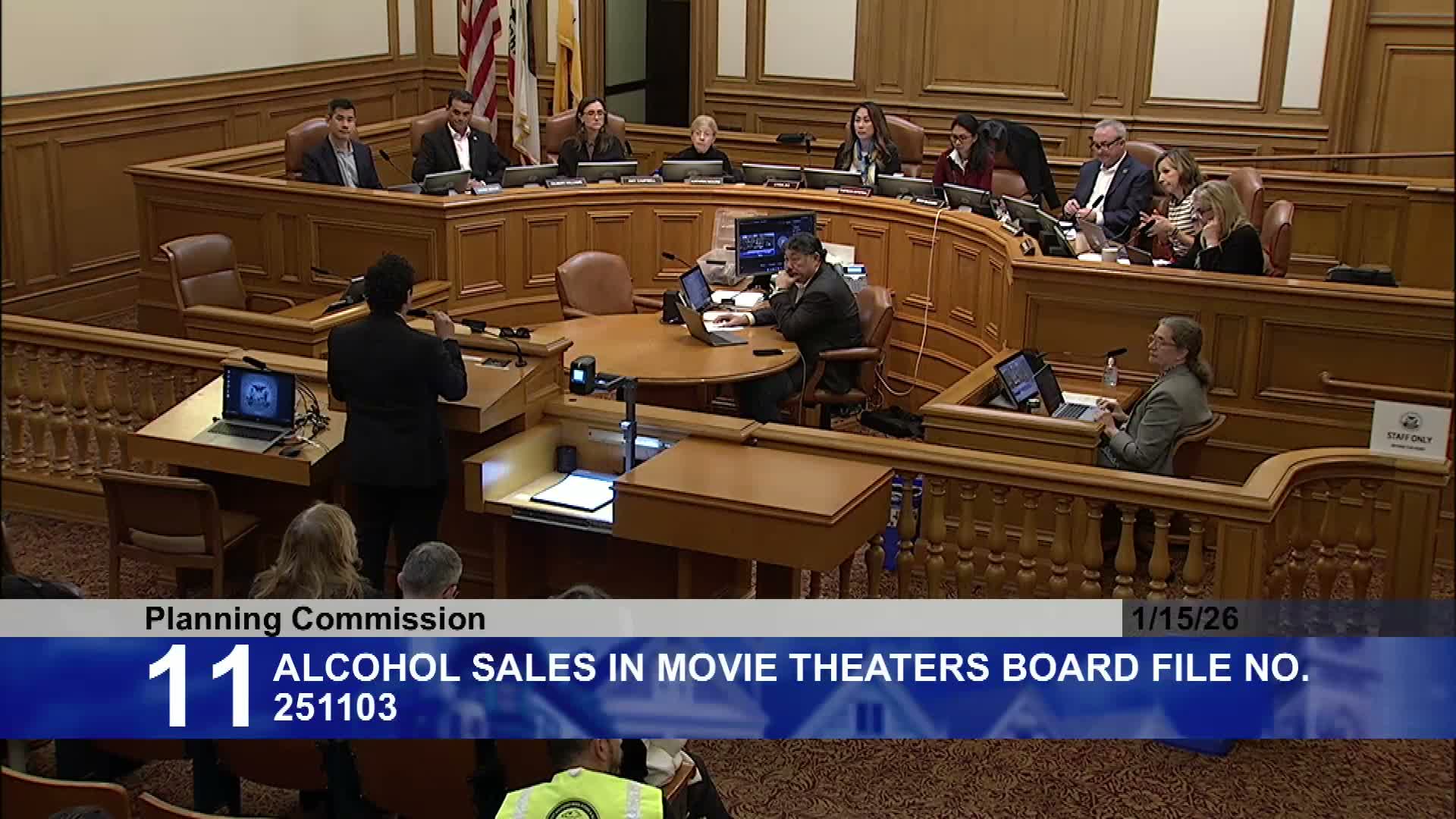
Planning Commission backs code change to let neighborhood theaters sell alcohol and broaden programming
Summary
The commission recommended approval of a planning-code amendment to allow on-site beer, wine and liquor sales at movie theaters as an incidental use and to ease local revenue thresholds that treated theaters like restaurants; a Fillmore-specific footnote allowing non‑ticketed patrons to buy drinks was added. The motion passed 7–0.
San Francisco’s Planning Commission voted unanimously Jan. 15 to recommend approval of a planning‑code amendment intended to make it easier for small, single‑screen and historic movie theaters to operate and diversify programming.
The ordinance, sponsored by Supervisor Sheryl and presented to the commission by Lorenzo Rosas, would change the planning code’s definition of “movie theater” so theaters are not automatically treated as restaurants — a classification that locally requires at least 51% of gross receipts to come from food sales prepared on-site. Rosas told the commission “movie theaters are an essential piece of our cultural fabric” and argued the change will help theaters survive shifting market conditions.
Planning staff described three recommended modifications: remove a fixed‑seating requirement, eliminate overly restrictive Upper Fillmore rules, and move several protections into a citywide movie‑theater definition while preserving existing alcohol‑restricted districts. Staff emphasized that the city’s 51% revenue test is a local threshold that differs from the state ABC test for a bona‑fide eating place.
Project sponsors and neighborhood groups said the changes are critical for neighborhood theaters’ financial viability. Cody Allen of the Upper Fillmore Revitalization Project called the Clay Theatre “the cornerstone of our neighborhood” and said allowing lobby access and more flexible programming will help the venue sustain operations and support nearby merchants.
Commissioners pressed staff on safeguards to prevent theaters from becoming nightclubs or large concert venues. Zoning Administrator Corey Teague said the proposed definition requires that a theater be “primarily designed and used for the presentation of films,” and staff said case‑by‑case review and conditions on approvals could address worst‑case scenarios.
The commission adopted the staff recommendations and added a Fillmore‑specific footnote to allow on‑site consumption by non‑ticketed patrons at the Clay Theatre in the Upper Fillmore Neighborhood Commercial District; the motion carried 7–0.
Next steps: The Board of Supervisors will take up the ordinance during the committee process, where further refinements and stakeholder input are expected.