Lifetime Citizen Portal Access — AI Briefings, Alerts & Unlimited Follows
Education Department proposes that workforce‑Pell recipients cannot receive concurrent Pell for other programs
Loading...
Summary
In negotiated rulemaking, Department of Education staff said proposed rules would bar students in eligible workforce programs from receiving Pell Grants concurrently for another Title IV program or program at another institution; committee members raised questions about consortium agreements, withdrawal timing and administrative implementation.
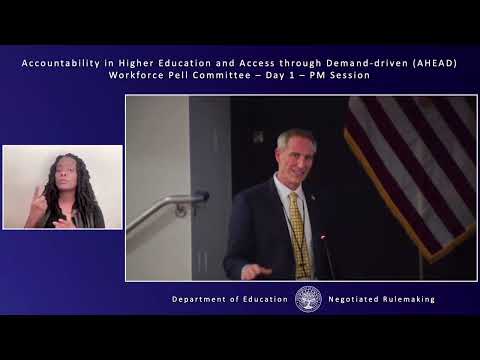
The U.S. Department of Education told its negotiated‑rulemaking committee that students enrolled in an eligible workforce program would not be able to receive a Federal Pell Grant at the same time for another Title IV program or for enrollment in a different program, even at the same institution.
Department staff said the change stems from statutory language and is intended to prevent double benefits. "A student is not entitled to concurrently receive a federal Pell Grant for enrollment in an eligible workforce program and any other educational program at the same or a different institution," the department read to the panel. The department said the institution and student would collaborate to determine which program receives Pell funding.
Committee members asked how the rule would work with existing consortium agreements and common cross‑institution arrangements. One committee member noted, for example, that many students enroll in a workforce program at one campus while pursuing an associate degree at another under consortium arrangements. Department staff responded that consortium arrangements may continue to allow credits from a host institution to apply to a home institution’s program for Pell purposes, but the student still cannot receive duplicate Pell disbursements; the school must choose which institution receives the funding.
Panelists also pressed how withdrawal and payment‑period sequencing affect eligibility. A Department Financial Student Aid colleague explained that if a student withdraws from a program they are no longer concurrently enrolled and may become eligible for Pell at a different institution; payment periods and modular scheduling may complicate timing but do not change the basic prohibition on concurrent awards. The department said it would provide subregulatory guidance to help institutions apply Satisfactory Academic Progress and configure short payment periods for these programs.
Next steps: the committee moved on to definitions and said agencies will return with guidance on complex operational issues such as consortiums and payment‑period configuration.