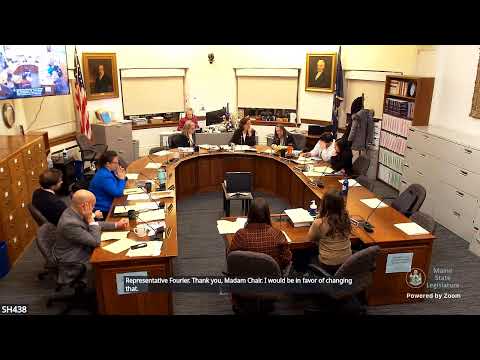
Lawmakers urged to approve emergency funding to avert public-defense payment crisis
Loading...
Summary
Sponsors and public-defense leaders told the judiciary committee that LD 2059 is an emergency appropriation to cover a $12M+ shortfall in assigned-counsel reimbursements and to fund a new Cumberland County public defender office; witnesses said failing to fund would reverse recent gains in reducing unrepresented defendants.
Senator Anne Carney presented LD 2059 as emergency legislation to provide funding for reimbursement of assigned counsel and to develop a Public Defender Office in Cumberland County. She told the committee the bill contains no statutory changes but is intended to sustain the Public Defender Service (PDS) through the remainder of the fiscal year.
Freyla Tarpenian, executive director of the Maine Commission on Public Defense Services, described a near-term cash-flow problem that would prevent PDS from paying vouchers in the fourth fiscal quarter if the supplemental appropriation is not approved. She said payments delayed until mid-summer would increase costs (late fees and interest), reduce assigned-counsel participation and risk returning the state to conditions that triggered prior litigation (Robins v. State of Maine). "If we do wait until July, the bills are gonna cost more and we're gonna waste money paying people late fees and interest," she said.
Tarpenian and other witnesses pointed to measurable progress under recent reforms: the unrepresented list fell from 1,053 cases in December 2024 to 252 in 2025, testimony showed, which supporters credited to rate increases and new public-defender offices. Witnesses argued the $13 million supplemental appropriation in the bill is necessary to keep that progress intact and to avoid immediate and predictable harms to clients and to attorneys who rely on regular payments.
Dozens of practitioners, public-defender leaders and advocates testified in favor, describing the human and system costs of payment delays: reduced attorney participation in appointed work, shuttered small firms that rely on vouchers, longer pretrial detention, coerced pleas and stalled cases. Supporters urged the committee to treat LD 2059 as an emergency funding measure to preserve ongoing services.
Committee members asked for additional detail on county allocations, case counts by district and PDSfinancial controls. Several witnesses and PDS staff promised to provide charts and follow-up material to help the committee assess where shortfalls are greatest and how the Cumberland County office build-out would be phased.
The public hearing on LD 2059 closed after broad support; the committee will consider the funding request and related PDS oversight language in upcoming committee business.