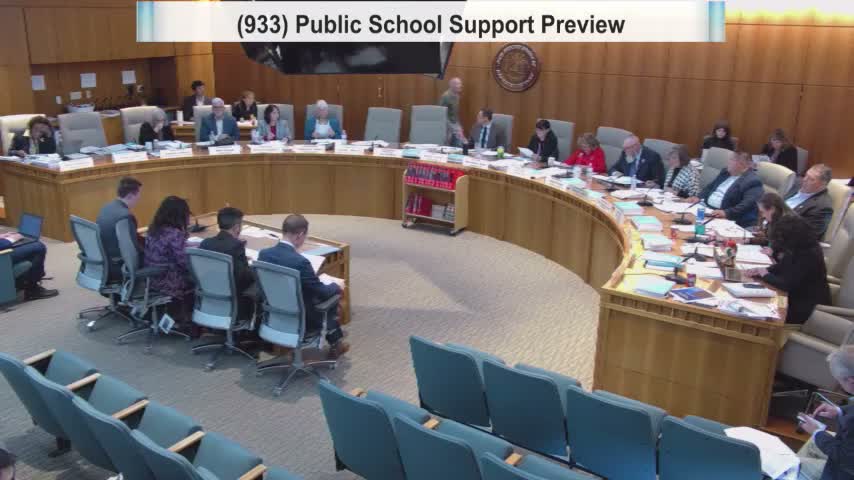
Legislators probe virtual‑school enrollment spike and calls for a temporary moratorium on new online schools
Loading...
Summary
The committee reviewed public school support budgets and debated language to pause new full‑time online schools while the department and staff investigate sudden virtual enrollment growth and unit‑value impacts; PED said it lacks full 40‑day reporting for key districts.
During the Appropriations & Finance Committee’s review of public school support, lawmakers focused intense attention on a sudden rise in full‑time virtual enrollment after private and district‑run online programs recruited students across district lines. Secretary Mariana Padilla told the committee PED is still collecting essential 40‑day membership reports from districts that have sought to reorganize and create online schools, and that data gaps complicate budget projections and unit‑value calculations.
"We are still collecting data and information from both of those school districts… we are still lacking, for sure, for one of them, even their fortieth day reporting," Secretary Padilla said when asked about reorganization requests from districts including Gallup and Santa Rosa. She and LESC/LFC staff described a supplemental request to address likely unit‑value and membership impacts but said the cost is still being estimated.
Staff and members outlined draft budget language (lines 6–8 in the packet) that would temporarily prohibit new full‑time online schools and change how virtual students count toward growth units and membership for one fiscal year while the legislature considers policy and budget guardrails. LESC staff summarized the intent as “to pump the brakes” on expansion so the state can determine a consistent policy and prevent sudden shifts in funding obligations.
Lawmakers also debated broader implementation and accountability for recent, large recurring investments in education — including structured literacy, CTE expansions and out‑of‑school time funding — and whether more reporting or statutory floors are needed now that more dollars are moving into the State Equalization Guarantee (SEG). Members pressed for better statewide student‑information reporting and for program evaluation to ensure funds reach intended students and outcomes.
No formal votes were taken on the moratorium language during the hearing. Panelists said further hearings and a senate finance session on virtual programs were expected within days and asked members to provide policy suggestions and guardrails for potential drafting.