
Committee hears broad support for state pilot to measure food insecurity after USDA survey cancellation
Get AI-powered insights, summaries, and transcripts
Subscribe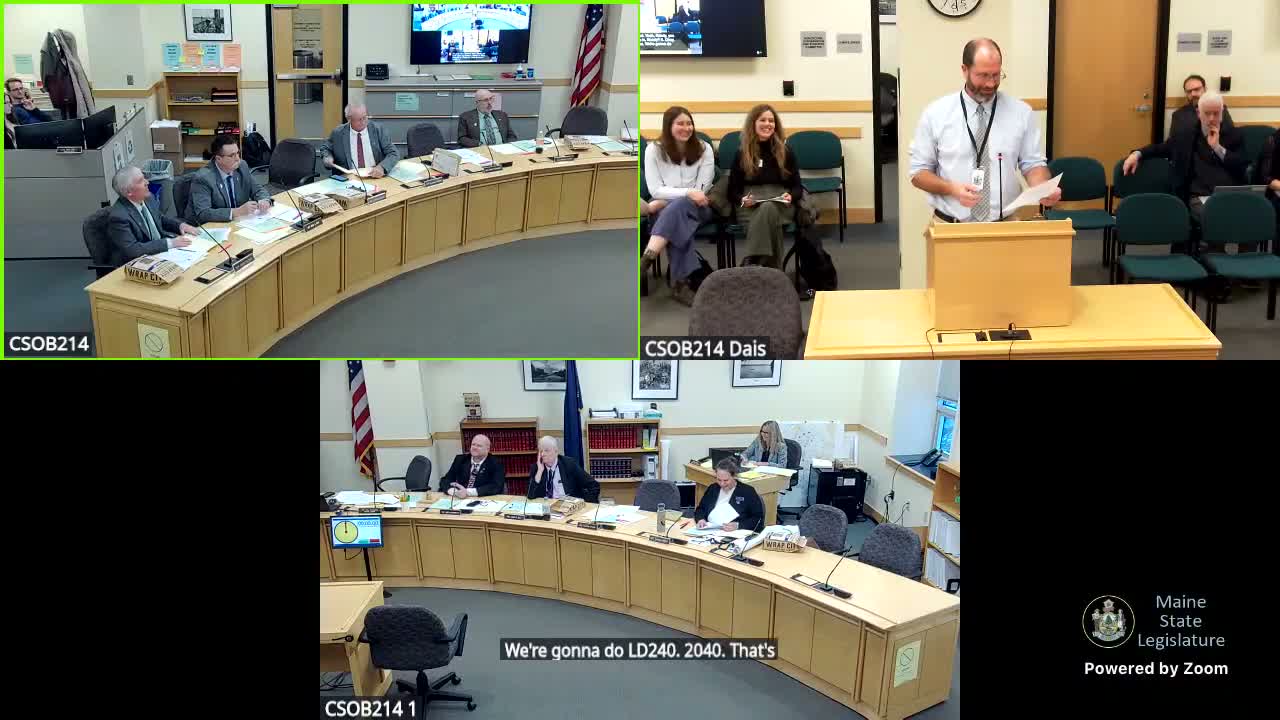
Summary
LD 2040 would establish a pilot, sunsetted in 2028, to measure food insecurity in Maine and produce disaggregated, timely data; nonprofits, advocates, state staff and policy experts testified the state must replace lost federal data to track progress toward ending hunger by 2030.
Representative Bill Plucker and a wide coalition of advocates urged the committee to support LD 2040, a pilot program to assess food insecurity across Maine.
Plucker said the pilot — which his amendment would sunset in 2028 and require a comprehensive review by January 2028 — directs the Commissioner of Agriculture, Conservation and Forestry to partner with outside agencies and to use the existing advisory committee to evaluate food insecurity by geography, age, income and veteran status while operating with designated funding to avoid an unfunded mandate.
Witnesses included Anna Corson (Full Plates Full Potential), Alex Carter (Maine Equal Justice), Sam Zuckerman (Permanent Commission on the Status of Wabanaki Peoples), Jen Burke (Maine Credit Union League), Annika Moore (Preble Street), Ken Shapiro (Apricot), Amy Stacy (Good Shepherd Food Bank), James Mile (Maine Center for Economic Policy) and Kristen Kinchla (Maine Children's Alliance). They told the committee the longstanding USDA Household Food Security report has been discontinued and that without comparable, timely state data policymakers and service providers would be "flying blind." Anna Corson said, "Without federal data, we will be flying blind," and multiple witnesses stressed the importance of disaggregated data for rural, tribal and child populations.
Testimony outlined the scale of need and disparity: witnesses cited that Maine has among the highest childhood food insecurity rates in New England and that rural counties like Aroostook face higher burdens. Several speakers also described a philanthropic partnership to seed a pilot survey and suggested a modest state contribution to establish the effort.
Committee members asked about staffing and funding burdens; the Governor's Office representative said they were assessing options and did not want to deplete Department of Agriculture resources. Witnesses urged robust sampling of veterans, seniors and other subgroups. The committee closed the hearing after multiple in‑room and online supporters testified and indicated work session follow‑up would be scheduled.