Lifetime Citizen Portal Access — AI Briefings, Alerts & Unlimited Follows
Maine public safety officials describe complaint, discipline and use-of-force review processes to oversight committee
Loading...
Summary
Department of Public Safety and Maine State Police described disciplinary pathways, MCJA complaint-review procedures and data on use-of-force reporting; officials recommended confidentiality for investigative hearings but said final agency actions are public and decertification follows MCJA rulings.
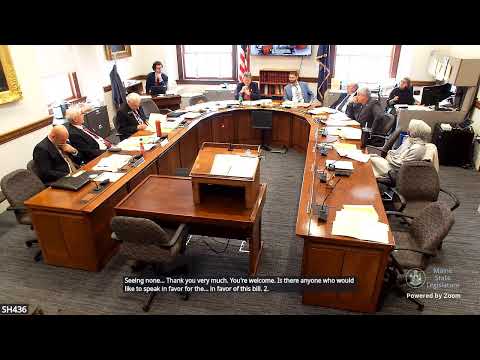
Commissioner of the Department of Public Safety and Maine State Police officials briefed the Criminal Justice and Public Safety Committee on how complaints and discipline are handled across DPS bureaus and on the state police’s internal Office of Professional Standards (OPS).
The department explained that complaints are handled either through HR-style investigations for some bureaus or, for law enforcement personnel, through a formal process that can involve the attorney general’s office and the Maine Criminal Justice Academy (MCJA) complaint review committee. Lieutenant Colonel Brian Scott described OPS intake and the pathway for use-of-force reviews: a trooper’s use-of-force report is routed to the immediate supervisor, then to the lieutenant, then to a training unit review and finally archived with OPS. Investigations that present probable cause proceed to formal personnel action. He said decertification (revocation of certification) is a possible outcome of MCJA final action and that revocation shows up on an officer’s statewide record.
Scott presented aggregate OPS data: over a recent six-year window OPS recorded 4 terminations, 3 demotions, 15 suspensions (163 suspension days total), 10 written reprimands and 6 corrective memos; in the same window the state police logged 1,217 use-of-force reports with 21 excessive-use complaints (about 1.7% of use-of-force reports) and 23,434 arrests (21 excessive-use complaints, about 0.09% of arrests). He described the archive and retention rules for disciplinary records and said the Maine State Police now concludes investigations even when an employee resigns or retires during an OPS probe so that findings can be forwarded to MCJA if needed.
Committee members pressed on what parts of the process are public. DPS officials said complaint-review hearings are confidential (executive session) while final agency actions are public unless under appeal. The commissioner described the “standards of conduct” expansion that allows MCJA to address professionalism and fitness for duty beyond strictly criminal allegations. Scott said the MCJA complaint-review committee includes civilian members, holds hearings and forwards recommendations to the board of trustees; the board may suspend or revoke a certificate.
On use-of-force the department said policy follows the U.S. Supreme Court’s Graham v. Connor totality-of-circumstances standard and MCJA model policies; the state police recently adopted a computerized BlueTeam reporting system and increased training and auditing capacity to identify issues before they escalate to OPS. The department said it will provide additional requested data — such as annual deadly-force review reports and audit examples — to the committee.
The committee did not take formal action at the briefing but requested follow-up materials on MCJA annual statistics, audits performed by OPS, and public-record channels for viewing final agency actions.