Get Full Government Meeting Transcripts, Videos, & Alerts Forever!
Get email alerts on the Budget Overview topic
No spam. Unsubscribe anytime.
Decatur proposes modestly larger FY25–26 budget, keeps millage rate unchanged
Summary
City Manager Andrea presented a proposed FY25–26 budget Thursday that would raise spending by just under 5% (about $2 million), preserve the tentative millage at 11.15 mills, and use roughly $1.5 million of fund balance while recommending a 2.5% merit increase for full‑time staff effective July.
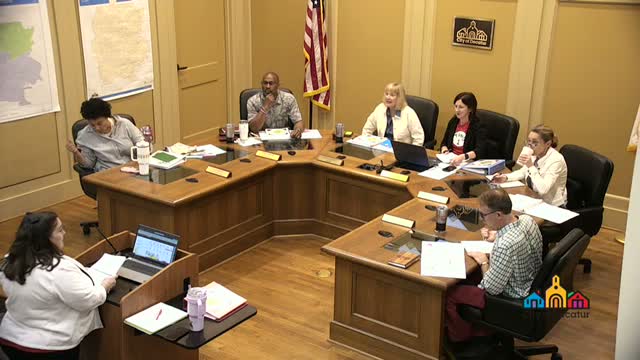
City Manager Andrea presented the City of Decatur’s proposed fiscal year 2025–26 budget, telling commissioners the plan balances the city’s strategic priorities while remaining within its financial policies.
“Decatur will foster an equitable, thriving, and welcoming community for all today and in the future,” Andrea said, reading the city’s vision as she laid out the budget framework. She described the plan as driven by six strategic themes — equity and racial justice, climate action, civic trust, affordable housing, mobility and economic growth — and said the city uses a “vision‑based budgeting” process that links each funded item to the plan.
The budget staff presented a headline increase of just under 5% over the revised FY24–25 budget, roughly a $2 million rise that staff called modest compared with recent years. Personnel services remain the largest single category, accounting for about 57% of the general fund. Andrea said proposed personnel changes add about $1.6 million to personnel services, and the budget includes a 2.5% merit‑based raise for full‑time employees, effective in July.
“We have built a budget that anticipates the use of just over $1,500,000 in fund balance,” Andrea said, adding that the plan would keep the city comfortably within its reserve policy of 20–30% of operating expenditures. She also noted the city is not proposing to change the tentative millage rate, which the commission previously adopted.
Staff identified two cost pressures for the next year: rising property/casualty premiums and health‑care costs. The draft included a projected increase of roughly $391,000 in liability premiums (a figure that staff said later revisions may lower) and near‑double‑digit increases in certain health‑plan metrics; the city’s stop‑loss threshold remains $105,000 per individual.
On capital priorities, staff highlighted funding for the downtown square transformation, West Howard Avenue improvements, multiuse path work on South Columbia Drive and targeted sidewalk and streets maintenance funded through SPLOST and other capital accounts. Staff said some capital projects depend on outside grants and federal approvals and noted one congressional earmark — a $500,000 allocation the city is tracking — would require a local $500,000 match if finalized.
Commissioners pressed staff on several items during the question period: the practical impacts of adopting a rollback millage rate instead of the tentative rate, the distribution of debt service that funds school bonds, and the timing of county valuations that affect tax bills. Andrea said reducing the millage to the rollback rate would require finding roughly $3 million in cuts, likely by leaving positions vacant or trimming services.
The commission will hold two more public budget hearings before a planned vote on June 16; if adopted, the budget would take effect July 1.