Lifetime Citizen Portal Access — AI Briefings, Alerts & Unlimited Follows
Committee accepts University of Maine System evaluation, praises enrollment and affordability gains while noting major deferred‑maintenance needs
Loading...
Summary
The committee accepted the University of Maine System’s Government Evaluation Act report, which highlighted seven consecutive semesters of enrollment growth, record degree completions, R1 research status reaffirmation, improved fiscal outlook, and chronic deferred maintenance totaling roughly $1.8 billion.
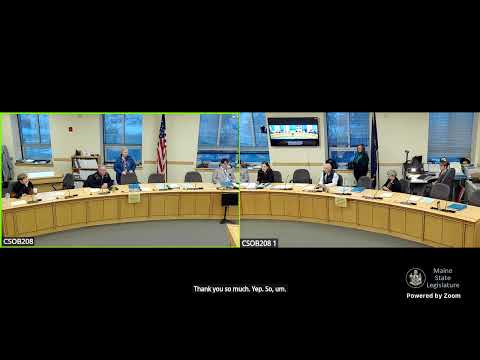
The Joint Standing Committee on Education and Cultural Affairs accepted the University of Maine System’s Government Evaluation Act (GEA) report after a detailed presentation by Sam Warren (University of Maine System). The committee voted to accept the report and directed staff to draft a letter summarizing committee observations.
Warren summarized the report’s findings: UMS has reversed long‑term enrollment declines and reached seven consecutive semesters of year‑over‑year growth, awarded nearly 7,400 degrees and certificates in the most recent year, and achieved and reaffirmed R1 Carnegie classification for the flagship campus. The system also demonstrated improved fiscal management — including balanced budgets without reserve use for FY25 and an upgraded S&P outlook — while continuing to face $1.8 billion in deferred maintenance and demographic headwinds that limit the traditional pool of college‑age students.
Collaborations and innovations highlighted Warren emphasized how unified accreditation has enabled cross‑campus collaboration, exampled by the Downeast Nursing Track (UMA delivering a 4‑year nursing degree at UM‑Machias) and shared academic platforms like a unified catalog and competency‑based online programs (UMPI’s YourPACE). He noted a substantial shift in student populations: 42% of UMS learners are now age 25 and older, and more than 42% of credit hours are delivered at a distance.
Facilities and fiscal tradeoffs The report calls attention to pressing capital needs. Warren said the system’s deferred maintenance totals approximately $1.8 billion and described some difficult decisions already taken, including trustee approval to remove an aging building at Orono (Crossland Center) paired with a commitment to relocate and support affected programs. He urged the committee to allow the system discretion to retire underutilized assets to focus investments where needed.
Committee response and action Members asked for follow‑up on campus program performance, teacher preparation concerns raised by a third‑party reviewer, online program quality standards, and the system’s AI strategy. Warren offered to provide further data and invited members to campus visits and a public demo event (UMA policy leaders academy). The committee voted to accept the GEA report and instructed staff to draft a committee letter; the acceptance was unanimous among members present.
Implication: The report frames UMS as a system that has achieved important gains in enrollment, degree production and research competitiveness while highlighting a capital investment shortfall and demographic challenges that will shape legislative interactions on higher‑education policy and budget requests.