Get Full Government Meeting Transcripts, Videos, & Alerts Forever!
Get email alerts on the Transportation Active Trails topic
No spam. Unsubscribe anytime.
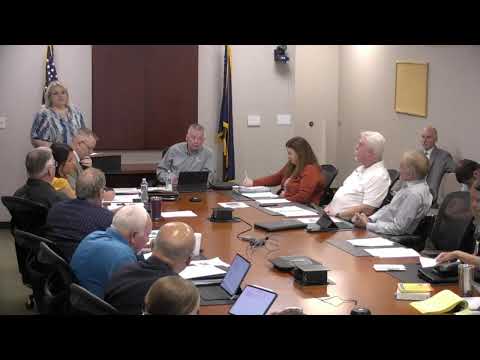
City of Myrtle Beach and county staff revisit Rails‑to‑Trails rail‑banking proposal
Summary
City representatives asked the Horry County subcommittee to revisit a 2021 proposal to rail‑bank the corridor from the Intracoastal Waterway to the train depot, arguing it could create a 10–12‑foot multiuse trail, qualify for federal grants, and be funded in part by salvaging steel; county members asked for studies and engineering details before forwarding to full council.
City of Myrtle Beach representatives returned to a Horry County subcommittee to renew a proposal to rail‑bank the railroad corridor east of the Intracoastal Waterway and convert it to a paved, 10– to 12‑foot multiuse rails‑to‑trails path.
"We would like to revisit a project that we came to talk to you about 4 years ago," Fox Simons told the subcommittee, describing a two‑phase plan that would initially link the train depot to Robert Grissom Parkway or Seaboard Street and could later extend to the Intracoastal waterway. He said rail‑banking would make the corridor eligible for federal and nonprofit grants and preserve the right to restore rail service in the future.
Railroad attorney Bill Mullins explained the federal rail‑banking process administered by the Surface Transportation Board (STB), saying a Trail Use (rail‑banking) certificate preserves federal jurisdiction over the corridor while permitting trail use. "When you do that, if you abandon and fully consummate that abandonment, it removes the corridor from the jurisdiction of the Surface Transportation Board," Mullins said, adding that the Trail Use certificate prevents reversionary landowners from reclaiming the corridor and preserves the option to restore rail service later.
Committee members raised engineering and cost concerns for several sections, particularly east of the waterway where a bridge and poor track condition would require substantial work. Councilmember (S4) asked about the feasibility of leaving rails in place and building an adjacent trail; presenters warned of costly retaining works, ditching and right‑of‑way constraints. Mullins said in his experience "that rail is in such bad shape, you probably have to replace it anyway if you want to restore rail service."
Members also discussed tourism possibilities, including a low‑speed trolley or tourist train to Conway, and how the rail corridor could connect to the East Coast Greenway. The presenters said prior studies and concept drawings exist and offered to share them with county staff.
The committee did not approve a formal ordinance or funding; instead members asked staff to gather prior studies, maps and engineering drawings and to convene community representatives for feedback. Chair recommended staff review the materials and bring a refined concept to the council; a referral to full council or a future recommendation remains the next procedural step.
What happens next: presenters will provide studies and concept drawings to county staff; the subcommittee asked staff to work with community representatives and return a refined recommendation at a later meeting.