
APS finance committee reviews December budget transfers; staff explain reallocations and small FTE changes
Get AI-powered insights, summaries, and transcripts
Subscribe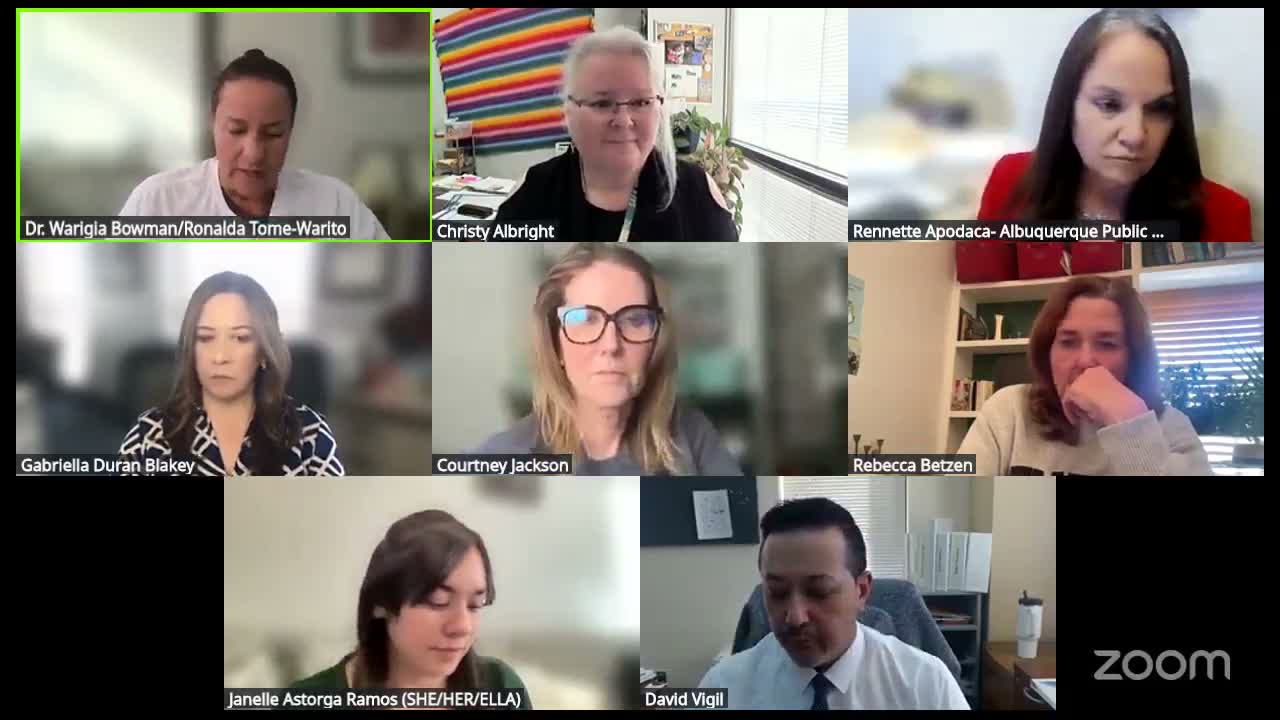
Summary
The Albuquerque Public Schools Finance Committee reviewed and recommended approval of December 2025 inter- and intra-function transfers across grant and operational funds, with staff explaining these are zero-sum reallocations tied to school-identified needs and state grant rules. Committee members pressed for school-level details after staff flagged examples that reduce small fractions of FTEs to fund teacher stipends and substitutes.
The Albuquerque Public Schools Board of Education Finance Committee on Jan. 29 reviewed December 2025 inter- and intra-function budget transfers for grant and noncategorical funds and recommended they be placed on the Feb. 4 consent agenda.
Grants management and finance staff told the committee the transfers are zero-sum reallocations within the existing budget that move funds between expense purposes — such as compensation, professional development and supplies — and that such moves must align with approved grant applications and New Mexico Public Education Department regulations. "All interfunction and intrafunction transfer are 0 sum transfers," said Mihaela Marin, senior director of grants management, explaining the transfers reallocate existing grant dollars rather than add new funding.
Marin described the school-driven workflow: a school or teacher identifies a need, the principal and relevant department verify allowability and alignment with the grant, then grants management processes the transfer. Marin pointed to two items of note in the December list: budget alignment for the Improving Adolescent Health grant after significant approval of an application, and a Math Lab pilot realignment tied to a state chart-of-accounts change that affects where professional-development and substitute costs must be recorded.
On the operational side, Senior Director Adrienne Hicks summarized 11 interfunction budget transfers totaling about $141,000 (eight funded by at‑risk funds and three from general funds). Hicks said these interfunction transfers, like the grant moves, are 0-sum and reassign money between purposes. "Overall, what we did in this one is we redistributed budget to fund teacher stipends, a 0.1 FTE teacher extended contract, and instructional supplies," Hicks said while walking the committee through a representative line item.
Hicks gave school-level examples prompting board questions. At Corrales K‑8, staff said roughly one-third of an assistant principal's salary (about 0.33 FTE) was reduced and those dollars were redistributed to teacher stipends (approximately $19,000), an extended contract (0.1 FTE) and general supplies, producing a net reported 0.23 reduction in FTE in that example. Hicks told the committee her working assumption was that the reduced AP time was an unfilled portion of the position and that principals request these changes; district analysts then review and process them.
Hicks also described other internal reclassifications: the APS Police Department reclassified approximately $162,358 to move three coordinator FTEs from one internal tracking program to another for tracking purposes, and maintenance salaries were moved between internal programs to reflect different internal assignments. In each case, Hicks said, the dollar totals are net zero across the budget, and the transactions are intended to reflect where work and expenses are actually performed.
Board members requested follow-up details on specific school items (for example, the Math Lab location and justification tying transfers to school needs). Marin and finance staff said they would provide additional follow-up to the board office where details were not immediately at hand.
The committee took no standalone final vote on each individual transfer during the meeting; instead the committee moved to recommend that these budget adjustments be included on the Feb. 4 Board of Education consent agenda for formal board action.