Get Full Government Meeting Transcripts, Videos, & Alerts Forever!
Get email alerts on the Short Term Rentals topic
No spam. Unsubscribe anytime.
Decatur planners propose tighter short-term rental rules, push implementation to May 1
Summary
Planning staff recommended a rewrite of Decatur's short-term rental ordinance to clarify parking by bedroom, prioritize off-street trailer/boat parking, limit density language, require an owner/agent within 50 miles to respond within an hour, and delay application acceptance to May 1, 2026 to allow software setup.
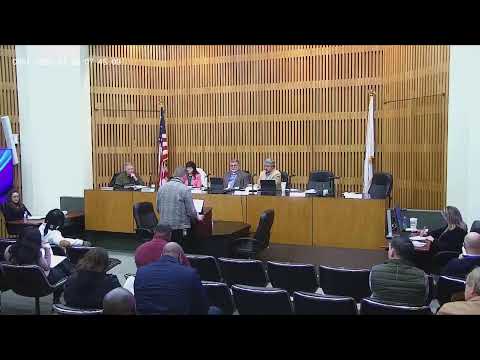
Planning staff and council members spent the bulk of the Decatur City work session debating a proposed rewrite of the city's short-term rental ordinance, focusing on parking rules, density limits and how the city will enforce new requirements.
Planning staff outlined several recommended changes to the draft ordinance, including a clarification that the number of off-street parking spaces required shall include a minimum of one space per bedroom; language to give priority to trailer or boat parking in off-street spaces; striking a density phrase that could be read as allowing more than three short-term rentals within a 1,000-foot radius; and a requirement that a rental owner or the owner's agent have an address within 50 miles of Decatur city limits so someone can respond to violations within an hour. "The owner or the owner's agent address must be within 50 miles of the Decatur city limits to ensure that the owner or agent are nearby and available to respond to any violations of this ordinance within an hour," planning staff said during the meeting.
Council members raised enforceability concerns. One councilmember said trailer or construction vehicles present a challenge for enforcement and cautioned administrators to keep provisions simple and enforceable. "If we're going to have it in here, we need to enforce," a councilmember said, noting difficulty distinguishing short-term renters from long-term residents when responding to complaints.
Staff also recommended a phased start to applications to allow the city to put monitoring software in place. Planning staff said they are evaluating two vendors and expect implementation to take 30–60 days depending on the vendor. The planning office recommended moving the application acceptance date from immediate adoption to March 1, 2026; council members agreed to a later date and directed staff to set May 1, 2026 as the target start date so the software and internal procedures can be ready and funding can be approved.
The discussion included proposed monetary penalties and where fines would be located in the ordinance text; council asked staff to consider adding the $500 initial fine in places where readers commonly look for it. Staff also suggested adding a clause requiring short-term rental leases to state that lessees assume responsibility for activities on the property, while noting that this clause does not remove legal obligations that already exist under Alabama law. Planning staff indicated that some issues (appeals and exceptions) would remain possible through established administrative or board processes.
Next steps: council members said the ordinance has to be reintroduced for immediate consideration (a double vote) if they want changes to take effect quickly; otherwise, adoption will follow the normal ordinance timetable and the May 1 implementation target will guide application acceptance and software procurement.