Lifetime Citizen Portal Access — AI Briefings, Alerts & Unlimited Follows
Fayetteville Housing Authority to relocate 28 families from Lewis Plaza and Willow Heights over safety concerns
Loading...
Summary
Authority staff told the board that structural instability, flooding, asbestos and lead paint make Lewis Plaza and Willow Heights uninhabitable. The board approved preferences and relocation assistance to rehouse 28 affected families while pursuing demolition and future redevelopment options.
Fayetteville Housing Authority officials recommended urgent relocation for 28 remaining families living at Lewis Plaza and Willow Heights after engineers and staff identified structural safety and habitability issues.
Tony Landecker, a development consultant with Natural State Housing Group, told the board there are “structural concerns, structural safety concerns… asbestos, lead based paint, and just an overall habitability that shouldn't be lived in.” He and Director Tapley said engineers and architects who visited the sites gave verbal confirmation of those problems and that the issues have worsened over many years.
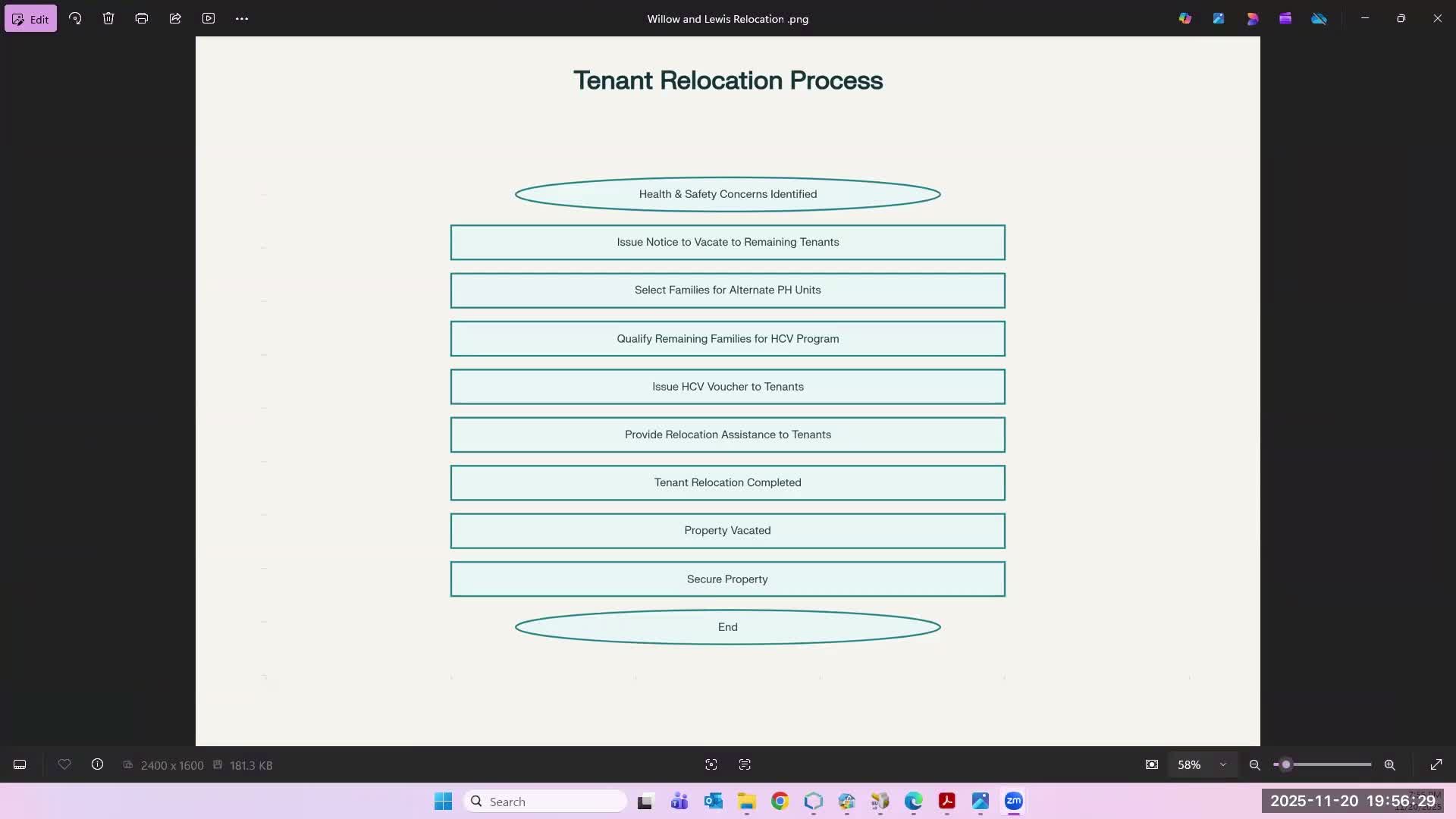
The board approved a package of actions to prioritize rehousing: issuing preferences for the Housing Choice Voucher (HCV) program, offering alternate public-housing placements (including Morgan Manor and, where appropriate, Hillcrest Tower), and providing a relocation assistance package that covers moving and storage costs, security and utility deposits, and housing navigation support. Director Tapley and Landecker estimated the authority could set up the outreach, qualification and a mass briefing within about a week and begin moves within roughly 30–45 days.
Staff described steps that follow tenant relocation: securing the vacant properties (boarding and fencing or contracting security), compiling forensic engineering and physical-needs assessments, and seeking HUD approval — potentially through an emergency demolition application — if rehabilitation is infeasible. Landecker said that, if demolition is approved, sites could be redeveloped with opportunities for higher-density, mixed-income housing and project-based vouchers to serve more families in the future.
Commissioners emphasized rehousing every household and confirmed the authority has funds earmarked for relocation assistance. The board voted to pass the resolutions implementing the preference and occupancy policies to enable the immediate rehousing work.
Next steps: staff will notify impacted tenants, begin the qualification process and coordinate relocation assistance; the board will return to HUD and partners with engineering documentation to determine whether rehabilitation or demolition and redevelopment is the appropriate long-term path.