Get Full Government Meeting Transcripts, Videos, & Alerts Forever!
Get email alerts on the Municipal Finance topic
No spam. Unsubscribe anytime.
Fayetteville council backs resolution to put roughly $320 million infrastructure bond before voters after heated housing debate
Summary
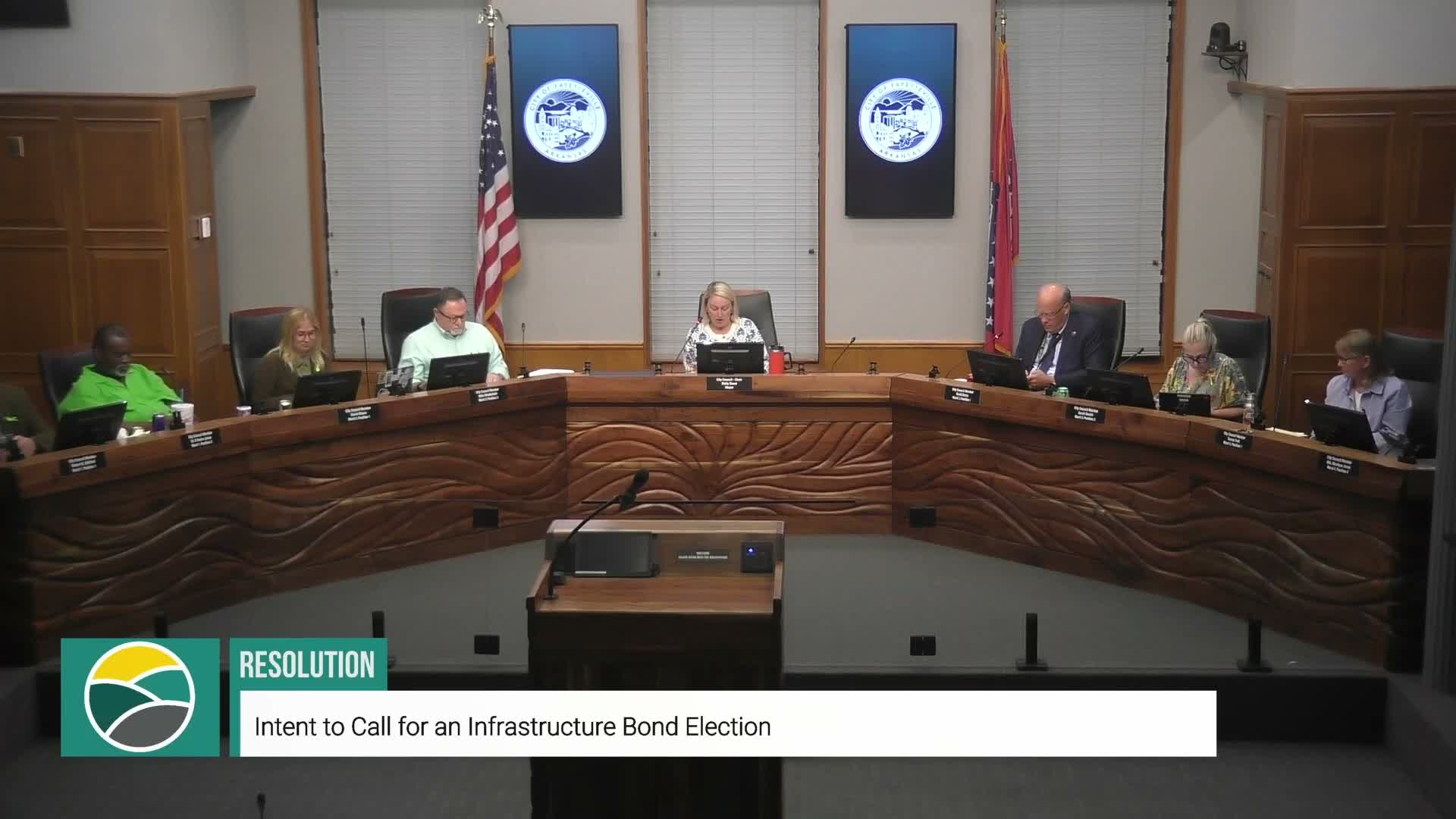
Council voted to place a resolution of intent to call an approximately $320 million infrastructure bond on the March ballot after extended public comment and a failed amendment to add a dedicated affordable‑housing preservation line.
The Fayetteville City Council voted Oct. 7 to adopt a resolution of intent to call an infrastructure bond election that would ask voters to renew the city's 1% sales and use tax to finance roughly $320 million in capital projects, including water and sewer upgrades, roads, pedestrian infrastructure, parks upgrades, an aquatic and recreation center, an animal shelter and sustainability projects.
Mayor Molly Ron framed the proposal as continuing the funding mechanism already in place without a tax increase and said the package “totals roughly $320,000,000” and builds on multi‑year studies and project planning. CFO Steven Dotson and bond underwriter Kevin Faught described the revenue mechanics and timing; staff noted a March ballot is needed to align with payoff timing for the 2019 bonds and to begin critical repairs, especially at the Nolan plant, as soon as possible.
Council debate focused sharply on whether the bond should include a dedicated, voter‑directed allocation for housing preservation. Councilmember Mike Bernett (and others) urged that housing is an urgent local priority; Chief Housing Officer Marley explained preservation strategies already underway while cautioning about implementing a public‑housing program through a sales tax bond without detailed operations and ownership plans. A motion to add an explicit affordable‑housing/preservation line (proposed by Councilmember Deandre Jones and refined as a preservation‑focused amendment) resulted in a 4–4 tie and failed.
Supporters of the bond stressed infrastructure urgency: staff outlined more than $200 million in water and sewer needs, critical work on a major water plant, and street projects that, officials said, cannot be delayed without further risk. Opponents and some council members urged either adding housing language or deferring the bond to allow more time for planning; the administration urged moving forward to preserve the opportunity to address critical infrastructure in the near term.
Public comment was robust and split: athletes, coaches and parents urged inclusion of an aquatic center for year‑round swim availability, while several residents and housing advocates urged the council to include or prioritize housing preservation funds. Underwriter Kevin Faught told council staff that $320M is around the maximum that can be issued on a 20‑year structure against the pledged sales tax without risking capacity.
Council ultimately voted to adopt the resolution of intent to pursue the bond; staff will return with final bond language and project allocations for a future council vote to place the question on the ballot.
Next steps: staff will refine project lists and bond language, continue public outreach, and return to council with ordinance language and a final ballot order. If placed on the March 2026 ballot, voters will decide whether to renew the 1% sales and use tax for the proposed capital program.