Get Full Government Meeting Transcripts, Videos, & Alerts Forever!
Get email alerts on the Land Use Rezoning topic
No spam. Unsubscribe anytime.
Fayetteville council approves rezoning for proposed Ramey junior high after hours of debate
Summary
After hours of technical presentations and more than three hours of public comment, the Fayetteville City Council voted 5–3 to rezone about 26.7 acres on North Marks Mill Lane to allow Fayetteville Public Schools to site a new Ramey Junior High. Supporters cited walkability and equity; opponents warned of runoff, tree loss and traffic safety risks.
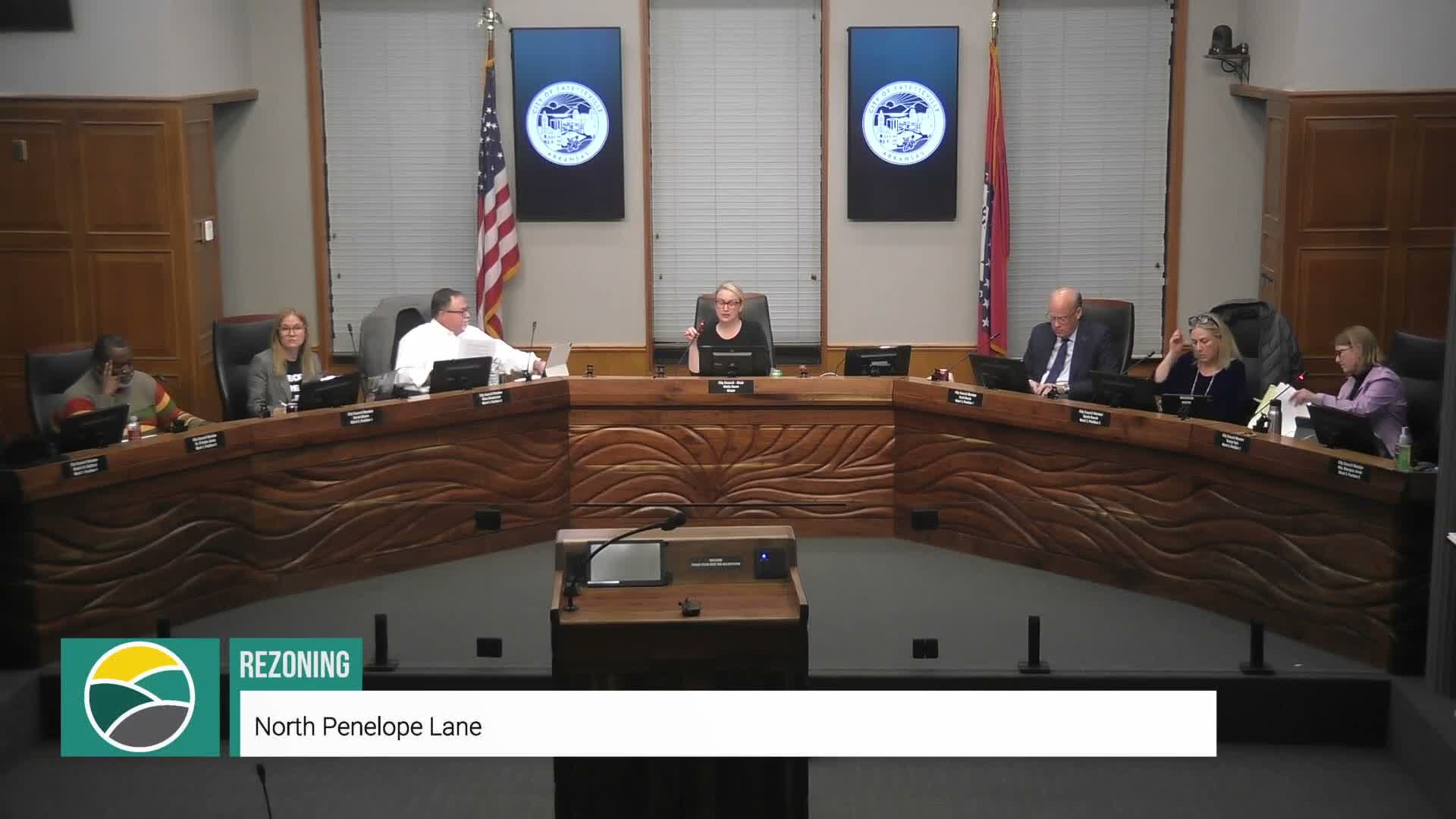
FAYETTEVILLE, Ark. — The Fayetteville City Council voted 5–3 on Dec. 16 to rezone roughly 26.7 acres near North Marks Mill Lane from RSF‑4/urban corridor to P‑1 institutional, clearing a key local hurdle for a proposed Fayetteville Public Schools Ramey Junior High campus.
Staff and school officials spent the meeting answering detailed technical questions about floodplain permitting, stormwater detention, traffic and soils. Development services director Jonathan Kurth told the council the city’s local floodplain standards are stricter than federal requirements and said his staff “do not currently have concerns that this project is unable to meet local permitting requirements” and that “the city does not hold any legal liability” for stormwater impacts from private developments (city staff comments). The planning commission had forwarded the rezoning by a 7–1 vote.
The school district’s team presented updated studies during the meeting. Kelly Freeman, the district’s owner’s representative, said the design includes large on‑site queuing — “2,750 lineal feet of queuing on‑site, an additional 1,300 lineal feet on the north side of the drive for events if needed” — and 130 dedicated parking spaces plus about 20 overflow spaces. Freeman called the proposal “an iconic, world‑class facility” and emphasized the district’s goal to preserve forested areas around much of the site.
Dozens of residents addressed the council during a lengthy public‑comment period. Supporters — including parents, PTO leaders and some school board members — said the location would improve walkability, reduce vehicle miles traveled and advance equity by keeping neighborhood cohorts intact. Dr. Christopher Johnson, Ramey’s principal, told council members the new campus would “allow Ramey to continue to provide outdoor spaces for teachers to instruct and scholars to learn” and called the site a “living laboratory” for environmental education.
Opponents raised concerns about erosion, stormwater run‑off and slope stability on the hillside site and questioned whether detention basins and proposed controls would be enough during intense rainfall. Multiple speakers cited construction impacts, including an estimate presented during the meeting of roughly “863 truckloads” of cut material to be exported. Several residents also argued that pedestrian crossings on College Avenue and access from Ash Street present safety risks that need more independent review.
Council members debated whether to delay the vote until a full geotechnical report — the district said borings were complete and a full report was expected after the first of the year — could be circulated. Councilmember Turk moved to table the item until the report was received; the motion produced a 4–4 tie and failed after the mayor declined to cast a tie‑breaking vote. After further remarks, the council adopted the rezoning 5–3.
What’s next: Rezoning clears a land‑use obstacle but does not authorize construction. The project must still undergo large‑scale development review, building permits and any required local stormwater approvals. School and city staff said they will continue to refine traffic and stormwater plans and that the district expects to advance development details during subsequent review steps.
The vote was one of the evening’s most contentious items; councilmembers and the mayor repeatedly thanked residents on both sides for their civic engagement and emphasized that further technical reviews will continue as the project moves into development review.