Get Full Government Meeting Transcripts, Videos, & Alerts Forever!
Get email alerts on the Housing Tif topic
No spam. Unsubscribe anytime.
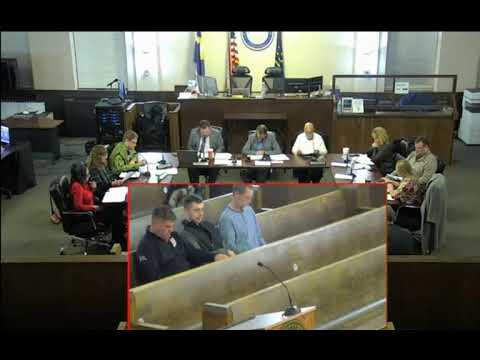
Terre Haute council approves residential housing TIF and redevelopment bonds to fund 50‑lot subdivision infrastructure
Summary
The council voted Dec. 11 to create a residential housing tax-increment allocation area and authorize redevelopment district bonds (up to $2.1 million) to pay for public infrastructure supporting a proposed 50‑lot single‑family subdivision; officials said they expect market interest rates near 3.5% and projected early debt service of roughly $145,000 a year.
Terre Haute — The City Council on Thursday approved two measures to establish a residential housing allocation area within the city’s consolidated tax‑increment finance (TIF) district and to authorize redevelopment district bonds to pay for infrastructure in a proposed single‑family subdivision.
Mayor Sackman introduced the items, saying the administration split its application to the state’s Community Crossing program and had still secured paving funding for the coming year. Dustin Meeks, legal counsel for the Redevelopment Commission, told the council that the plan “includes what state statute refers to as a residential housing program,” which allows the city to use TIF revenues to build streets and utilities that support housing.
The bond resolution sets maximum financing parameters of $2,100,000 with a maximum interest figure shown in the paperwork; Meeks said the paperwork lists higher maximums but staff expects a lower market rate. “The max parameters are $2,100,000 … interest rate of 6.6%, though we expect 3.5,” Meeks said during his summary to the council.
Financial adviser Jason Simler and city consultants told the council the administration’s current modeling calls for roughly $1.6 million in bonds and expects the housing TIF to generate incremental revenue once houses are built. Simler cited projections that housing build‑out could occur in four to five years and that the illustrative debt service on the housing bonds would be “about a $145,000 a year.” Council members asked how long existing downtown and adjacent TIF district revenues might be used to back payments until the new housing TIF matured; staff said several existing TIF areas could cover initial payments.
Builder Jared Grama, representing Global Construction Management, said the proposal is for about 50 lots with homes similar in size and price point to other local developments; he estimated the subdivision could be completed in “5 years or less.” Council members said city‑constructed infrastructure would reduce later maintenance and neighborhood complaints.
The council adopted the declaratory amendment establishing the allocation area (Resolution 35‑20‑25) and the bond issuance resolution (Resolution 36‑20‑25) by voice votes. Council President Nation announced both measures passed after members answered “aye.”
What happens next: With council approval, city staff and the Redevelopment Commission will proceed with the financing plans and any bond sale will follow required market steps; the housing allocation area will operate under the statutory schedule tied to when debt obligations are placed on the area.