Get AI Briefings, Transcripts & Alerts on Local & National Government Meetings — Forever.
House committee weighs bill to protect minors in sports scholarships; private schools, DRD and health experts split on scope
Loading...
Summary
The House Committee on Recreation and Sports heard testimony on Proyecto de la Cámara 10‑53, a proposed law to regulate sports scholarships for minors. Supporters cited child protections and contract transparency; private‑school representatives warned the bill could infringe institutional autonomy and impose burdens on small academies.
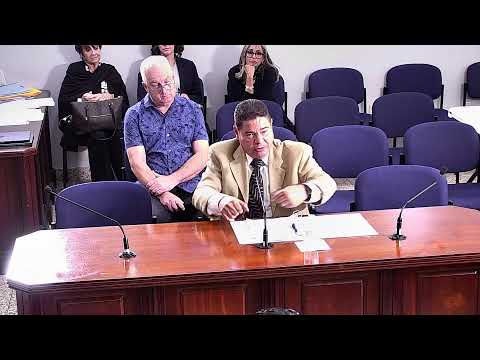
The House of Representatives Committee on Recreation and Sports heard testimony on Proyecto de la Cámara 10‑53 on Jan. 31, 2026, a bill that would require written, itemized scholarship contracts for minors, prioritize education over competition and give the Department of Recreation and Sports (DRD) administrative authority to adjudicate complaints and levy fines.
Supporters said the measure fills a regulatory gap in youth sports. Sara Rosario, president of the Comité Olímpico, said the policy should protect young athletes from commercial exploitation and ensure contracts are clear and in a language families understand. "El deporte debe ser un espacio que promueve el desarrollo integral del ser humano," Rosario said, urging objective termination criteria, mandated tutoring before canceling a scholarship and independent orientation for families.
The DRD, represented in the record by Rolando Cuevas Colón and Juan García Rivera (who read the department's written statement), told the committee it supports the bill's goals but warned of implementation costs and capacity limits. The DRD recommended a preapproved model contract, a public registry and thresholds for higher‑volume providers to limit per‑contract administrative review. The department noted it might need additional staff and resources if the law is enacted and suggested a proforma contract "para agilizar los procesos y reducir la carga administrativa un 80 por 100." The DRD also described enforcement options in the bill, citing administrative fines "desde los 1000 dólares hasta 5000 dólares por infracción."
Private‑school representatives opposed applying the bill to institutions of private education. Emma Zulsona Gándara, president of the Asociación de Educación Privada de Puerto Rico, said the association "rechaza y se opone a la aplicabilidad del proyecto de la cámara 10 53 a las instituciones de educación privada," citing Law 2‑12 (12 Aug. 2018) and arguing the measure would displace existing regulatory roles and institutional autonomy. AEP leaders recommended limiting the bill's scope to entities where government has direct jurisdiction and urged use of existing complaint forums (Department of the Family, Department of State) for discrete abuses.
Health officials endorsed the protective goals and urged medical safeguards. Dr. Luis N. Olmedo Morales of the Department of Health recommended multidisciplinary care teams (psychologist, nutritionist, generalist physician and certified trainer), limits on weekly training hours tied to a child's age and clear return‑to‑play protocols, and said telemedicine could help rural areas meet physical‑maturity certification requirements.
Committee members pressed witnesses on several tradeoffs: how to protect minors while avoiding imposing disproportionate costs on small, nonprofit academies; how to ensure DRD has the budget and staff to perform enforcement; and whether a DRD model contract could expose the department to litigation. Witnesses agreed on practical steps that could reduce administrative burden — a preapproved contract model, certification for high‑volume entities and modest registration or certification fees — while warning these solutions must be calibrated to avoid shrinking scholarship offers.
No formal vote was held. The committee requested that DRD provide requested information on the Cámara Resolution No. 89 within 10 days and discussed a DRD timeline (members suggested roughly 60 days) to draft and publish a model contract for use by entities that offer scholarships. The hearing recessed and was closed for the day pending further follow‑up.
The committee will consider DRD's follow‑up materials and invited additional stakeholders including small academies and private schools for future sessions.