Lifetime Citizen Portal Access — AI Briefings, Alerts & Unlimited Follows
Committee advances bill allowing two-year eyeglass prescriptions when clinically appropriate
Loading...
Summary
The Arizona Senate Efficiency Committee gave SB1023 a due-pass recommendation after sponsors and the optometry association said the measure clarifies standards of care and permits eyeglass prescriptions to be extended to two years unless clinical risk warrants a shorter period.
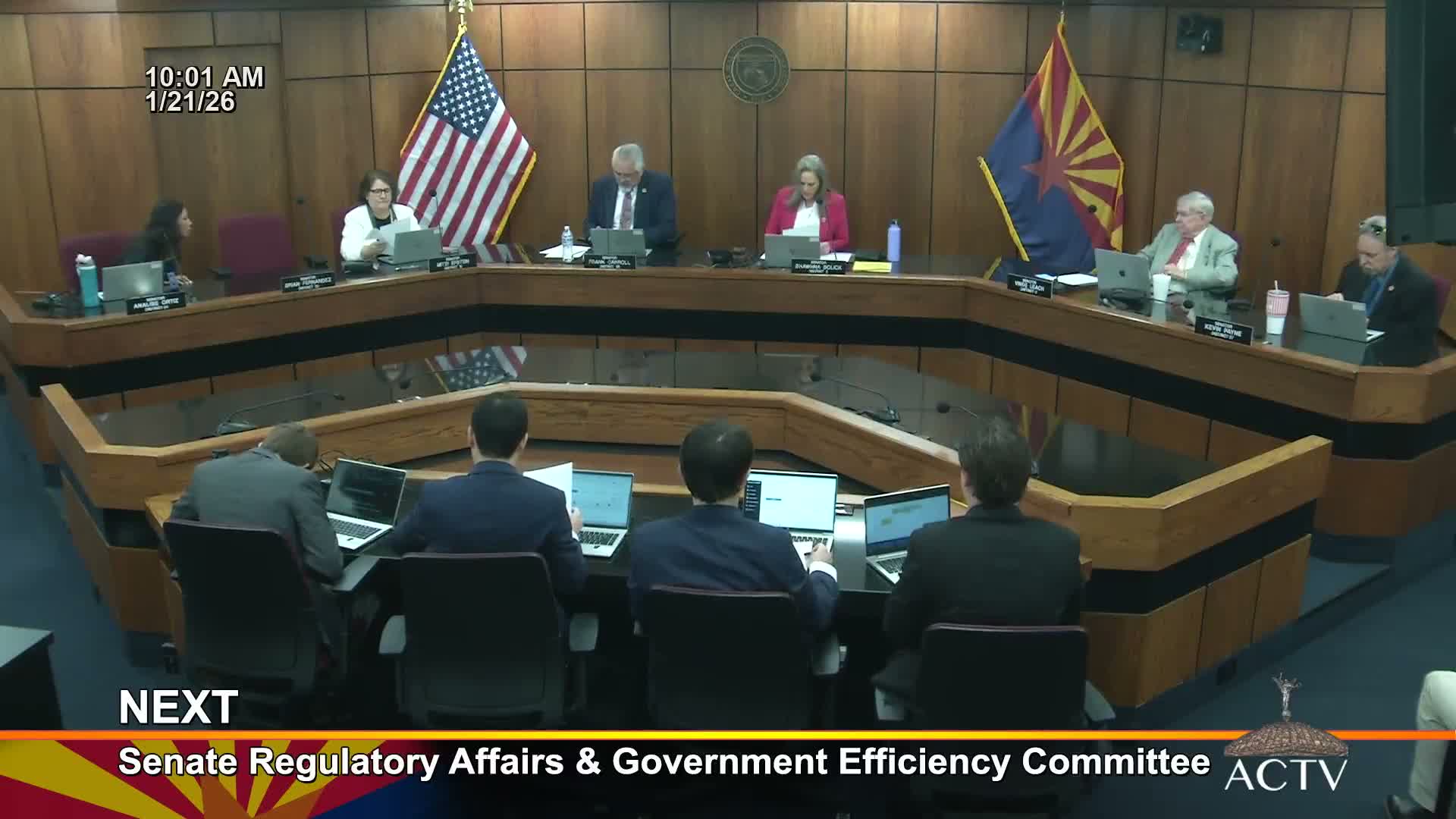
The Arizona Senate Efficiency Committee advanced Senate Bill 1023 on a unanimous voice roll call after proponents said the measure would reduce confusion and codify common clinical practice for eyeglass prescriptions.
The bill, described to the committee by staff intern Hayden Darst, would require an optometrist to conduct an eye examination according to the prevalent community standard of care and recommends a one-year interval for exams while allowing an optometrist to extend an eyeglass prescription’s validity up to two years or shorten it based on risk factors.
The bill sponsor, Mr. Kavanaugh, said he had tried broader extensions in prior sessions but revised the proposal after conversations with the eye-health community. “While the best practice is a year, lacking those other problems ... we can go to two years,” he told the committee, describing the bill as a compromise that avoids overreach.
Representing the Arizona Optometric Association, Don Isaacson and Dr. Amber Dunn told the committee the bill “codifies best practice in the community” and creates clarity for both patients and practitioners. “This sets it at two years to be dialed down depending on the vision and medical condition of the patient,” Isaacson said.
After brief discussion and no amendments, a committee member moved SB1023 with a due-pass recommendation. The secretary recorded seven ayes, zero nays. The chair announced that SB1023 received a due-pass recommendation and the committee moved on to other business.
The committee’s action gives the bill a favorable committee recommendation; the measure will proceed according to the Senate’s regular legislative calendar for further consideration.