Get email alerts on the Governance topic
No spam. Unsubscribe anytime.
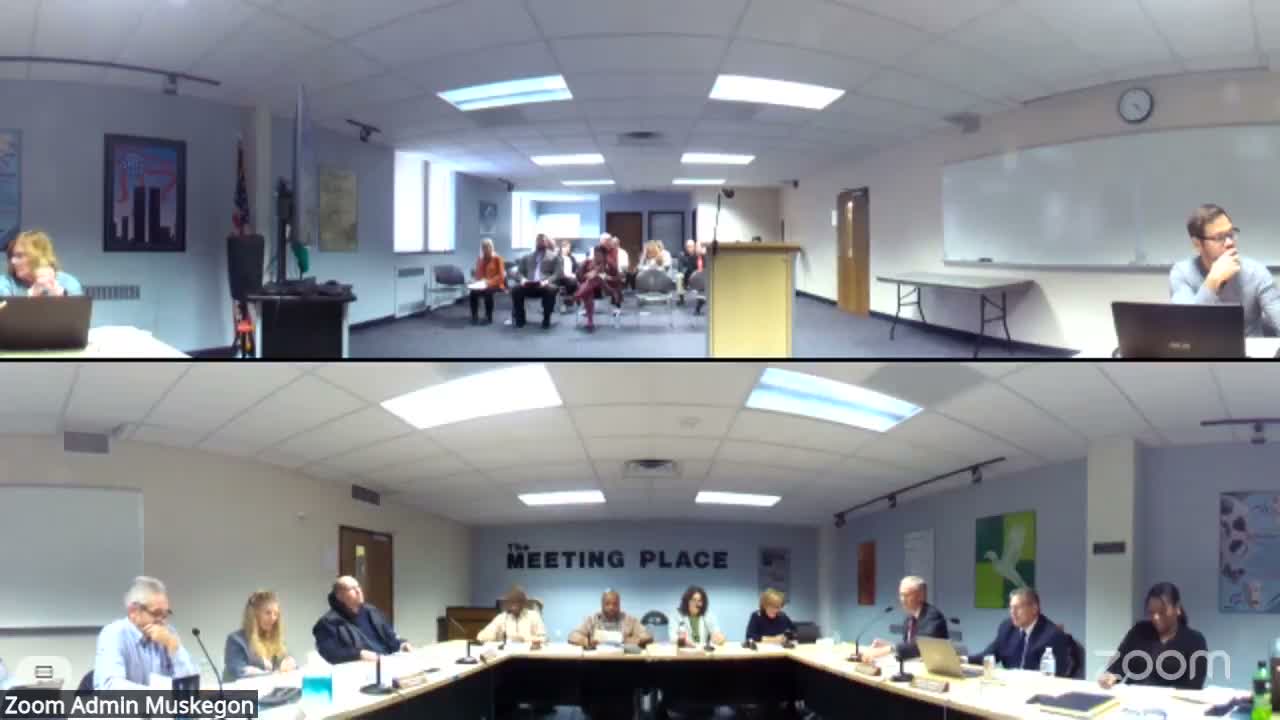
Muskegon County board debates collapsing standing committees into full board sessions
Summary
Commissioners discussed proposed board-rule changes to make standing committees operate as committees of the whole, preserving motion review and staff coordination; debate focused on whether to keep separate review meetings (Thursdays) or move final votes to Tuesdays to improve attendance and prep time.
Members of the Muskegon County Board of Commissioners debated proposed changes to board rules that would treat standing committees as "committees of the whole" and fold their work into full-board meetings. Corporate counsel and multiple commissioners discussed how to preserve motion review, staff scheduling, and public clarity if committee work is presented and voted on at the same meeting.
One commissioner asked whether chairs and vice chairs should still present topic areas even if committees no longer meet separately; another argued motion-review must continue "because this is our one chance to vote on it." Supporters of keeping separate review sessions said staff need predictable schedules and that Thursdays can be difficult for attendance; proponents of moving full-board votes to Tuesdays said it gives staff more weekend preparation time and reduces missed meetings.
No formal rule change or vote occurred at this session. Commissioners said corporate counsel would prepare recommended language in advance of the January 6 organizational meeting, when the board expects to take formal action on the calendar and any rule changes. The discussion closed with a request to return proposed edits for review prior to the organizational meeting.
AI generated
The text on this page is AI generated. Summaries, highlights, analysis, and video transcripts are all produced from the original source material.
AI can make mistakes, so if you spot one, and we will fix it for everyone.
Note: the source content is unaltered by us. Any content source we link to, be it a video, an audio recording, or a document, is presented exactly as its publisher released it. That publisher is usually a government body, sometimes an individual official or another organisation.