Get Full Government Meeting Transcripts, Videos, & Alerts Forever!
Get email alerts on the Affordable Housing topic
No spam. Unsubscribe anytime.
Developer pledges 14 affordable studio units in Chauncey Annex rezone; council seeks details
Summary
Outside counsel said the Chauncey Annex rezone will include at least 14 studio units designated affordable (≤80% AMI, 2025 AMI = $50,750), with an MOU to define selection and lease terms; councilors asked about application processes, student eligibility and whether increasing the share to 10% would affect project economics.
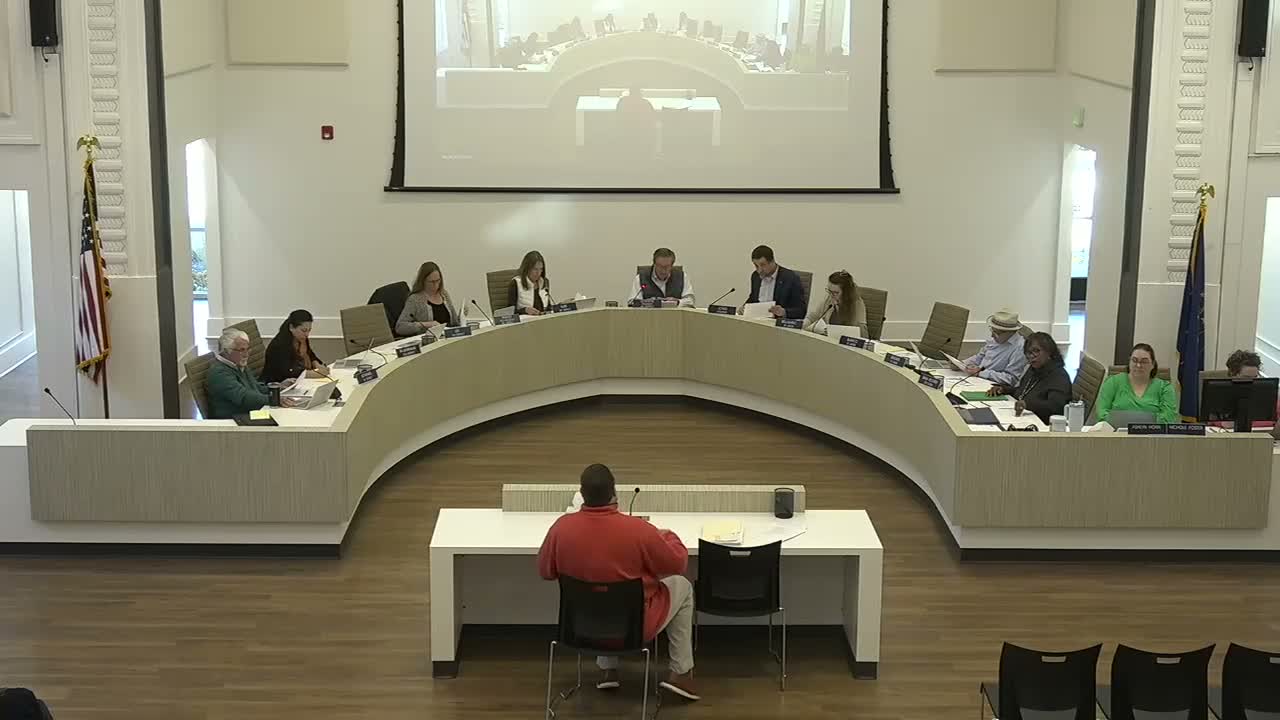
At a Oct. 30 pre-council meeting, petitioner representatives previewed the Chauncey Annex rezone and told councilors they plan to include at least 14 affordable studio units as a public-benefit commitment if the rezoning is approved.
Kevin Riley of RTS Law, who represents the petitioner, said the commitment is for a minimum of 14 studio units and that the ordinance defines "affordable" as households earning less than or equal to 80% of area median income (AMI); staff stated the 2025 80% AMI level is $50,750. Riley said the developer’s intent is to provide those units as a distinct product type (studio efficiencies) so residents are not placed into shared-bed arrangements.
Andre Sahakian, who identified himself and provided a contact address, said the developer would manage marketing and application intake, maintain a waiting list and vet applicants; he proposed an MOU (referenced as item 7 in the draft) to spell out lease terms and selection mechanics and said the MOU would be completed by final detailed-plan (FDP) recordation.
Councilors asked whether the 14 units reflect a percentage used elsewhere; staff replied that 14 units equal roughly 5% of the building’s units and that inclusionary percentages vary by development. A councilor asked whether raising the requirement to 10% would change project economics; the petitioner said such a change "would be detrimental." Councilors also asked how students or graduate workers would be treated; staff and the petitioner said qualifying criteria would prevent ineligible undergraduates from taking units (for example, by verifying independent income, TA appointments, or other financial support).
Riley and staff agreed to provide an MOU template and details of selection and reporting procedures for council review at the formal council meeting on Monday.
Next steps: staff said they will present the full rezone material and the draft MOU at the council meeting for formal consideration.