Get Full Government Meeting Transcripts, Videos, & Alerts Forever!
Get email alerts on the Managed Natural Landscapes topic
No spam. Unsubscribe anytime.
West Lafayette council tables managed-natural-landscape ordinance after detailed questions on buffers, enforcement and pests
Summary
Councilors deferred Ordinance 49-2025, which would encourage native landscaping and expand the noxious-weed list, after extended discussion about a three-foot setback, enforceability for existing plantings and potential mosquito risks; the item was tabled to December by voice vote.
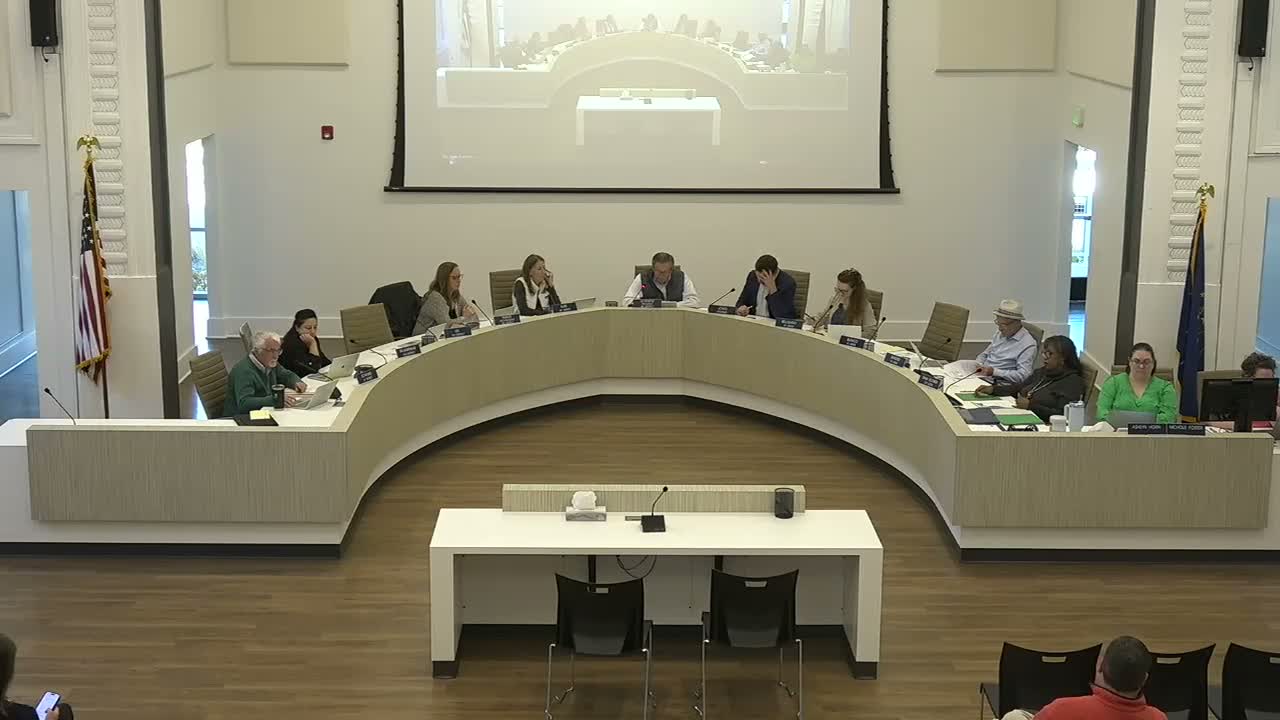
West Lafayette councilors on Oct. 30 agreed to table Ordinance 49-2025, a proposal to encourage managed natural landscapes and expand the city’s noxious-weed list, after several members and staff pressed for clearer language on setbacks, enforcement and public-health implications.
Iris, who introduced the measure, said the ordinance’s goal is to "allow or encourage native landscaping and biodiversity" and to clarify what the city considers noxious weeds and two species the city now identifies as public-health threats. She proposed limiting the three-foot buffer requirement to the front of properties rather than requiring it on all sides.
Councillors sought concrete definitions and enforceable standards. One member asked whether the three-foot setback is measured from the sidewalk, the street or the property line; Iris and staff answered that the right-of-way reading was intended but offered to reword the draft before the council meeting. Adam Ferguson of the Police Department warned enforcement could be challenging in established neighborhoods with existing plantings and urged additional work on practical implementation.
Public-health concerns also surfaced. A councilor with experience on mosquito-borne viruses said taller, unmanaged plantings can provide havens for adult mosquitoes and asked whether mitigation language or guidance is needed. Iris said she would consult the Soil and Water Conservation District, the Wabash River Enhancement Corporation and parks staff — all of whom were consulted in drafting the ordinance — to determine whether mosquito mitigation is a necessary addition.
Several councilors and staff said they support the ordinance’s intent to promote native species but emphasized that the city cannot legally require only native plantings; the draft therefore discourages invasive species and clarifies enforcement categories. The proposal also contemplates a memorandum of understanding or other implementation guidance so homeowners understand options and available assistance.
After concluding that multiple clarifications and potential wordsmithing were needed, Christopher Johnson moved to table the ordinance to the December meeting; the motion was seconded and carried by voice vote. The city removed the item from the Monday agenda and scheduled it for further work and amendment in December.
Next steps: city staff said they will prepare revised language addressing the setback measurement, enforcement parameters and potential mosquito mitigation strategies and will circulate suggested amendments before the December meeting.