
Committee backs 'report-and-hold' bill to let banks pause suspect transfers; debate over immunity continues
Get AI-powered insights, summaries, and transcripts
Subscribe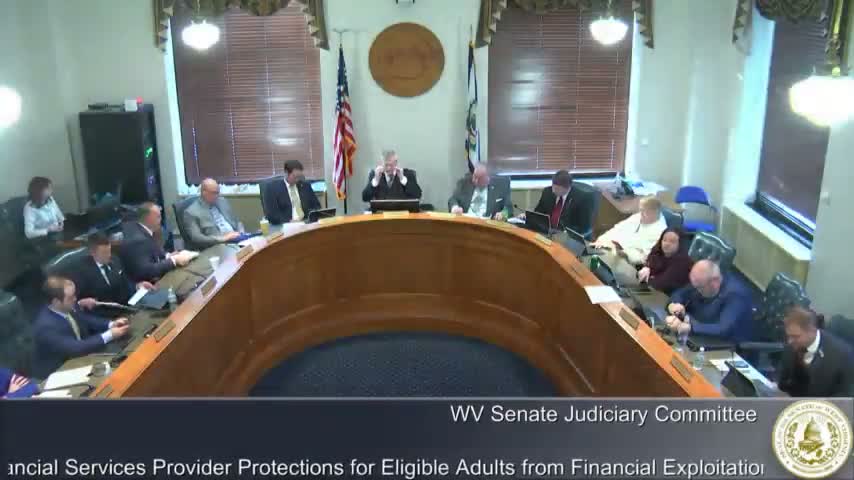
Summary
The committee agreed to a committee substitute for SB617 to let banks pause suspected financial-exploitation transactions and report them; AARP and consumer advocates supported the measure, bankers pressed for immunity protections, an amendment to restore broader immunity failed, and the bill was reported to the full Senate with a referral to Finance.
The Senate committee approved a committee substitute for Senate Bill 617, a measure that would permit depository institutions to delay or refuse financial transactions when employees reasonably suspect financial exploitation of an elderly or incapacitated adult, notify adult protective services or law enforcement, and place a short hold (15 days maximum) while authorities investigate.
Angela Vance, senior associate state director for advocacy at AARP West Virginia, told the committee temporary holds are a proven way to prevent losses: “One of the most effective ways to prevent financial exploitation is simple. Stop the money from leaving the victim's account,” she said, noting that once funds leave, recovery is rare.
Representatives of West Virginia’s banking industry said they want the tool but urged stronger immunity language than what appears in the committee substitute. Mark Atkins of the Community Bankers of West Virginia said banks typically seek legal protection when they exercise judgment to delay transactions and noted many peer states include civil-immunity provisions for reporting institutions.
Litigation-interest groups also spoke. Steve Broadwater of the West Virginia Association for Justice said he supports the bill’s intent but cautioned against granting blanket immunity; the committee substitute instead limits private suits except when a plaintiff proves by clear and convincing evidence that an institution or employee acted in bad faith to further exploitation.
The senior senator from the Fourth offered an amendment to restore broader immunity language from the introduced bill; supporters argued the change was necessary to secure bank participation. Opponents said the committee substitute already sets a high standard to bring private suits and protects vulnerable adults’ recourse. The amendment failed on a division vote.
The committee then agreed to the committee substitute and voted to report SB617 to the full Senate with its original double-reference intact — the bill will next go to the Finance Committee for review.
Committee members said stakeholders reached a workable compromise and that the bill gives financial institutions a limited, structured tool to stop likely exploitation while maintaining a path for plaintiffs to pursue claims in the narrowest circumstances.