
Senate committee adopts working substitute for SB 121 to set out‑of‑network floor and add network adequacy
Get AI-powered insights, summaries, and transcripts
Subscribe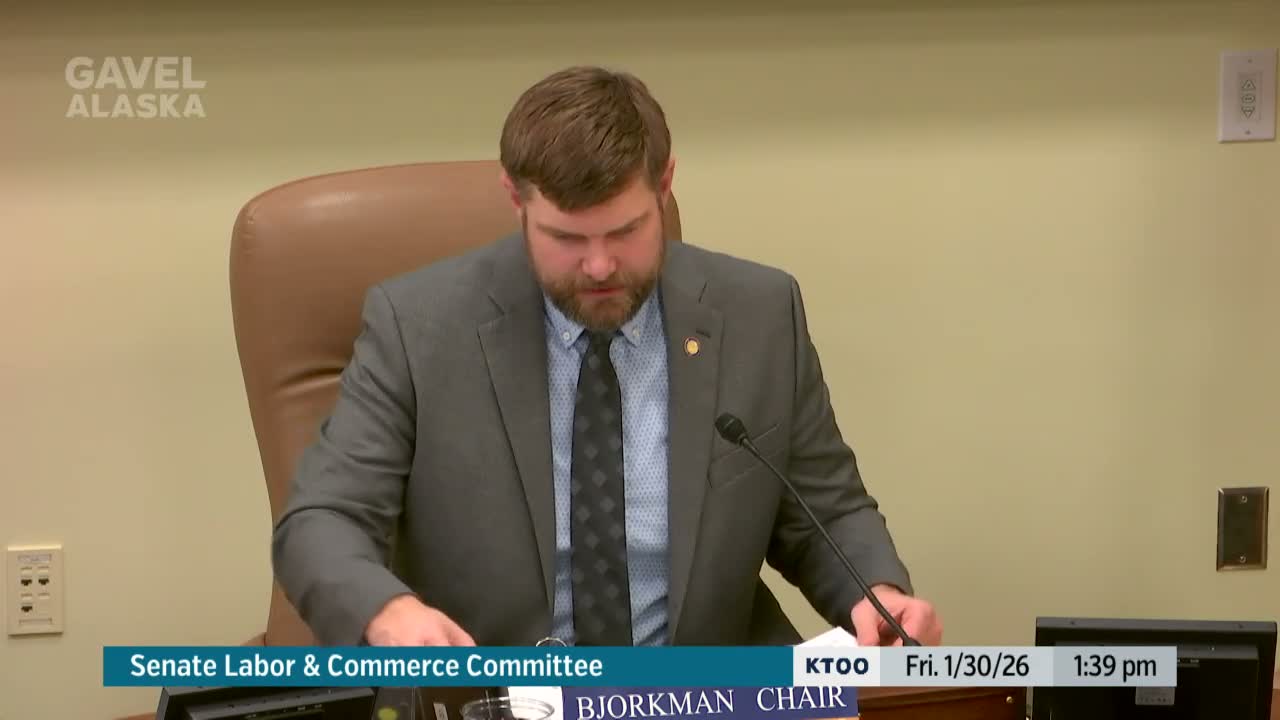
Summary
The Senate Labor and Commerce Committee adopted a committee substitute for Senate Bill 121 to set a floor for out‑of‑network reimbursements (benchmarked to Medicare) and add minimum network‑adequacy standards; supporters said the bill would protect access and strengthen providers’ bargaining positions while staff will provide requested data on premiums and payouts.
The Senate Labor and Commerce Committee on Jan. 30 adopted a committee substitute as the working document for Senate Bill 121, a bill that would set a minimum reimbursement benchmark for out‑of‑network clinicians and require minimum provider network standards intended to preserve consumer access in Alaska.
Sponsor Senator Kathy Giesel said the substitute combines two prior concepts—an out‑of‑network reimbursement floor and network adequacy standards—so clinicians have a negotiation reference point when contracting with insurers. "I've been chasing this greased pig since 2018," Giesel said while explaining that the measure seeks to keep clinicians practicing in Alaska by restoring predictable reimbursement mechanics.
Supporters in invited testimony described steep drops in reimbursements and provider departures after the repeal of the previous 80th‑percentile regulation. Jeffrey Davis, representing the Alaska State Medical Association, called SB 121 "a consumer protection bill that replaces the protections that were in place for 20 years under the repealed 80th‑percentile regulation," and said the package both ensures Alaskans receive the benefits they paid for and helps protect provider access.
The committee substitute (version G) retains language creating a floor based on the Medicare fee schedule (a 450% multiplier is the current floor language in the substitute) while removing earlier percentile‑based language; it also adds a new statutory section (2107035) establishing minimum network‑adequacy standards for contracting regions and repeals section 21070203 that the staff described as obsolete. Staff explained that the Division of Insurance would enforce network standards at product‑filing time and that the director could authorize phase‑in periods or exceptions for carriers that cannot immediately meet the minimums.
Multiple clinicians testified to real‑world impacts: Dr. Carolyn Renee Mercuris said the change in enforcement led to a sharp reimbursement drop and forced her to retire earlier than planned; Theresa Lyons (president, APRN Alliance) described a multistate practice seeing roughly 10,000 visits per year and said the substitute would give clinicians negotiating leverage; Dr. Carl Bowerick (OB/GYN) and Debbie Ryan (Alaska Chiropractic Society) provided clinic‑level examples of revenue declines and high patient cost exposure. Several witnesses quantified the problem with different figures—examples included reimbursements reported in the 165–185% of Medicare range for in‑network contracts before recent reductions and the substitute's 450% Medicare floor for allowable out‑of‑network charges—while witnesses warned that narrow networks could worsen access in Alaska’s federally designated shortage areas.
Committee questions focused on enforcement and market effects. Senator Dunbar asked how enforcement would work; Jeffrey Davis said the Division of Insurance would require carriers to demonstrate compliance at product filing and that enforcement is similar to approaches in other states that have adopted NAIC model network standards. Senator Yundt requested that staff return with four‑ to five‑year comparative data on provider payouts and premium trends; Senator Giesel agreed to provide that information.
Chair Bjorkman asked if there was any objection to adopting the committee substitute as the working document; hearing none, the committee adopted CS for SB 121 (version noted in the record) by unanimous consent. The sponsor said she remains open to an amendment to the 450% figure (for example, an inflation‑adjusted 350% based on her cited Milliman study) and the committee requested additional data before further action.
Next steps: SB 121 remains in committee under the working document; staff will be asked to provide the requested premium and payout comparisons and the committee may consider amendments or take the bill up in a subsequent meeting.