Lifetime Citizen Portal Access — AI Briefings, Alerts & Unlimited Follows
House committee advances bill to codify income-based valuation for agricultural property after appellate ruling
Loading...
Summary
The House Ways and Means Committee voted to return House Bill 2261 with a due-pass recommendation, directing statutory language that class 2 property be defined as agricultural real property and codifying an income-based valuation approach after an appellate court ruling favored taxpayers.
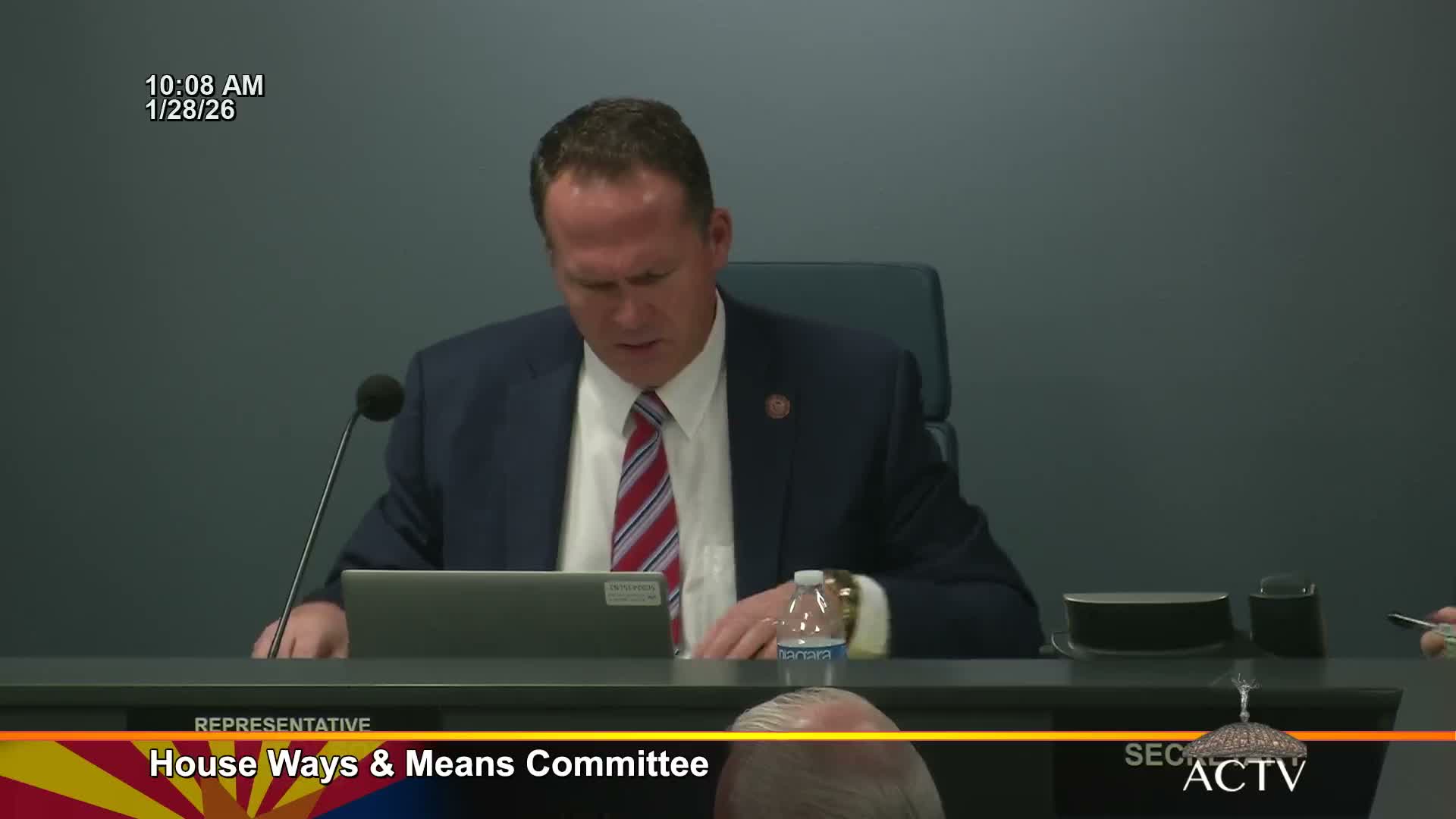
At a House Ways and Means Committee meeting, members voted to return House Bill 2261 with a due-pass recommendation to clarify how agricultural land should be classified and valued for property-tax purposes.
Sponsor Rep. Gail Griffin said the bill harmonizes language in Title 42, Chapter 12, Article 4 to make clear that class 2 property is "agricultural real property" and to codify the use of the income approach for valuing agricultural lands. "So house bill 22 61 clarifies and codifies this interpretation," Griffin said, adding that the change "does not raise or lower property taxes for the taxpayer."
The bill arises from litigation in Cochise County in which taxpayers sued over assessors’ valuation of permanent crops such as orchards and vineyards. Griffin said courts have repeatedly found the assessors’ interpretation unreasonable: "Taxpayers sued the assessor and won in tax court. The assessors appealed and lost again in court of appeals." Committee members heard from supporters and county assessors about both the legal precedent and the practical consequences of changing statute before the Arizona Supreme Court issues a ruling.
Patrick Bray, representing the Arizona Farm and Ranch Group, urged lawmakers to act now, saying the appellate decision makes the fix clear: "Let's make the change. Let's get on with this." Bray characterized further appeals as a waste of taxpayer money.
County assessors and the Arizona Association of Counties urged caution. Megan Kittner testified "in respectful opposition to 2261," asking the committee to let the Arizona Supreme Court process conclude before altering statute; she noted briefs were due Feb. 10. Maricopa County Assessor Eddie Cook told members to "let the due process go through," warning that preemptive statutory changes could create operational conflicts across counties because all 15 county assessors have historically followed Department of Revenue guidance.
Committee members split along procedural and policy lines during debate. Some lawmakers said clarifying statutory language is the legislature’s role; others worried about the administrative and fiscal consequences of moving ahead while a higher court may rule differently. The committee returned the bill with a due-pass recommendation by a vote of 5 yeas, 3 nays and 1 absent; the measure will proceed through the legislative process.
The committee’s action does not itself change property-tax practice; it sends the bill to subsequent floor or committee steps where lawmakers may amend or wait for the Supreme Court outcome. Supporters said the change simply reflects the Court of Appeals' interpretation and would align statute with how agricultural real property has been historically valued; opponents cited the value of allowing the judiciary to finish its review before legislative action.