Lifetime Citizen Portal Access — AI Briefings, Alerts & Unlimited Follows
Advocates press board to reshape $26M San Francisco jail food contract before May RFP
Loading...
Summary
Community advocates told the Sheriff's Department Oversight Board on May 9 that the upcoming RFP to replace the jail food vendor should require fresher, culturally appropriate meals, subcontracting with local BIPOC producers, regular inspections and town halls to collect incarcerated people's feedback before the contract goes to the Board of Supervisors.
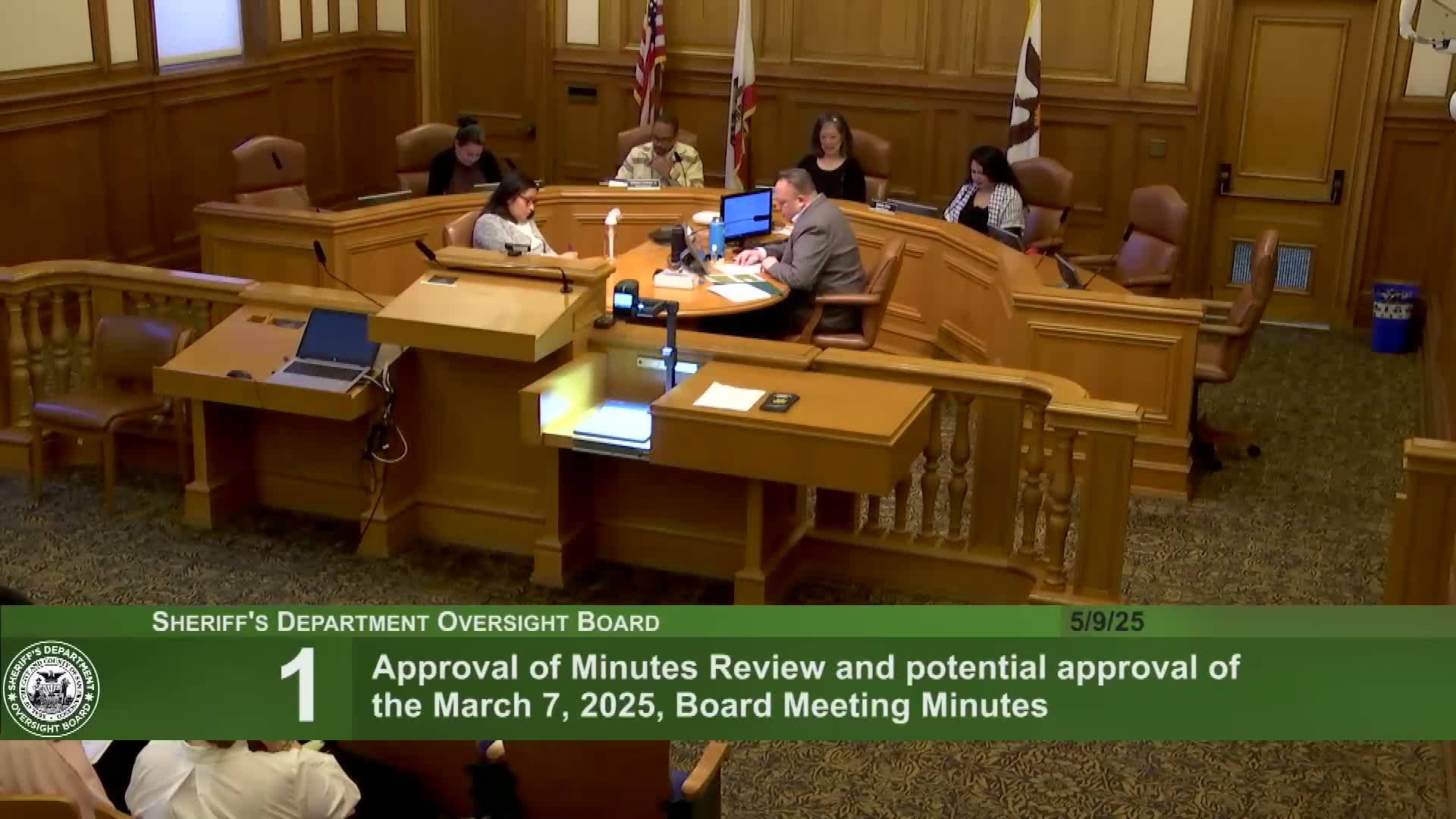
Shakira Simley, executive director of the Booker T. Washington Community Service Center and a representative of the Food and Action Agriculture Coalition (FACS), urged the San Francisco Sheriff's Department Oversight Board on May 9 to use an imminent request-for-proposals to reshape how the city procures jail food. Simley told the board the Aramark contract that currently supplies meals to San Francisco jails is up for renewal and described the agreement presented in her remarks as roughly $26,000,000.
Why it matters: Simley said the quality, cultural relevance and nutritional adequacy of jail meals affects incarcerated people's health and rehabilitation and has broader economic implications for the city's local food economy. She argued that the RFP window — which she and sheriff's staff identified in the meeting as tight (Simley noted May 19 as a target to influence RFP language) — presents a key opportunity to require higher standards and diversify vendors.
Simley summarized community feedback: meals often lack sufficient protein and fresh produce, are repetitious, and may exacerbate chronic conditions such as diabetes; commissary pricing has risen under a recent contract; and a single national vendor's control of meals and vending can create perverse incentives. "Food is a basic human right," she said, adding that meals should be "fresh, culturally appropriate" and include provisions for religious and dietary needs.
Her recommendations included hosting town halls that include incarcerated people and family members, incorporating food-quality questions into the DPA/Inspector General jail survey, requiring prime contractors to subcontract with smaller local producers and BIPOC-led community-based organizations, mandating regular unannounced inspections, and creating transparent complaint and feedback mechanisms that include staff and families.
Board members responded positively and asked practical questions. Member Carryon asked whether the city's existing Good Food Purchasing Policy applies and what consequences exist for noncompliance; Simley said the policy is elective and implementation has fallen short, and that there are no explicit legislative or budgetary penalties tied to the policy, which is why RFP language matters. Member Palmer and others emphasized the public-health and economic benefits of sourcing locally. Several members encouraged Simley and coalition partners to work with Sheriff's Office staff, the Inspector General's office and the city's food-access teams to adapt already reviewed contract language so changes could be implemented quickly.
What the board did: The presentation was a discussion item only; no formal board action was taken on the recommendations during the May 9 meeting. Members discussed asking their Inspector General/IG office and staff to help shepherd suggestions into the RFP process before the May timeline referenced by presenters, and offered to convene additional stakeholders for input.
Next steps: Simley said coalition members would continue outreach, meet with Marshall Kine and sheriff's staff, and help provide suggested RFP language; the board and staff noted the RFP and contract will later be routed to the Board of Supervisors for approval, with contract adoption expected after that legislative review (Simley projected the Board of Supervisors would consider the final contract by end of October).