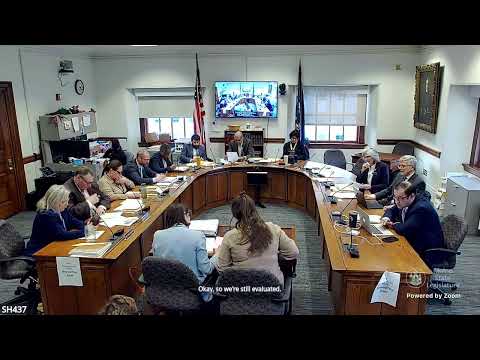
Veterans and Legal Affairs committee votes 'ought not to pass' on hospitality‑lounges bill amid enforcement and smoking concerns
Loading...
Summary
The joint committee voted to recommend 'ought not to pass' on LD 13‑65, an amendment to authorize adult‑use cannabis hospitality lounges, after debate over public‑safety enforcement limits and smoking carve‑outs. The Office of Cannabis Policy opposed adding new authorized activities until illicit market issues are addressed.
The Joint Standing Committee on Veterans and Legal Affairs recommended 'ought not to pass' on LD 13‑65 after a contested work session that centered on enforcement capability and whether permitting indoor smoking would weaken Maine's smoke‑free protections. Senator Timberlake moved the 'ought not to pass' motion, which Representative Frost seconded; the motion carried on a recorded roll call with nine votes in the affirmative, three in the negative and one member absent.
The committee heard from Gabrielle Pierce, policy director for the Office of Cannabis Policy, who told members, “The administration is not supportive of any additional programmatic changes to the adult use program until the illicit cannabis issue is under control.” Pierce urged legislators to allow the existing program to mature and to give the agency time and tools to distinguish regulated product from unregulated cannabis circulating in the state.
Supporters of hospitality lounges, including the bill sponsor and several members, argued the measure would create regulated spaces and economic opportunities. Representative Boyer said municipalities should be able to opt in to hospitality lounges and then opt out of permitting smoking if they choose, and he encouraged drafting language that allows towns to carve out vaping versus combustion distinctions. Opponents, including Senator Timberlake, emphasized enforcement limits: "Our law enforcement doesn't have the ability" to test drivers for cannabis impairment the way breath tests detect alcohol, he said, and warned that lack of reliable roadside testing would make regulation difficult.
The committee discussed several specific policy choices in the amendment: whether municipalities should opt in or opt out for smoking inside lounges; whether vaping and combustion should be treated the same; and whether pilot programs might be a prudent first step. Analysts and members noted additional technical drafting questions — for example, how the proposal's smoking carve‑out would interact with existing Title 22 smoking provisions and local permitting and fire codes.
Following debate and a roll call, the motion that the bill be reported as 'ought not to pass' was approved. Members also recorded a minority report proposing a change to the duration language in the amendment (from 90 days to 120 days). The chair directed the analyst to prepare any technical corrections identified in the work session. The committee closed the work session on LD 13‑65 and moved to the next agenda items.
The committee left open the opportunity for further refinement: the sponsor and analyst indicated they would consider technical edits and potential floor amendments; an absent member was given until the next Friday noon to cast an absentia vote on the motion. The committee did not adopt any direction to implement hospitality lounges statewide at this meeting.