Get Full Government Meeting Transcripts, Videos, & Alerts Forever!
Get email alerts on the Transient Lodging topic
No spam. Unsubscribe anytime.
Rappahannock County adopts revised transient‑lodging ordinance after public hearing
Summary
The Rappahannock County Board of Supervisors adopted an amendment to Chapter 170 defining and tightening rules for transient lodging uses — from tent campgrounds to conference centers — after public comment on definitions, road standards and RV use. The ordinance passed on a roll‑call vote.
Rappahannock County supervisors on Feb. 2 adopted an amendment to the county zoning code that revises definitions and special requirements for transient lodging uses, including tourist homes, bed‑and‑breakfasts, campgrounds, RV parks, country inns and conference centers.
Gary, a county staff member, told the board the Planning Commission spent months reviewing uses and public input and recommended the ordinance with one minor wording change. The amendment organizes transient lodging in a continuum of intensity and applies progressively stricter special requirements to higher‑intensity uses such as conference centers with lodging and hotels.
“[The Planning Commission] arranged these uses in increasing intensity from a tent campground up to a hotel or motel,” Gary said, noting some uses remain allowed only by special exception. He confirmed the public hearing was advertised in the local newspaper as required by Virginia Code §15.2‑2204.
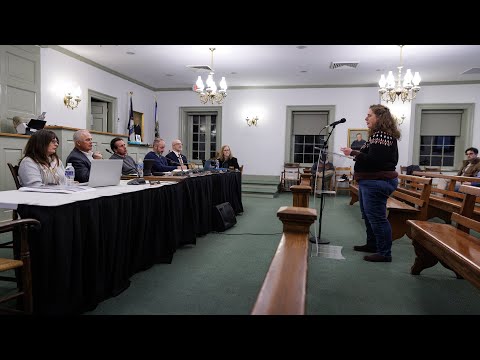
The draft clarified the tourist‑home definition so only one tourist home is allowed per structure and that a tourist home is rented to a single party of guests rather than multiple separate room rentals. Karen Hunt (Jackson District), who spoke during the public hearing, said she welcomed improvements but warned the change could raise building‑code, septic and fire‑separation issues when transient lodging is allowed inside a structure that also serves as a residence or commercial space. “There are different building code requirements for single residential, commercial and for multifamily residential uses,” Hunt said, urging the board to consider retroactive inspection and code compliance challenges.
Marlena Lee (Hampton District) urged caution on treating recreational vehicles as mobile homes for temporary permits and pressed the board to preserve clear distinctions for enforcement: “RVs are not designed for long‑term occupancy,” she said, and cautioned against allowing short‑term conversions that are difficult to police.
The ordinance also addresses road and access standards. Staff explained that tourist homes and bed‑and‑breakfasts may be allowed on a type‑2 road (one car width with passing zones, which can be gravel), while country inns with up to seven units must have direct access to the public road network and sites with eight or more units must connect to a hard surface. For conference centers with lodging (more than 40 units), the ordinance requires hard‑service public road access. The amendment adds traffic management‑plan requirements for some special‑exception applications so applicants demonstrate how vehicles and site access will function with existing road geometry.
On the related issue of temporary mobile‑home permits under Rappahannock County Code §17041, the amendment explicitly allows recreational vehicles to be used as temporary mobile homes in limited situations (for example, during rebuilding after a fire), while noting they remain subject to building‑code limits and enforcement constraints.
Supervisor [Unidentified Board member] moved to adopt the ordinance as presented; it was seconded and passed in a roll‑call vote in which Miss Comer, Mr. Settle, Mr. Whitson and Mr. General recorded “Aye.” The motion carried and the ordinance was adopted.
The Planning Commission and staff will continue to evaluate special‑exception applications under the new code language; several supervisors said the special‑exception process remains the principal tool to address location‑specific impacts, including road adequacy, screening and density. The board directed staff to retain objective requirements where appropriate and to rely on site‑specific scrutiny in cases that raise unique neighborhood impacts.
The ordinance references existing county code provisions, including Rappahannock County Code §17041 (temporary mobile homes) and related use‑table provisions in §17036; staff confirmed the changes were intended to align zoning and dependent definitions with state code.