Get Full Government Meeting Transcripts, Videos, & Alerts Forever!
Get email alerts on the Advanced Academics topic
No spam. Unsubscribe anytime.
Central CUSD 301 unveils proposed advanced‑learning pathway for elementary and middle grades
Summary
The district presented a recommended advanced‑learning pathway: elementary accelerated math starting in fourth grade, enrichment‑focused ELA in middle school, a multi‑measure rubric for qualification and staged implementation with pilot work in 26‑27 and broader roll‑out targeted for 27‑28.
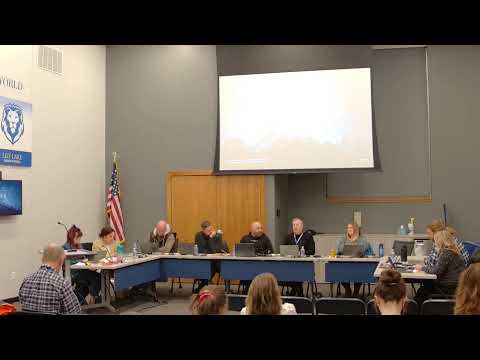
Kim Paulus, the district curriculum director, and a committee presented a proposed advanced‑learning pathway designed to create an early on‑ramp for accelerated math and enrichment‑focused English language arts across Central CUSD 301.
The proposal recommends starting accelerated math in fourth grade (covering portions of fifth grade as the pathway rolls up) and offering enrichment‑style ELA in middle school rather than accelerating ELA content. Qualification would use a multi‑measure rubric including MAP benchmark results, IAR, classroom common assessments, and aptitude testing (CogAT, with a possible pilot of the Naglieri). Presenters said the rubric is intended to prevent elimination based on a single poor test day and to include teacher input and a writing sample for ELA.
Presenters provided preliminary cohort numbers and said about 80 students currently would qualify under early‑stage criteria (pending CogAT data). For the 26‑27 school year the committee proposed release time and curriculum work for ELA preparations and starting fourth‑grade accelerated math in the following year; ELA enrichment for grades 6‑8 was discussed for implementation in 27‑28. The team emphasized using existing staff where possible and clustering students across teachers to minimize new hires, but warned growth and class‑size pressures could require additional staffing.
Board members and attendees asked about opt‑out provisions, whether students can qualify for math but not ELA (presenters said yes), and how teacher recommendation and common assessments would be included; presenters confirmed parents may opt out and that teacher input and nontraditional assessments (writing samples) are under consideration. The committee said it will finalize the rubric in the coming weeks and bring course proposals to curriculum committees (CCC) and SACs as the next steps.
If adopted in stages as recommended, the pathway would create early acceleration opportunities in math while offering enrichment in ELA that aims to deepen grade‑level work rather than move students off grade level in reading and writing.