Get Full Government Meeting Transcripts, Videos, & Alerts Forever!
Get email alerts on the Nuclear Decommissioning topic
No spam. Unsubscribe anytime.
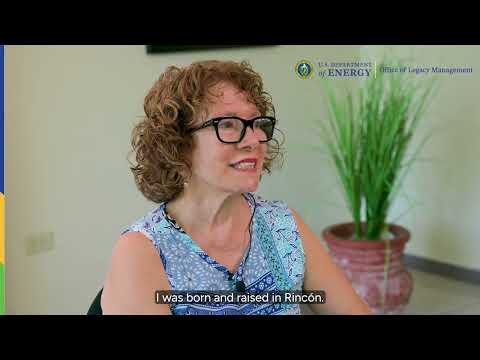
Madeline Ramos recalls rapid decommissioning of BONUS site, ongoing DOE monitoring and community concerns
Summary
In a July 16, 2024 oral-history interview with the Department of Energy Office of Legacy Management, Madeline Ramos described the BONUS site's late-1960s closure, quick decommissioning, quarterly monitoring and annual independent inspections, persistent community fears about contamination, and local memories including a rarely opened museum.
Madeline Ramos, who said she was born and raised in the local town identified in the interview as “Boone,” described her long association with the BONUS site and recalled its swift decommissioning and continued oversight in an oral-history interview with Scott Snyder of the Department of Energy Office of Legacy Management on July 16, 2024.
Ramos said the facility closed in the late 1960s and that decommissioning work began soon afterward. She told the interviewer that federal ownership of nuclear fuel meant the federal government took charge of removal and that documentation she has seen shows the site was addressed quickly after closure. "It was very impressive," the narrator in the interview said of the decommissioning pace.
The interview emphasized ongoing monitoring: Ramos (as recounted by the interview narrator) said the site is monitored every three months and that an independent private-sector contractor performs an annual inspection with certified personnel. The interviewee described this combined monitoring and third-party inspection approach as important to counter community concerns that the site had been abandoned.
Ramos and the narrator described a records-transfer process: boxes of site documents were reviewed and transferred, with the interview indicating roughly 394 boxes were involved and that about 17% of those records were designated historic and scanned. The interview also mentions that some scanned records were sent to PREPA (the Puerto Rico Electric Power Authority) and that periodic inspections continue every three to four years.
On the local relationship with the Department of Energy, the interview reported consistently positive and available communications. "They were open to answering any questions," the narrator said of DOE staff, who the interviewee said provided recommendations that local managers used to take corrective actions.
The interview placed the site in local and regional history: the narrator described what was called the first nuclear power plant in Latin America as a source of pride for residents, noting visits from scientists from other countries and uses of nuclear technology beyond electricity, including medicine and space. The interviewee referenced an "Atoms for Peace" framing when describing the project's historical significance.
Ramos also recounted persistent community misinformation and rumors that the site caused pollution and increased cancer risk. She described a specific episode in which residents alleged seeing materials moved from the site; the interviewee said the concern was later explained as U.S. Fish and Wildlife Service crews using the BONUS area as a staging site for work on nearby islands, and that town officials agreed to provide formal notice when such activity would occur so local monitors could observe.
The interview included local, human-scale memories: Ramos described the site museum as seldom open to the public because of staffing constraints and recommended that better public access could support tourism. She also told short personal stories about two well-known site dogs, Alan and Lola; the interviewee said community members sometimes funded veterinary care and that Lola was much loved — "She was the best," the interviewee said.
The interview concluded with logistics: Ramos agreed to join a short walking tour of the site the interviewer scheduled for Thursday at 9:00 a.m. for video recording. The interview materials and the narrator's account provide contemporaneous oral-history testimony about community memory, the transfer and preservation of records, and the tools DOE and contractors use to monitor the site.
The oral history is a personal account and draws on the interviewee's memories and the documents she has reviewed; it records local perceptions and described procedures but does not include independent technical measurements of contamination or public-health determinations.